 4 citations
,
January 2021 in “Journal of Clinical Medical Research”
4 citations
,
January 2021 in “Journal of Clinical Medical Research” This review provides an in-depth analysis of the structure and function of c-kit activation, and its role in both normal physiological and pathological conditions, with no new research findings reported.
June 2026 in “Revista Ibero-Americana de Humanidades, Ciências e Educação” This study highlights the crucial role pharmacists play in the aesthetic field, emphasizing their technical knowledge in ensuring safe and informed use of cosmetic products, which enhances professional recognition and promotes more secure and ethical aesthetic practices.
148 citations
,
May 2012 in “The American Journal of Human Genetics” This study identified heterozygous mutations in the ABCC9 gene as the genetic basis of Cantú syndrome, suggesting the syndrome as a new member of potassium channelopathies.
16 citations
,
December 2006 in “Chinese Medical Journal” This case report describes a 12-year-old boy with congenital insensitivity to pain with anhidrosis and progressing acro-osteolysis, highlighting the severe complications and the necessity for early intervention.
 46 citations
,
December 2006 in “Anais Brasileiros de Dermatologia”
46 citations
,
December 2006 in “Anais Brasileiros de Dermatologia” This study identified acne, superficial mycoses, pigmentation disorders, and actinic keratosis as the most common dermatologic diagnoses in Brazil, emphasizing the importance of skin cancer and leprosy in public health.
 28 citations
,
August 2003 in “Nature”
28 citations
,
August 2003 in “Nature” Cosmeceuticals may have potential but their effectiveness and market success are still uncertain.
 November 2023 in “Open Repository of the University of Porto (University of Porto)”
 Pharmacists play a crucial role in patient care and education.
 July 2016 in “Hair transplant forum international”
 This article discusses participation in the Brazilian Association of Hair Restoration Surgery's workshop on hair transplantation but does not present any new research findings.

In this study, researchers found that cosmetic formulations containing guaraná extract effectively controlled oiliness in oily skin and hair by reducing sebaceous gland activity and lipid content without compromising skin barrier function, making them promising for managing excessive sebum production.
 1 citations
,
August 2024 in “Transgenic Research”
1 citations
,
August 2024 in “Transgenic Research” In this study, the researchers observed that inducing and then withdrawing β-catenin expression in a bigenic mouse model caused reversible changes in skin morphology, indicating dependence on β-catenin signaling.
 8 citations
,
July 2019 in “Pure and Applied Chemistry”
8 citations
,
July 2019 in “Pure and Applied Chemistry” This study identified natural compounds from Iris plants that showed potential as inhibitors of urease and carbonic anhydrase-II enzymes, suggesting their possible use in treating related disorders.
109 citations
,
November 2011 in “Nature Neuroscience” 13 citations
,
September 2012 in “Cell & tissue research/Cell and tissue research” In this study, researchers found that the pCLCA2 protein is expressed in specific areas of pig skin, but its role in skin structure or function remains unclear.
3 citations
,
April 2018 in “Journal of Investigative Dermatology” CCCA may be a fibroproliferative disorder, and anti-fibrotic therapies could help.
 April 2025 in “Revista JRG de Estudos Acadêmicos”
 This study examined the use of Instagram® to share scientific information about onychomycosis, a common nail fungal infection, and found it to be an effective tool for engaging a broad audience with educational posts about prevention and treatment over two months.
 August 2025 in “Fabad Journal of Pharmaceutical Sciences”
 This review highlights the potential medicinal benefits of Cuscuta reflexa, a parasitic plant known for its bioactive compounds, while emphasizing the need for further research to fully understand its therapeutic mechanisms and integrate its use into mainstream medicine.
January 2004 in “Linchuang pifuke zazhi” This study found that in fetal skin development, both α- and β-catenins showed similar expression patterns, indicating their related roles in the development of the epidermis and skin appendages.
 August 2023 in “Gastroenterology”
 This study describes the diagnosis and successful management of Cronkhite-Canada syndrome in a 78-year-old man, highlighting improvement in symptoms and endoscopic findings after treatment with prednisone and supportive therapies.
January 2026 in “AAPS PharmSciTech” In this study, a novel liposomal formulation combining caffeine and cafestol significantly enhanced their penetration into human skin layers, with formulation F9 doubling caffeine and greatly increasing cafestol levels in the dermis, suggesting potential for improved topical delivery.
 October 2022 in “Amplla Editora eBooks”
 The document's conclusion cannot be provided because the document is not accessible or understandable.
 11 citations
,
September 2011 in “British Journal of Dermatology”
11 citations
,
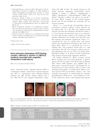
September 2011 in “British Journal of Dermatology” New ABCA12 gene mutations were linked to a skin condition with scaling and hair loss, and a treatment helped with hair loss in a related case.
December 2019 in “Case Medical Research” January 2026 in “Journal of Ethnopharmacology” Cedrol promotes hair growth better than baricitinib by regulating immune cells.
September 2023 in “Editora Pascal LTDA eBooks” This work compiles numerous research articles concerning health, providing insights from literature reviews in fields like aesthetics, dentistry, nursing, biology, and medicine. Results are not detailed in this abstract.
February 2025 in “Canadian Journal of Health Technologies” This review assessed the clinical and cost-effectiveness of baricitinib, an oral treatment for severe alopecia areata in adults, to inform Canadian reimbursement recommendations, excluding Quebec.
March 2023 in “Editora e-Publicar eBooks” May 2019 in “Journal of clinical oncology” This Phase 1 study reported that topical application of BPM31543 was safe and well-tolerated in patients receiving taxane-based chemotherapy, with some experiencing less than 50% hair loss, suggesting potential efficacy in reducing chemotherapy-induced alopecia, although no maximum tolerated dose was identified.
 January 2022 in “International Journal of Medical Sciences”
 This study investigated the effects of cedrol on colorectal cancer and found that it inhibited cell proliferation and induced cell cycle arrest and apoptosis in cell models, while in vivo, it suppressed cancer progression and improved survival at a well-tolerated dose.
 1 citations
,
May 2018 in “Psychology, Health & Medicine”
1 citations
,
May 2018 in “Psychology, Health & Medicine” In this study, researchers found that the original four-factor model of causal illness attributions in the IPQ-R did not fit a Chinese sample, and instead identified a two-factor model focusing on psychological attributions and risk factors.
February 2025 in “Gastroenterology” Corticosteroids improved symptoms in a man with Cronkhite-Canada Syndrome.