 September 2021 in “Journal of skin and stem cell”
 Lactium, a milk protein, can help reduce symptoms of skin disorders linked to stress and anxiety without side effects.
 January 2017 in “Qucosa (Saxon State and University Library Dresden)”
 This study found that plasma protein binding significantly contributes to the shifts in glucocorticosteroid concentration ratios among blood, saliva, and hair, challenging prior assumptions about enzyme inactivation as the main factor.
December 2015 in “European Journal of Pediatric Dermatology” This study describes synchronous neonatal telogen effluvium as a physiological phenomenon where newborns exhibit a hair band of rarefaction in the occipital region, not caused by sleeping position.
 May 2015 in “Plastic and Reconstructive Surgery”
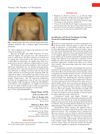
 This article introduces a novel, inexpensive hair preparation technique using glove-finger sheaths to secure and protect hair during calvarial surgery, reducing procedure time and hair damage without the need for full scalp shaving.
This review summarizes the roles of PDGF and its receptors in cell development and wound healing, reporting no new research findings; the authors emphasize PDGF's diverse biological functions.
 January 2007 in “Revista del Centro Dermatológico Pascua”
 This case report describes a 2-year-old boy diagnosed with trichothiodystrophy, characterized by fragile hair, intellectual damage, diminished fertility, and short stature.
March 2003 in “中華皮膚科醫學雜誌” This report describes a patient with trichothiodystrophy exhibiting both specific hair abnormalities and developmental delay, contributing to the understanding of this rare disorder's clinical presentation.
 January 2022 in “Social Science Research Network”
 This study found that in androgenetic alopecia, the androgen receptor directly increases miR-221 transcription, which suppresses hair growth by targeting IGF-1 and inactivating specific signaling pathways.
186 citations
,
December 2011 in “Molecules” This study reported that while no synthesized compounds surpassed finasteride in 5α-reductase inhibitory activity, certain 4-azasteroid-2-oximes exhibited notable inhibition.
150 citations
,
July 2001 in “Clinics in dermatology” This article discusses hair care practices and hair cosmetics in managing alopecia but reports no new clinical findings; it emphasizes the importance of scalp health and good patient-physician communication.
 42 citations
,
May 2003 in “Mini-reviews in Medicinal Chemistry”
42 citations
,
May 2003 in “Mini-reviews in Medicinal Chemistry” This study found that newly synthesized steroidal trienones demonstrated stronger 5α-reductase inhibitory activity compared to dienones in various biological models, suggesting potential for developing enhanced antiandrogenic drugs.
29 citations
,
September 2020 in “Polymers” This study found that electrospun poly(ε-caprolactone)/poly(3-hydroxybutyrate) blend fibers demonstrated nanometric dimensions and promising properties for drug delivery, with curcumin release linked to fiber morphology and processing parameters.
 18 citations
,
August 2017 in “PLOS ONE”
18 citations
,
August 2017 in “PLOS ONE” This study reports that the mechanical interactions between human skin and adjacent subcutaneous white adipose tissue influence the appearance of skin wrinkles, with sWAT reinforcement potentially more effective for reducing signs of skin aging than skin reinforcement alone.
17 citations
,
January 2016 in “Journal of Drug Delivery” In this study, PEG and keratin scaffolds selectively influenced protein release rates based on charge and size, suggesting their potential for targeted delivery of protein therapeutics.
12 citations
,
January 2013 in “Acta Histochemica” Junctional proteins stabilize the inner root sheath and connect the companion layer in human hair.
 9 citations
,
April 2018 in “Journal of trace elements in medicine and biology”
9 citations
,
April 2018 in “Journal of trace elements in medicine and biology” This review presents the practice of using hair bioelement analysis to assess nutritional status or environmental exposure, proposing complex interactions and hypotheses regarding depression and autism but reports no new clinical results.
4 citations
,
December 2024 in “International Journal of Molecular Sciences” This study found that extracts from Hom Thong banana peels, rich in phenolic compounds, may inhibit melanin production in human and mouse melanoma cells, showing potential as anti-melanogenic agents comparable to standard treatments like arbutin and kojic acid.
 4 citations
,
September 2024 in “Jurnal Pengolahan Hasil Perikanan Indonesia”
4 citations
,
September 2024 in “Jurnal Pengolahan Hasil Perikanan Indonesia” In this study, researchers reported that compounds from Bruguiera gymnorhiza leaves showed anti-inflammatory potential in in silico analyses, with favorable drug properties and specific binding to the IKKβ receptor, suggesting possible development into anti-inflammatory drugs.
4 citations
,
January 1981 in “PubMed” This study found that medullary cell content in mammal hair evolves from an amorphous form to a biphasic phase, with human and anthropoid hair containing both macrofibrils and microfibrils.
3 citations
,
January 2025 in “International Journal of Molecular Sciences” In this study, researchers investigated EGCG's spectroscopic properties and its interaction with DPPG lipid, finding that both experimental and theoretical approaches agree on the electronic transitions and reveal an increased absorbance due to molecular interactions.
 1 citations
,
September 2022 in “Sudan Journal of Medical Sciences”
1 citations
,
September 2022 in “Sudan Journal of Medical Sciences” This molecular docking study reported that danoprevir, remdesivir, and saridegib exhibit stronger binding affinities to the main protease of SARS-CoV-2 than the control, suggesting their potential as inhibitors of the virus's replication process.
 1 citations
,
May 2022 in “Frontiers in Pharmacology”
1 citations
,
May 2022 in “Frontiers in Pharmacology” This study found that astilbin downregulates effector CD4+ T cell activities through the CYP1B1/ROS/PPARγ pathway, suggesting its potential use in treating inflammation.
 February 2026 in “Optics”
 This study demonstrates that polarized second harmonic generation imaging effectively monitors wool fiber stretching, revealing significant structural changes in keratin alignment that improve textile performance.
 February 2026 in “Molecules”
 This study reported that a novel nanomedicine combining berberine and sinapic acid significantly inhibited the growth of mouse mammary carcinoma cells and demonstrated an anti-tumor effect in vivo, without significant systemic toxicity after 28 days, suggesting a promising, low-toxicity therapeutic strategy for breast cancer.
December 2025 in “JURNAL PIJAR MIPA” This study explored the Belanger tradition, a Sasak hair-cleansing ritual using natural ingredients, and concluded that it combines cultural heritage with sustainable practices and scientifically supported benefits.
December 2025 in “Biopolymers” This study found that chemically treated hair, particularly when subjected to both acid straightening and bleaching, experiences more significant structural damage when exposed to heat, highlighting key changes in both the internal and surface components of hair fibers.
 December 2025 in “Fullerene Journal of Chemistry”
 This study investigated the potential of nutmeg-derived phytochemicals as anti-alopecia agents using molecular docking and simulations, finding that geranylgeraniol exhibited significant binding stability and potential efficacy against androgenetic alopecia comparable to finasteride and superior to minoxidil.
This study mapped potential targets and pathways for baicalin's action in androgenic alopecia, suggesting it may inhibit 5α-reductase and serve as an effective treatment ingredient.
August 2025 in “Applied Sciences” This study found that peroxide-rich plasma-activated water caused minimal morphological damage to hair, while nitrate-rich plasma-activated water induced significant damage, especially in porous hair types.
 February 2025 in “International Journal of Cosmetic Science”
 This study found that treating hair with ATS, formed from fumaric acid and cysteamine, effectively improved hair quality by increasing moisture content and altering the internal structure of strong curls.