29 citations
,
February 1989 in “Journal of Cutaneous Pathology” This case report identifies a new type of hair matrix tumor called "rippled pattern trichomatricoma," distinguished by its unique cell arrangement and differentiation features.
 51 citations
,
February 2006 in “Clinics in Dermatology”
51 citations
,
February 2006 in “Clinics in Dermatology” This review discusses the physiological changes in the female body during pregnancy, relating them to hormonal shifts, and comments on treatment considerations, but it presents no new research findings.
 13 citations
,
September 2011 in “Archives of dermatology”
13 citations
,
September 2011 in “Archives of dermatology” This case report describes a 3-year-old male with X-linked ichthyosis and associated neurologic abnormalities, identifying an unusual cortical development malformation and suggesting that abnormal hair banding may assist diagnosis.
 7 citations
,
March 2003 in “PubMed”
7 citations
,
March 2003 in “PubMed” This study reported that in men with androgenic alopecia, a distinct subclinical hyperpigmentation pattern was observed in the scalp, associated with baldness severity and possibly linked to local melanin production by pilosebaceous units.
3 citations
,
December 2013 in “American Journal of Dermatopathology” This case report describes a unique lesion in a 10-month-old girl, characterized by increased eccrine glands and hair follicles, leading to the proposed term "hybrid eccrine gland and hair follicle hamartoma".
 1 citations
,
December 2021 in “Annals of the College of Medecine”
1 citations
,
December 2021 in “Annals of the College of Medecine” This study found that yellow dots, black dots, exclamation mark hairs, broken hairs, and nail changes observed through dermoscopy are related to the severe form of alopecia areata.
69 citations
,
May 2002 in “Journal of Investigative Dermatology” This study suggests that congenital atrichia with papular lesions may be more common than previously thought and proposes diagnostic criteria including the observation of hypopigmented whitish streaks on the scalp.
7 citations
,
August 2017 in “Genetic testing and molecular biomarkers” This report suggests that patients with primary spontaneous pneumothorax should be evaluated for FLCN mutations, as they may indicate Birt-Hogg-Dube syndrome and associated cancer risks.
 December 2025 in “Italian Journal of Anatomy and Embryology”
 This narrative literature review examined how linking embryonic development with non-genetic skin anomalies can improve diagnostic accuracy, guide prenatal counseling, and enrich dermatology education by revealing specific vulnerabilities in skin morphogenesis and supporting advances in regenerative medicine.
 1 citations
,
January 2013 in “Springer eBooks”
1 citations
,
January 2013 in “Springer eBooks” The document concludes that skin and nail changes can indicate various underlying health conditions.

In this study, the authors emphasize the importance of accurately diagnosing congenital atrichia with papules—a condition marked by hair loss and papular skin lesions—differentiating it from other similar disorders to prevent unnecessary treatments and inform families about its benign but irreversible nature.
September 2016 in “Journal of Dermatological Science” Polarizing light microscopy can easily and reliably diagnose congenital keratinizing disorders like Netherton syndrome.
 15 citations
,
December 2016 in “Obstetrics & Gynecology”
15 citations
,
December 2016 in “Obstetrics & Gynecology” This review discusses the effects of pregnancy on melanocytic nevi and reports no new clinical results; it suggests that changing nevi during pregnancy should be evaluated similarly to those in nonpregnant patients.
1 citations
,
April 2021 in “Annals of Otology Rhinology & Laryngology” This report highlights the diagnosis of a giant congenital blue nevus with secondary cutis verticis gyrata in a 20-year-old Asian male, underscoring the need for clinicopathologic correlation due to overlapping features with cerebriform intradermal nevi.
 2 citations
,
March 2014 in “Veterinary World”
2 citations
,
March 2014 in “Veterinary World” This study characterized the hair follicle patterns of Indian bison, Black buck, and Nilgai, providing valuable data to help identify these endangered species' skins, commonly targeted by poachers.
12 citations
,
September 2011 in “BMJ Case Reports” This case report describes a 2-month-old male with biotinidase deficiency whose seizures and skin symptoms improved dramatically with oral biotin supplementation.
 11 citations
,
July 2012 in “Current Opinion in Pediatrics”
11 citations
,
July 2012 in “Current Opinion in Pediatrics” This review discusses dermatologic signs in childhood endocrine disorders and highlights their importance in early diagnosis and treatment, but it reports no new clinical findings.
 September 2023 in “bioRxiv (Cold Spring Harbor Laboratory)”
 This study describes the use of a genetically engineered mouse model, mTurquoise2-Col4a1, to fluorescently label collagen IV and observe basement membrane dynamics during skin development, revealing its stability and pliability during rapid growth phases.
 November 2013 in “John Wiley & Sons, Ltd eBooks”
 This chapter reviews various mucocutaneous manifestations of endocrine disorders and provides illustrative images of these clinical features, but reports no new research findings.
 February 2009 in “Journal of The American Academy of Dermatology”
 The document concludes that detailed clinical descriptions of seven family cases help understand dominant dystrophic epidermolysis bullosa's symptoms and inheritance.
 January 2020 in “PARIPEX INDIAN JOURNAL OF RESEARCH”
 This study found that the most common skin manifestation among diabetes patients was cutaneous infections.

In this case study, researchers reported the first documented instance of malignant transformation of congenital triangular alopecia into basal cell carcinoma in a 48-year-old woman, underscoring the importance of assessing long-standing alopecic areas for malignancy.
 32 citations
,
April 1994 in “Journal of the American Academy of Dermatology”
32 citations
,
April 1994 in “Journal of the American Academy of Dermatology” This report presents the second known case of erythema nodosum without typical associated conditions, which could be linked to mycoplasma infection, although no testing was conducted to confirm this in the patient.
October 2025 in “Indian Journal of Paediatric Dermatology” This report describes a case of halo scalp ring, a pattern of transient alopecia in infants, which resolved without treatment over 17 months.
6 citations
,
January 2014 in “Pediatric annals” This case report describes a 21-day-old infant with erythematous annular scaly plaques and pustules on the face and scalp, which did not improve with topical corticosteroid cream.
 July 2021 in “PARIPEX INDIAN JOURNAL OF RESEARCH”
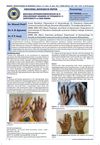
 This study highlighted knuckle hyperpigmentation as an early sign of vitamin B12 deficiency, indicating a potential link to megaloblastic anemia in the vegetarian population in India.
 November 2017 in “International journal of research in dermatology”
 This case report describes a rare instance of nevus comedonicus with a multi-dermatomal unilateral pattern along the lines of Blaschko, treated unsuccessfully with topical tretinoin and oral retinoids.
 20 citations
,
February 2003 in “Facial Plastic Surgery”
20 citations
,
February 2003 in “Facial Plastic Surgery” This article reviews the classification and treatments of vascular anomalies, such as hemangiomas and vascular malformations, and reports no new clinical results; it emphasizes the importance of managing patient expectations due to treatment limitations.
 November 2023 in “BMJ case reports”
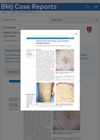
 Results are not reported in this abstract, which describes a man in his 30s with a 4-year history of patchy hair loss on the right lower leg and associated itching, highlighting the use of dermoscopy in his examination.
14 citations
,
April 2017 in “Dermatology practical & conceptual” This study reports that yellow dots in a higher number per field of vision were the most consistent dermoscopic finding in severe cases of alopecia areata.