 6 citations
,
January 2012 in “Indian Journal of Endocrinology and Metabolism”
6 citations
,
January 2012 in “Indian Journal of Endocrinology and Metabolism” Old drugs are often used for new, different medical purposes in endocrine pharmacology.
July 2026 in “The Bioscan.” This review details the process and advantages of drug repurposing, highlighting its potential as a cost-effective and expedited alternative to traditional drug development while summarizing various strategies and successful examples, and exploring related regulatory challenges.
November 2025 in “Applied Research” This review examines synthetic derivatives of curcumin for treating diabetes and cancer, reporting potential pharmacokinetic improvements and enhanced biological activity, but highlights ongoing challenges with bioavailability and stability, as well as gaps in translational research.
147 citations
,
November 2021 in “Environmental Science and Pollution Research” This review discusses the growth potential and business opportunities in biocosmetics, emphasizing the replacement of fossil-based ingredients with bio-based alternatives, but reports no new experimental findings.
This study introduced ElixirSeeker2, a computational framework for designing anti-aging peptides, and found that some newly identified peptides significantly delayed cellular senescence and enhanced cellular and locomotor functions in aged Caenorhabditis elegans.
 January 2018 in “Computational Toxicology”
 This review introduces pharmacophore technology and discusses its applications in toxicity prediction and limits, but reports no new clinical results.
 2 citations
,
January 2023 in “Applied Science and Convergence Technology”
2 citations
,
January 2023 in “Applied Science and Convergence Technology” This review discusses the potential of 3D bioprinting technologies for tissue regeneration, drug evaluation, and drug delivery systems, but reports no new findings.
 August 2023 in “Military Medical Research”
 This review highlights that skin organoids, advanced three-dimensional models mimicking human skin, are emerging as effective alternatives to traditional culture models and human skin, overcoming limitations of two-dimensional systems and ethical concerns, and are being increasingly used in areas like developmental biology and disease modeling.
29 citations
,
May 2025 in “Polymers” This study systematically examines how smart biomaterials used with DLP technology can enhance bioprinting in tissue engineering and regenerative medicine, while also identifying current challenges and future research needs.
36 citations
,
October 2009 in “Journal of biological chemistry/The Journal of biological chemistry” This study reports that TFM-4AS-1, a selective androgen receptor modulator, promoted bone and muscle growth with reduced effects on reproductive organs in ovariectomized rats.
 14 citations
,
November 2014 in “European journal of medicinal chemistry”
14 citations
,
November 2014 in “European journal of medicinal chemistry” This study identified 30 new compounds with significant androgen receptor binding affinity through a combination of virtual screening and in vitro testing.
 December 2008 in “Enzyme and Microbial Technology”
 New patents include innovations in skin and hair care, disease treatment, plant stress tolerance, and protein purification.
39 citations
,
May 2015 in “Advanced drug delivery reviews” This review discusses skin tissue engineering and highlights the potential role of microRNAs in improving bioengineered skin equivalents, concluding that further exploration of microRNA targets could address unmet clinical needs.
14 citations
,
March 2016 in “Regenerative Biomaterials” This article proposes a broad interpretation of tissue engineering as systematically controlling the body's cells, matrices, and fluids, suggesting many existing therapies may fall under this category.
August 2025 in “OPAL (Open@LaTrobe) (La Trobe University)” This preclinical study found that a machine-learning-driven strategy for fabricating microneedles with optimal hardness and rapid dissolution significantly promoted hair regrowth in androgenetic alopecia mice by activating the Wnt/β-catenin pathway, surpassing the effects of minoxidil.
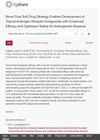
This study found that the optimized AR antagonist candidate 39, in a hair-growth mouse model, achieved similar efficacy to pyrilutamide with faster onset and favorable safety, suggesting a promising approach for developing topical treatments with low systemic toxicity for androgenetic alopecia.
180 citations
,
February 2023 in “Journal of Chemical Information and Modeling” In this paper, Chemistry42—a software integrating AI with computational and medicinal chemistry—demonstrated efficiency in designing novel molecular structures targeting DDR1 and CDK20, with properties validated in both in vitro and in vivo studies.
 39 citations
,
April 2020 in “IntechOpen eBooks”
39 citations
,
April 2020 in “IntechOpen eBooks” The authors describe drug repurposing as a promising strategy for finding new uses for existing drugs, noting it is efficient, cost-effective, and poses lower risks than traditional drug discovery processes, potentially aiding in the treatment of rare and difficult-to-treat diseases.
This study identified that α-ketobutyrate (α-KB) extends lifespan and improves health markers in Caenorhabditis elegans and aged mice by modulating pyruvate metabolism and activating AMPK pathways, with potential implications for human anti-aging treatments.
 202 citations
,
August 2007 in “Biomaterials”
202 citations
,
August 2007 in “Biomaterials” This review discusses advancements in artificial skin for wound treatment and reports no new clinical findings; the authors highlight the potential of new biomaterials to enhance future skin replacement therapies.
January 2026 in “OSF Preprints (OSF Preprints)” In this study, researchers presented a novel therapeutic approach for androgenetic alopecia combining AR-PROTAC degradation with regenerative strategies and evaluated the potential of GT20029 as a topical treatment, proposing a three-phase protocol and future research hypotheses.
246 citations
,
February 2021 in “Trends in Pharmacological Sciences” This review discusses drug repurposing strategies for rare diseases, highlighting methodologies, achievements, and challenges, but reports no new clinical results.
23 citations
,
October 2008 in “Journal of medicinal chemistry” This study suggests that PF-0998425 is an effective androgen receptor antagonist for sebum control and androgenetic alopecia with rapid metabolism reducing the risk of systemic side effects.
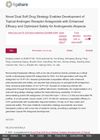
This study found that the optimized AR antagonist compound 39 showed potent hair growth activity with improved safety in mice, suggesting potential for better topical treatments for androgenetic alopecia.
11 citations
,
March 2024 in “Current Issues in Molecular Biology” This review discusses the pharmacological actions and potential therapeutic benefits of ginsenoside compound K for metabolic disorders, reports no new clinical results, and suggests further research on its bioavailability and toxicity.
3 citations
,
April 2023 in “Cytotechnology”  July 2025 in “Scientific Reports”
 In this study, researchers explored drug repurposing as a potential strategy for treating psoriasis and identified Pioglitazone, Trimipramine, and Dimetindene as promising candidates for this indication, based on molecular docking and predictive algorithms.
 1 citations
,
August 2025
1 citations
,
August 2025 In this study, researchers evaluated drug-target interaction data from three major resources and developed a framework for drug repurposing, revealing associations between drug properties and therapeutic groups to aid in compound prioritization and predicting repositioning opportunities for existing drugs, particularly in cancer treatment.
In this study, a dual soft drug design strategy improved the AR antagonist candidate 39, showing potent AR antagonism and good safety in a mouse hair-growth model, with similar efficacy to pyrilutamide but faster response.
 April 2026 in “International Journal of Drug Delivery Technology”
 This study discusses advancements in nanotechnology and theranostic dressings, which may significantly improve chronic wound care by effectively targeting biofilms and enabling real-time monitoring, although obstacles to broad applicability and sustainability remain.