 1 citations
,
September 2020 in “Prometheus”
1 citations
,
September 2020 in “Prometheus” This review examines the reliance on formalized and automated protocols in fields like aviation and medicine, suggesting that such approaches may hinder the human capability of mètis needed to handle emergencies and dynamic ambiguities; it reports no new results.
 November 2020 in “Journal of Pharmaceutical Sciences”
 This study suggests a decision tree using in vitro metabolic clearance to identify early drug candidates likely to experience nonlinear pharmacokinetics due to intestinal CYP3A-related metabolism.
This genome-wide association study of over 70,000 men identified 71 genetic loci linked to male pattern baldness, highlighting pathways that could help explain its underlying biology.
 4 citations
,
May 2021 in “Journal of The American Academy of Dermatology”
4 citations
,
May 2021 in “Journal of The American Academy of Dermatology” This study found no significant genetic correlations between male pattern baldness and COVID-19 outcomes, suggesting that shared genetic factors may not explain the reported association.
 May 2026 in “The Journal of Headache and Pain”
 In this study, researchers developed an enhanced rodent model of trigeminal neuralgia, demonstrating that structural and functional changes in the anterior cingulate cortex are linked to chronic pain and emotional disturbances, and chemogenetic inhibition of specific neurons could alleviate symptoms.
January 2026 in “Figshare” This report presents gene set enrichment scores for hair follicle compartments using tape strip and bulk biopsy methods, providing statistical data but no new experimental findings.
3 citations
,
September 2025 in “ChemMedChem” This review highlights the inadequacy of the "specificity paradigm" in drug design for complex diseases like Alzheimer's and cancer, suggesting a shift toward developing multitarget drugs to improve treatment efficacy by interacting with multiple targets through various mechanisms.
This study reviewed the use of self-supervised Auto ML models for detecting alopecia areata, finding significant advancements in automated diagnosis but also challenges such as model explainability and data bias, which may guide future AI-driven dermatological diagnostics.
January 2026 in “JAAD International”  February 2024 in “Frontiers in physics”
 This study developed a model for detecting sparse hair clusters using enhanced object detection neural networks and medical images, which accurately identifies and counts sparse hair clusters with greater accuracy and efficiency than existing methods.
 1 citations
,
April 2020 in “medRxiv (Cold Spring Harbor Laboratory)”
1 citations
,
April 2020 in “medRxiv (Cold Spring Harbor Laboratory)” This study identified gene sets associated with Tourette Syndrome, implicating Ligand-gated Ion Channel Signaling, Lymphocytic, and Cell Adhesion and Trans-synaptic Signaling processes in the disorder's neurobiology.
July 2026 in “Journal of Cosmetic Dermatology” This network meta-analysis found that for female pattern hair loss, microneedling combined with minoxidil ranked highest for hair density and patient satisfaction, while poly-L-lactic acid threads plus minoxidil led in hair diameter; however, the evidence is uncertain and lacks placebo-controlled trials.
51 citations
,
February 2004 in “Environmental Health Perspectives” This article analyzes various cases of weak or low-dose endocrine effects in laboratory animals and highlights challenges in data interpretation due to variability among controls, but reports no new experimental findings.
1 citations
,
September 2003 in “Annals of Epidemiology”  January 2025 in “Fitoterapia”
 This study reviewed literature on signaling pathways and concluded that these pathways are crucial pharmacological targets, influencing the mechanisms of drugs used in neurological, cardiovascular, and oncological treatments to correct signal transmission disturbances.
July 2024 in “International Journal of Molecular Sciences” This article proposes using the hallmarks of ageing and dysregulated microRNAs to create a molecular morbidity score that could improve prognostication and clinical trial inclusion for patients with multimorbidity.
 35 citations
,
June 2005 in “The Milbank Quarterly”
35 citations
,
June 2005 in “The Milbank Quarterly” This article describes a framework for evaluating new health technologies by integrating quantitative evidence with qualitative assessments and using precedents to guide policy decisions, without reporting new clinical results.
September 2025 in “Journal of the American Academy of Dermatology” Alopecia areata is linked to a higher risk of psychiatric disorders.

This study used machine learning to develop classifiers for identifying effective inhibitors of 5α-reductase isozyme 2, achieving high performance in distinguishing potent from weak inhibitors.
 July 2025 in “Dermatology and Therapy”
 This study found that patients with alopecia areata showing low treatment burden responded better to baricitinib compared to those with higher previous systemic treatment exposure.
January 2026 in “Dermatologic Therapy” In this systematic review and meta‐analysis, botulinum toxin monotherapy was found to significantly increase hair density in patients with androgenetic alopecia, with optimal effects observed using a 100-unit dose every six months. These findings suggest potential efficacy but should be confirmed in larger, placebo-controlled trials.
 November 2023 in “Advances and Applications in Statistics”
 In this retrospective study, researchers developed machine learning models to predict mortality risk among 7115 COVID-19 patients in Iran, finding that the random forests model performed best with 96% accuracy and identified factors like intubation and SpO2 as significant predictors.
June 2026 in “Mendeley Data” This dataset provides supplemental material for a study on long-term particulate matter exposure and androgenetic alopecia risk, including additional exposure data and sensitivity analyses, but reports no new clinical results.
![Benzo[c]quinolizin-3-ones Theoretical Investigation: SAR Analysis and Application to Untested Compounds](/images/assets/6712367a-949f-47c7-a756-2bfe6316fc69/small/15331.jpg) 6 citations
,
August 2004 in “Journal of Chemical Information and Computer Sciences”
6 citations
,
August 2004 in “Journal of Chemical Information and Computer Sciences” This study found that certain molecular quantum descriptors can be directly correlated with the biological activity of benzo[c]quinolizin-3-ones, potentially aiding in the identification and design of active compounds.
 1 citations
,
September 2017
1 citations
,
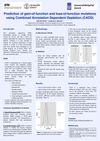
September 2017 This study found that the combination of Stemoxydine® and Resveratrol improved hair density in women with Female Pattern Hair Loss.
 April 2026 in “Zenodo (CERN European Organization for Nuclear Research)”
 This study presented a reproducibility package supporting an exploratory secondary analysis of miRNA dysregulation and aging-related target enrichment in female pattern hair loss, based on a comparison of three scalp samples from affected women to five healthy controls using public dataset GSE106780.
January 2026 in “Dermatologic Therapy” This study found that Pinus massoniana needles extract may promote hair regrowth in a mouse model of androgenetic alopecia, potentially by reducing oxidative stress and affecting immune, metabolic, and apoptosis-related pathways.
 January 2017 in “Brazilian Journal of Pharmaceutical Sciences”
 This study identified neprilysin as a potential target of the pharmacological agent arteannuin, which may guide future research into its clinical applications, although experimental verification is needed.
April 2017 in “The journal of investigative dermatology/Journal of investigative dermatology” This study compiled and functionally annotated 489 genes associated with hair disorders, revealing their involvement in diverse biological pathways, including those linked to cancer and cellular signaling.