4 citations
,
May 2023 in “Pigment Cell & Melanoma Research” In this study, researchers found that deleting the Bmi1 gene in murine melanocytes caused premature hair greying and loss of melanocyte lineage cells, highlighting BMI1's role in protecting melanocyte stem cells from stress and oxidative damage.
40 citations
,
September 2004 in “Biomacromolecules” In this study, molecular dynamics simulations indicated that the Glu413Lys mutation in human hair keratin significantly affects the stability of coiled coil structures, whereas Glu413Asp showed no impact on stability.
 25 citations
,
December 2018 in “Human Molecular Genetics”
25 citations
,
December 2018 in “Human Molecular Genetics” This study found that the PSEN1-P242LfsX11 mutation in hidradenitis suppurativa influences cytokine and chemokine expression in macrophages, potentially affecting inflammatory responses.
January 2010 in “Chinese Journal of Dermatovenereology of Integrated Traditional and Western Medicine” This study found a novel nonsynonymous genetic variant in the hHb1 gene of a family with monilethrix, which differs from ten previously reported pathogenic mutations.
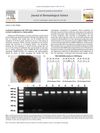 13 citations
,
November 2009 in “Journal of Dermatological Science”
13 citations
,
November 2009 in “Journal of Dermatological Science” This article discusses various dermatological studies cited by previous authors and reports no new clinical results.
100 citations
,
December 2002 in “Journal of biological chemistry/The Journal of biological chemistry” This study identified a domain on human chromosome 21q22.1 containing various high glycine-tyrosine and high sulfur keratin-associated protein genes, revealing their diverse expression in hair-forming cells.
This case report details a child with a specific TNFAIP3 mutation manifesting as a severe SLE/SS phenotype, expanding the known phenotype for this genetic variant.
6 citations
,
January 2004 in “DNA Research” This study identified a nonsense mutation in the Sgkl gene as the cause of defective hair growth in a mutant mouse strain, implicating the SGKL signaling pathway in hair development.
12 citations
,
June 2016 in “Clinical and experimental dermatology” This study reported a previously undescribed G573V point mutation in the TRPV3 gene as a cause of familial Olmsted syndrome in a Mongolian family.
23 citations
,
March 2017 in “JAAD case reports” This study reports a new family with hereditary fibrosing poikiloderma (POIKTMP) and identifies a pancreatic cancer occurrence in a family member, raising questions about FAM111B's role as a potential cancer predisposition gene.
 June 2021 in “bioRxiv (Cold Spring Harbor Laboratory)”
 This research found that the microtubule catastrophe factor KIF18B plays a crucial role in promoting spindle orientation in keratinocytes, linking this process to cell fate decisions during hair follicle morphogenesis.
 12 citations
,
September 2021 in “PLoS ONE”
12 citations
,
September 2021 in “PLoS ONE” In this study, researchers found that interaction between transcription factor EBF1 and gene WNT10A, influenced by a genetic variant, may play a role in hair shaft formation and anagen shortening in male pattern baldness.
27 citations
,
November 2007 in “Genomics” This study found that mutations in type I IRS keratin genes disrupt keratin protein complexes in mice, suggesting crucial roles for these genes in proper hair coat formation.
 January 2020 in “bioRxiv (Cold Spring Harbor Laboratory)”
 This study identified novel genetic variants in APOE ε4 non-carriers associated with Alzheimer's disease age-of-onset, linking them to regulatory mechanisms like the unfolded protein response in the pathology of Alzheimer's and other degenerative diseases.
 November 2025 in “PubMed”
 This study identified nine pathogenic variants in the PADI3 gene, and variants in the S100A3 and TCHH genes, which may disrupt protein function and contribute to central centrifugal cicatricial alopecia.
 20 citations
,
July 2013 in “European Journal of Oral Sciences”
20 citations
,
July 2013 in “European Journal of Oral Sciences” This study found a novel PAX9 gene mutation that may cause tooth agenesis and trichodysplasia in a studied family.
June 2020 in “The journal of investigative dermatology/Journal of investigative dermatology” This study found that rare damaging variants in the KRT82 gene, which affect hair shaft integrity, may contribute to the risk of alopecia areata.
1 citations
,
January 2016 in “Australasian Journal of Dermatology” This case study describes a 54-year-old man with an E600A mutation in the NOD-2 gene associated with Blau syndrome, who presented with skin involvement, differing from typical cases, and initially responded to colchicine treatment.
175 citations
,
August 1997 in “Nature Genetics” 50 citations
,
September 2009 in “Molecular Genetics and Metabolism” This study identified a novel V26M mutation in the vitamin D receptor as the cause of hereditary vitamin D resistant rickets in a patient, characterized by severe rickets and an unusual pattern of alopecia.
 April 2023 in “The journal of investigative dermatology/Journal of investigative dermatology”
 This study found that p21 is much more highly expressed in normal melanocytes compared to melanoma cells, suggesting a potential target for preventing melanoma progression through cell cycle repair processes.

This study suggests that skin tumor cells in tuberous sclerosis complex may promote hamartoma morphogenesis by expressing and releasing higher levels of cathepsin B.
This study reports that patients with specific MFN2 mutations, including p.Arg707Trp, exhibit significant upper body fat overgrowth with suppressed leptin production, suggesting tissue-selective mitochondrial dysfunction and potential therapeutic targets.
114 citations
,
July 2003 in “PubMed” This study found that KSR1 is necessary for v-Ha-ras-mediated skin tumor formation but not for MT-driven mammary cancer, indicating its potential as a therapeutic target in Ras/MAPK signaling-related tumors.
May 2025 in “Acta Dermato Venereologica” The Paxbp1 gene is crucial for healthy hair follicles.
3 citations
,
July 2022 in “Brain and Behavior” This study observed that a CARASIL mouse model demonstrated abnormal behavior, vascular and cellular changes, and upregulation of the TGF-β/Smad signaling pathway, indicating its potential involvement in CARASIL pathogenesis.
1 citations
,
April 2021 in “IntechOpen eBooks” This review examines genetic variation in the ovine KRTAP1.1 gene and its potential impact on wool quality, reporting no new findings but suggesting opportunities for developing gene markers for wool and pelt traits.
 95 citations
,
February 2019 in “The New England Journal of Medicine”
95 citations
,
February 2019 in “The New England Journal of Medicine” This article discusses the potential genetic basis of central centrifugal cicatricial alopecia in women of African ancestry but does not provide new research results.
 12 citations
,
January 2016 in “Journal of Orofacial Orthopedics / Fortschritte der Kieferorthopädie”
12 citations
,
January 2016 in “Journal of Orofacial Orthopedics / Fortschritte der Kieferorthopädie” This study identified a novel mutation in the EDA gene, which may impair protein stabilization and be involved in the development of oligodontia and mild ectodermal dysplasia phenotypes.
 2 citations
,
January 2017 in “Folia biologica”
2 citations
,
January 2017 in “Folia biologica” This study identified two single-nucleotide polymorphisms and three haplotypes in the KRTAP7-1 gene across yak, taurine, and zebu cattle, with the BOVIN-KRTAP7-1*A haplotype most prevalent.