3 citations
,
June 2024 in “iScience” In this theoretical study, axolotl spinal cord regeneration was modeled using a reaction-diffusion process, suggesting that the control of regenerative response relies on cell sensitivity to the signal and its diffusion characteristics, laying groundwork for identifying the signaling mechanism.
74 citations
,
October 2023 in “Nature Reviews Molecular Cell Biology”  2 citations
,
June 2026 in “Frontiers in Science”
2 citations
,
June 2026 in “Frontiers in Science” This review examines the potential of regulatory T cell-based therapies to transform treatment across various medical specialties by promoting immune tolerance and tissue repair, but it reports no new clinical results.
April 2017 in “bioRxiv (Cold Spring Harbor Laboratory)” This study introduced the dual-flow-RootChip platform to demonstrate that Arabidopsis roots exhibit non-autonomous adaptations, such as hair growth regulation, when subjected to varied environmental conditions on opposite sides.
 21 citations
,
January 2024 in “Science Immunology”
21 citations
,
January 2024 in “Science Immunology” This study developed a technique to limit genetic recombination to regulatory T cells to investigate whether self-tolerance is maintained in non-lymphoid tissues, an area previously not well understood.
 1066 citations
,
March 2010 in “Nature Reviews Molecular Cell Biology”
1066 citations
,
March 2010 in “Nature Reviews Molecular Cell Biology” This review discusses the potential regulation of signal transduction pathways by microRNAs in animal cells, aiming to identify biological processes that may be influenced by miRNA-mediated regulation, but it reports no new experimental outcomes.
 176 citations
,
April 2011 in “Science”
176 citations
,
April 2011 in “Science” This study found that in a population of hair follicles, regenerative cycling stages are regulated by both intrinsic and extrinsic signals, with WNT/BMP signaling mediating interactions among follicles for adaptability.
322 citations
,
January 1997 in “Thrombosis and Haemostasis” This review discusses factors influencing angiogenesis, focusing on vascular permeability factor as a key inducer and thrombospondin as a notable inhibitor, and recommends exploring molecular mechanisms for therapeutic interventions.
 75 citations
,
September 2017 in “Developmental biology”
75 citations
,
September 2017 in “Developmental biology” This review discusses circadian clock regulation in stem cells and its role in processes like neurogenesis, but reports no new results; the authors emphasize its significance in stem cell function across various tissues.
 1 citations
,
December 2022 in “Frontiers in Immunology”
1 citations
,
December 2022 in “Frontiers in Immunology” This review summarizes recent findings about the multi-site differentiation of tissue regulatory T cells, emphasizing the pivotal role of epigenetic remodeling, but it reports no new clinical results.
3 citations
,
November 2005 in “Journal of Investigative Dermatology Symposium Proceedings” Enhancing regulatory T cells may help treat autoimmune diseases like alopecia areata.
 October 2013 in “Journal of the American College of Cardiology”
 This review discusses the potential role of autonomic dysfunction and sympathetic overactivity in hypertension development and reports no new results; renal denervation therapies have gained popularity for resistant cases.
July 2020 in “Stem Cells Translational Medicine” In this study, Caplan et al. found that treatment with human Tregs expanded from umbilical cord blood may modulate immune responses and improve outcomes in a rodent model of traumatic brain injury.
47 citations
,
October 2020 in “Communications Biology” This study found that maintaining tension-force balance in a human skin equivalent improved characteristics of skin homeostasis and structure, suggesting potential as an alternative to animal models for studying skin physiology.
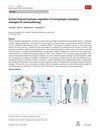
This review highlights that surface mechanical regulation can program macrophage behavior through specific mechanical cues on material surfaces, potentially advancing immunotherapies and regenerative medicine by enabling precise control over macrophage functions.
 42 citations
,
January 2014 in “Cold Spring Harbor Perspectives in Medicine”
42 citations
,
January 2014 in “Cold Spring Harbor Perspectives in Medicine” This abstract omits specific findings and does not provide new research results.
80 citations
,
November 2017 in “New Phytologist” In this study, the researchers used the dual-flow-RootChip to show that Arabidopsis roots can locally adapt their hair development in response to asymmetric phosphate conditions.
April 2026 in “Current Opinion in Genetics & Development” This mini-review explores how both endogenous and damage-released RNAs serve as instructional signals that influence cell identity and plasticity during tissue maintenance and repair, highlighting RNA's role as a regulator of cellular flexibility in various regenerative contexts.
January 2026 in “Advanced Healthcare Materials” This study introduces a new multiaxial bioreactor system that uniformly stretches tissue-engineered skin grafts and improves skin tissue maturation through enhanced cellular distribution and environmental monitoring.
 June 2026 in “arXiv (Cornell University)”
 This study investigated the dynamic mechanical properties of fluid-immersed elastic hair beds under oscillatory shear flows, revealing a nonlinear response influenced by driving frequency and amplitude, which impacts mechanosensory signaling stability in biological processes like vasodilation and ciliary remodeling.
May 2026 in “Science Advances” This research observed that translation initiation shifts from cap-dependent to IRES-mediated pathways varied across tissues and cell types under stress and differentiation conditions in mice, with low IRES/Cap ratios signaling high stemness and potential multipotency, mediated by the RNA processing protein PTBP1.
11 citations
,
June 2020 in “FEBS Journal” This review discusses the regulation of myeloid cell networks in barrier tissues and how various factors influence immune homeostasis, but it reports no new experimental results.
52 citations
,
June 2014 in “PLANT PHYSIOLOGY” This study found that Arabidopsis mutants with disrupted auxin conversion pathways displayed low auxin phenotypes and increased biosynthetic gene expression, suggesting a feedback mechanism maintains auxin homeostasis.
 April 2026 in “Scientific Reports”
 This study found that perifollicular vascularization around the dermal papilla adjusts dynamically to physiological changes, with minoxidil enhancing vessel mobilization and aging processes inhibiting it, highlighting potential targets for treating hair loss and skin aging.
20 citations
,
March 2014 in “Molecular Endocrinology” This study suggests that NFIB and STAT5 work together to control cell-specific genetic programs in mammalian tissues, particularly in mammary and hair follicle stem cells.
5 citations
,
December 2023 in “Current Biology” A feedback loop between LRH and RSL4 controls root hair growth in Arabidopsis.
 57 citations
,
February 1975 in “Journal of Clinical Investigation”
57 citations
,
February 1975 in “Journal of Clinical Investigation” This study found that minoxidil increased plasma renin activity in patients with hypertension through both an adrenergic mechanism related to heart rate changes and a secondary mechanism unrelated to propranolol.
 25 citations
,
May 2020 in “EMBO reports”
25 citations
,
May 2020 in “EMBO reports” This review discusses the potential roles of calcium in the regulation of pluripotent and tissue-specific stem cells but reports no new experimental results, highlighting areas for future research.
1 citations
,
March 2022 in “bioRxiv (Cold Spring Harbor Laboratory)” This study used confocal Brillouin microscopy to observe that a decrease in tissue compressibility occurs during the development and regeneration of axolotl limbs, suggesting mechanical changes linked to regeneration stages undetectable by fluorescence microscopy.
 December 2025 in “EMBO Reports”
 This review discusses how stem and progenitor cells communicate to synchronize their differentiation responses, highlighting the challenges in identifying these mechanisms and surveying new technologies that may overcome these obstacles.