 14 citations
,
December 2010 in “Journal of human genetics”
14 citations
,
December 2010 in “Journal of human genetics” This study identified a severe MBTPS2 gene mutation in a Japanese patient with IFAP syndrome, suggesting other factors may influence the varied clinical severity of the condition.
3 citations
,
September 2022 in “European Journal of Dermatology” This report identifies a novel splice-site variant in the LAMB3 gene linked to junctional epidermolysis bullosa, emphasizing the need for gene sequencing in diagnosing the disease.
 January 1981 in “The Journal of Toxicological Sciences”
 In this study, beagle dogs treated with hydrocortisone 17-butyrate 21-propionate ointment showed various toxic effects, including acne-like skin changes and organ atrophy, which returned to normal after a recovery period.
42 citations
,
January 2005 in “Applied spectroscopy” In this study, hair samples from breast cancer patients showed increased β-sheet structures and lipid content, with spectral markers successfully identifying cancer in a blind test but also producing false positives.
April 2016 in “Journal of Investigative Dermatology” CD73 may regulate hair growth and could be targeted for hair growth treatments.
July 2024 in “Journal of Investigative Dermatology” This study suggests that macrophages, especially CD206+ subsets, play a key role in hair growth induced by squaric acid dibutyl ester, a therapy used for alopecia areata.
 April 2024 in “Journal of asthma and allergy”
 This case report describes a 12-year-old boy with severe atopic dermatitis and comorbid alopecia areata who experienced complete hair regrowth and improved skin condition after 3 months of oral abrocitinib treatment, with no adverse reactions observed during a 1-year follow-up period.
 36 citations
,
July 2014 in “Neuromuscular Disorders”
36 citations
,
July 2014 in “Neuromuscular Disorders” This study investigated a patient with spinal and bulbar muscular atrophy who had 68 CAG repeats, revealing early onset and unique symptoms not previously documented in the condition.
 10 citations
,
January 2011 in “Case reports in dermatological medicine”
10 citations
,
January 2011 in “Case reports in dermatological medicine” This report documented a successful and sustained hair restoration surgery using follicular unit transplantation for temporal triangular alopecia, lasting over six years.
1 citations
,
July 2021 in “Acta dermatovenerologica Croatica” This case report describes regression of hidradenitis suppurativa lesions in two patients after 16 weeks of adalimumab treatment.
 September 2024 in “Journal of the American Academy of Dermatology”
 In this retrospective analysis, baricitinib 4 mg was found to improve hair regrowth and was deemed effective and safe for treating severe alopecia areata in a real-world setting.
5 citations
,
August 2012 in “Archives of Dermatology” This case report describes a man's permanent skin and hair whitening, and generalized anhidrosis following allogeneic stem cell transplant, linked to immune-mediated destruction of melanocytes.
 September 2023 in “Journal of The American Academy of Dermatology”
 This article discusses the incidence of androgenetic alopecia in transgender and gender diverse patients undergoing gender affirming hormone therapy but presents no new clinical findings, highlighting a gap in large-scale studies.
 September 2023 in “Journal of The American Academy of Dermatology”
 At Week-104 of the BRAVE-AA2 trial, this study found that 90.2% of severe alopecia areata patients who continued on baricitinib 4mg maintained hair regrowth, whereas 45.2% of those who reduced their dosage to 2mg experienced a loss of treatment benefit.
December 2025 in “AL-QADISIYAH MEDICAL JOURNAL” This study found that patients with alopecia areata had higher serum levels of interleukin-17 and interleukin-23 compared to healthy controls, suggesting these cytokines may play a role in the disease's pathophysiology.
 1 citations
,
February 2004 in “Journal of The European Academy of Dermatology and Venereology”
1 citations
,
February 2004 in “Journal of The European Academy of Dermatology and Venereology” This paper reports a case of alopecia triangularis congenita in a 22-year-old woman, combined with androgenetic alopecia, and highlights successful treatment with internal and topical antiandrogens.
This study utilized 3D ultra-high frequency ultrasound to effectively detect different disease phases of alopecia areata by visualizing hair follicle structures and identifying unique pathological signs, offering a promising non-invasive diagnostic tool that surpasses conventional methods.
4 citations
,
February 2013 in “PubMed” In this study, the antibody A3 identified quiescent post-progenitor epithelial and mesenchymal cells in developing rat hair follicles, suggesting it may help track the differentiation of these cells.
46 citations
,
December 1992 in “The Journal of Steroid Biochemistry and Molecular Biology” In this study, researchers observed that testicular 17β-hydroxysteroid dehydrogenase deficiency in an inbred Arab population in Israel leads to genital ambiguity at birth and progressive virilization after puberty.
4 citations
,
October 2024 in “Journal of the American Academy of Dermatology” Abrocitinib may help treat alopecia areata effectively with mild side effects.
 146 citations
,
July 2003 in “Journal of the American Academy of Dermatology”
146 citations
,
July 2003 in “Journal of the American Academy of Dermatology” In this study, clobetasol propionate 0.05% ointment was found to induce hair regrowth in 28.5% of patients with severe alopecia areata under occlusive conditions, though long-term benefit was limited to 17.8%.
 19 citations
,
January 2018 in “Acta dermato-venereologica”
19 citations
,
January 2018 in “Acta dermato-venereologica” In this study, the researchers observed that subjects with alopecia areata had the highest plasma level of cardiac troponin I, followed by those with androgenetic alopecia, and the lowest levels in individuals without hair loss.
 88 citations
,
August 2019 in “Nature communications”
88 citations
,
August 2019 in “Nature communications” In this study, researchers identified a specific T cell receptor associated with carbamazepine-induced severe cutaneous adverse reactions, demonstrating its potential for therapeutic development in patients with the HLA-B*15:02 genotype.
November 2025 in “Journal of Investigative Dermatology” Chronic refractory alopecia areata has more skin-resident memory T cells, and JAK inhibitors may help reduce them.
 6 citations
,
July 2022 in “Journal of health economics and outcomes research”
6 citations
,
July 2022 in “Journal of health economics and outcomes research” This study found that US adolescents with alopecia areata, especially those with alopecia totalis or universalis, experience significantly higher healthcare costs and resource use compared to matched controls.
 13 citations
,
January 2011 in “International Journal of Trichology”
13 citations
,
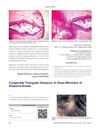
January 2011 in “International Journal of Trichology” CTA is often mistaken for AA but doesn't respond to steroids and may require hair transplantation.
December 2015 in “PLOS ONE” This content contains no study findings or new results, instead referring only to statistical methods and figure captions.
 November 2020 in “Dubai medical journal”
 This case report described a 24-year-old with alopecia totalis who saw full scalp hair regrowth by the 9th month while using oral tofacitinib, which was well-tolerated and did not show serious adverse effects. Longer-term studies are needed to confirm its overall effectiveness for alopecia totalis.
 3 citations
,
March 2020 in “International Journal of Molecular Sciences”
3 citations
,
March 2020 in “International Journal of Molecular Sciences” This study found that overexpressing the gene Thymosin β4 (Tβ4) can promote the growth and development of secondary hair follicle dermal papilla cells in cashmere goats, suggesting its potential as a target for increasing cashmere production.
July 2025 in “Journal of the European Academy of Dermatology and Venereology” This study reports no new findings but provides corrected figures for the long-term safety and efficacy of ritlecitinib in treating alopecia areata from the ALLEGRO-LT phase 3 study.