44 citations
,
December 2005 in “Journal of Investigative Dermatology” This study found significant associations between certain MICA variants and haplotypes with alopecia areata, suggesting MICA as a potential candidate gene linked to the disease's susceptibility and severity.
 October 2023 in “Facial Plastic Surgery”
 This article describes the PHAT technique for lip and facial rejuvenation but reports no new clinical findings; the technique aims to improve skin quality and enhance surgical outcomes.
September 2025 in “JID Innovations” This study suggests that macrophages, particularly CD206+ macrophages, play a crucial role in squaric acid dibutylester-induced hair growth in alopecia areata treatment.
January 1996 in “Studia iuridica” This study identified two novel point mutations in the hHb6 gene associated with monilethrix, suggesting these mutations could serve as diagnostic markers for this genetic hair disorder.
 2 citations
,
January 2022 in “BioMed Research International”
2 citations
,
January 2022 in “BioMed Research International” This study found that using an LED array with an 863 nm wavelength delayed tumor development and reduced systemic inflammatory cytokines in DMBA/TPA-induced mouse skin tumors, suggesting potential but limited benefits of light therapy.
September 2024 in “Journal of Microbiology and Biotechnology” In this study, the researchers found that their conductive bio-harvesting tonic enhanced hair follicle proliferation and delayed regression with electric stimulation and the antifungal agent 6-pentyl-α-pyrone in both mice and human hair follicle tests.
January 2026 in “Journal of Clinical Case Studies” This article discusses the potential of copper tripeptide (GHK-Cu) to support collagen synthesis and antioxidant activity in the context of androgenetic alopecia but reports no clinical results.
 11 citations
,
March 2014 in “Journal of Investigative Dermatology”
11 citations
,
March 2014 in “Journal of Investigative Dermatology” In this study, basal cell carcinoma developed in Ptch-deficient mice only after chemical treatment, not skin wounding, suggesting a second unknown event is necessary for tumor formation.
1 citations
,
July 2021 in “Acta dermatovenerologica Croatica” This case report describes regression of hidradenitis suppurativa lesions in two patients after 16 weeks of adalimumab treatment.
8 citations
,
April 2016 in “Experimental dermatology” This study found that the immune-competent B6. Cg‐Tyr c−2J Hr hr /J congenic mouse line had a more pronounced delayed sunburn response and different proliferative skin reactions to UV exposure compared to SKH 1 mice.
3 citations
,
December 1967 in “Australasian Journal of Dermatology” This review discusses Becker's Melanosis and Hypertrichosis in young males, summarizing cases observed in Melbourne with clinical and histological analyses, but reports no new clinical findings.
6 citations
,
May 2013 in “The Journal of Dermatology” This case study suggests that autoimmunity involving cytotoxic CD8+ T cells may link alopecia areata and human T-cell lymphotropic virus-1-associated myelopathy in adult T-cell leukemia/lymphoma patients.
September 2019 in “Journal of Investigative Dermatology” This study found that in chronic alopecia areata, increased IL-17 expression and CD8+CD49a-Trm cell infiltration in hair follicles were associated with more severe histopathologic gradings, while Foxp3+mTreg infiltration decreased.
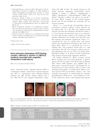
This case report describes a hair transplantation technique for restoring axillary hair after bromhidrosis surgery, addressing challenges in graft survival and immobilization in the shaved recipient area.
 11 citations
,
September 2011 in “British Journal of Dermatology”
11 citations
,
September 2011 in “British Journal of Dermatology” New ABCA12 gene mutations were linked to a skin condition with scaling and hair loss, and a treatment helped with hair loss in a related case.
11 citations
,
February 2022 in “JAAD case reports” This case report observed hair regrowth following the treatment of alopecia universalis and atopic dermatitis with tofacitinib, a JAK inhibitor.
20 citations
,
August 2003 in “Clinical and Experimental Dermatology” In this study, a novel E583V missense mutation in the hairless gene was identified in an Italian family with atrichia with papular lesions, reinforcing the significance of zinc-finger and LXXLL domains in this condition.

This abstract contains subscription and access information for Wolters Kluwer Health journals but reports no research findings.
60 citations
,
October 2020 in “Nature Communications” This study found that small molecule AP-1 inhibitors may selectively target SMO inhibitor-resistant basal cell carcinoma cells characterized by specific markers, potentially enhancing combinatorial cancer therapies.
 3 citations
,
May 2019 in “Cytotherapy”
3 citations
,
May 2019 in “Cytotherapy” In this study, only a subset of proposed biomarkers universally responded to priming in mesenchymal stromal cells, suggesting limited utility for standardized potency assays across different MSC types and conditions.
127 citations
,
August 2016 in “The oncologist” This paper reviews adverse events related to hedgehog pathway inhibitors in advanced basal cell carcinoma patients, reporting no new clinical results but aiming to inform healthcare professionals for improved patient care.
11 citations
,
February 2011 in “The Journal of Dermatology” This study observed four consanguineous families with congenital atrichia with papular lesions and identified three novel mutations in the hairless gene, which may contribute to the disorder.
82 citations
,
January 2011 in “New Phytologist” This study demonstrated that AtVLN4 plays a role in root hair growth by regulating actin organization in a calcium-dependent manner.
 August 1994 in “Molecular Endocrinology”
 This study found that AtT-20 pituitary cells with higher cAMP-dependent kinase activity had larger calcium currents and significantly increased beta-endorphin release compared to cells with lower kinase activity.
 April 2026 in “Zenodo (CERN European Organization for Nuclear Research)”
 In this study, Dodatek A operationalizes the Functional Androgen Axis framework by defining three system-level indices and an efficiency metric to describe androgen function, incorporating key methodological improvements and acknowledging significant limitations for future empirical validation.
2 citations
,
October 1990 in “PubMed” This study suggests that autoimmune dysregulation involving HLA-DR+ T and NK cell subsets may contribute to severe patchy alopecia areata and alopecia universalis, with normalization seen after betamethasone treatment.
 2 citations
,
January 2018 in “Journal of clinical & experimental dermatology research”
2 citations
,
January 2018 in “Journal of clinical & experimental dermatology research” This study suggests that AT-ASCs significantly improve terminal and intermediate hair counts and hair caliber in androgenetic alopecia more than PRP, though with more side effects like headache and erythema.
31 citations
,
May 2017 in “JAAD Case Reports” This article reviews the use of deoxycholic acid as a nonsurgical treatment for unwanted fat in the cosmetic field but reports no new clinical results.
April 2026 in “Proceedings of the National Academy of Sciences” In this study, Tmem30b was identified as a key regulator of outer hair cell structure in mice, and its modulation may offer a therapeutic approach for certain types of hearing loss.
1 citations
,
March 2023 in “SKIN The Journal of Cutaneous Medicine”