 51 citations
,
April 2021 in “JAMA network open”
51 citations
,
April 2021 in “JAMA network open” This study found that artificial intelligence assistance improved diagnostic accuracy in dermatologic cases for primary care physicians and nurse practitioners, with higher agreement rates with reference diagnoses observed.
256 citations
,
March 2019 in “Journal of the American Academy of Dermatology” This review provides graded evidence and a therapeutic algorithm for managing hidradenitis suppurativa, but does not present new clinical results.
12 citations
,
July 2017 in “International Journal of Cosmetic Science” This study found that N‐AOHPA was particularly effective as a silicone emulsifier for improving the condition of damaged hair by preventing amino acid dissolution from bleached hair.
December 2013 in “Pump Industry Analyst” This study found that using particle-based antigen delivery in combination with cyanoacrylate skin surface stripping is an effective needle-free method for targeting HIV-1 p24 protein to skin cells, enhancing transcutaneous vaccination potential.
 3 citations
,
February 2023 in “Journal of drug delivery science and technology”
3 citations
,
February 2023 in “Journal of drug delivery science and technology” In vitro, this study found that PTX and HU SF-FA NLCs showed greater cytotoxicity and apoptosis in ovarian cancer cells than pure paclitaxel, suggesting promise as a targeted drug delivery platform.
 1 citations
,
September 2023 in “Journal of the American Academy of Dermatology”
1 citations
,
September 2023 in “Journal of the American Academy of Dermatology” This abstract introduces baricitinib as an approved treatment for adults with severe alopecia areata in the US, Europe, and Japan, but does not report any specific study results or findings.
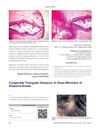 13 citations
,
January 2011 in “International Journal of Trichology”
13 citations
,
January 2011 in “International Journal of Trichology” CTA is often mistaken for AA but doesn't respond to steroids and may require hair transplantation.
 1 citations
,
May 2008 in “Toxicon”
1 citations
,
May 2008 in “Toxicon” This study found that BOTOX doses of 75–100 U effectively reduce postvoiding residual urine and detrusor pressure in patients with detrusor sphincter dyssynergia.
2 citations
,
January 2014 in “Dermatology Online Journal” This article reviews hair-thread tourniquet syndrome, discussing its demographics, causes, and current treatment methods, but presents no new clinical findings.
 June 2026 in “International Journal of Molecular Sciences”
 This review synthesizes current evidence on the Warburg effect in anaplastic thyroid carcinoma and discusses potential therapeutic targets, but reports no new clinical results.
1 citations
,
February 2023 in “Pharmaceutics” This article reviews cell proteomic footprinting technology and its application in improving the authentication and quality control of cell-based immunotherapeutics, without providing new clinical results.
 July 2023 in “Journal of Cosmetic Dermatology”
 This study investigated AGA professionals' perspectives and found that 42% were misled by commercial influences, underestimated these biases' extent, and faced ethical challenges in treatment due to societal pressures and misinformation, highlighting a need for evidence-based guidance and research scrutiny tools.
 29 citations
,
January 2003 in “Dermatology”
29 citations
,
January 2003 in “Dermatology” This study suggests a new subtype of alopecia, termed 'acute diffuse and total alopecia of the female scalp' (ADTAFS), characterized by acute and total hair loss in women with a favorable recovery profile.

This review examines complex regional pain syndrome (CRPS I) mechanisms, including immune dysregulation and psychological factors, but reports no new clinical results; the authors highlight potential diagnostic refinements.
1 citations
,
May 2024 in “Skin Appendage Disorders” In this study, researchers analyzed trichoscopy findings in black patients with FFA to aid in precise diagnosis and treatment, highlighting the importance of understanding disease characteristics to improve hair care in this group.
 June 2006 in “Annales de Dermatologie et de Vénéréologie”
 This review highlights the potential benefits of spironolactone in dermatology, particularly for female acne, supporting its safety over long-term use without extensive testing, but presents no new clinical results.
March 2026 in “Journal of Investigative Dermatology” This study found that GPT-4o demonstrated high concordance with in-person and image-based provider assessments in generating SALT scores for alopecia areata, suggesting its potential as an adjunct tool in clinical practice for automating these assessments.
 December 2024 in “Indian Journal of Dermatology”
 This case report describes a 3-year-old boy with atrichia with papular lesions, emphasizing that dermoscopy, showing the 'cluster of stars' appearance, facilitated diagnosis without needing a skin biopsy.
 8 citations
,
December 1996 in “Dermatologic Surgery”
8 citations
,
December 1996 in “Dermatologic Surgery” This article discusses surgical innovations in scalp reduction to improve cosmetic outcomes but reports no new clinical results, emphasizing the benefits of anchor techniques for minimizing scars and stretch-back.
 April 2017 in “Australasian Journal of Dermatology”
 This article presents a planned trial comparing radiotherapy and imiquimod for lentigo maligna treatment, noting a lack of direct evidence supporting current therapies, and aims to inform future treatment guidelines.
31 citations
,
February 2007 in “Molecular Carcinogenesis” This study found that transgenic mice overexpressing human ATF3 showed hyperplastic and dysplastic changes in epithelial tissues, with a high incidence of oral cancer, suggesting potential oncogenic properties of ATF3.
 3 citations
,
March 2010 in “Dermatologica Sinica”
3 citations
,
March 2010 in “Dermatologica Sinica” This study reports the first case of atrichia with papular lesions in a Taiwanese family without a detectable mutation in the HR gene.

The document recommends a multidisciplinary approach and experience sharing to advance facial feminization surgery as a medical field.
 November 1999 in “Australasian Journal of Dermatology”
 This article discusses various dermatological topics from different journals but does not present any new clinical findings.
 August 2025 in “Journal of IMAB - Annual Proceeding (Scientific Papers)”
 This study describes a successful reconstructive A-T flap surgery on a 74-year-old male with a 35mm basal cell carcinoma on the scalp, resulting in a 50mm defect, with no complications and optimal functional and cosmetic outcomes reported.
 10 citations
,
May 2018 in “Cell death discovery”
10 citations
,
May 2018 in “Cell death discovery” This study found that the interaction between heat shock protein 90 and lamin A/C is crucial for the growth, migration, and self-aggregation of dermal papilla cells, suggesting a potential role in alopecia areata mechanisms.
 September 2024 in “Skin Appendage Disorders”
 This case report describes a 21-year-old woman with circumscribed alopecia areata incognita, who experienced a sustained positive response to treatment with oral tofacitinib after conventional treatments frequently failed to provide lasting effects.
 7 citations
,
February 2006 in “Clinical and Experimental Dermatology”
7 citations
,
February 2006 in “Clinical and Experimental Dermatology” This clinical report details the case of a 22-year-old man experiencing severe pustular eruptions on his chest and back, which improved after increasing minocycline to 100 mg twice daily.
28 citations
,
October 2024 in “Advanced Materials” This study reports that a new artificial skin system using multi-layered hydrogels can promote scarless wound healing and regenerate appendages like hair follicles without cell transplantation.
 July 2026 in “Quality in Sport”
 This narrative review highlights that endurance, skill-oriented athletes, and physique-oriented competitors such as bodybuilders face accelerated degradation of fillers and botulinum neurotoxin due to elevated basal metabolic rates and other factors, and raised concerns about psychological conditions like body dysmorphic disorder in these populations.