4 citations
,
January 2021 in “PubMed” This review discusses the pathogenesis and management of hidradenitis suppurativa, examining conventional treatments and exploring botulinum toxin type A as a potential therapeutic option, but it reports no new clinical results.
22 citations
,
February 2000 in “Journal of the American Academy of Dermatology” Eosinophils are not a reliable marker for diagnosing alopecia areata.
9 citations
,
October 2015 in “Cutaneous and ocular toxicology” This case report observed vemurafenib-induced pityriasis amiantacea, a scalp scaling reaction, in a patient with metastatic melanoma, which was managed symptomatically without altering vemurafenib treatment.
14 citations
,
March 1994 in “Archives of Dermatology” This article presents two cases of alopecia areata occurring simultaneously in a married couple, suggesting a potential psychosocial factor like stress rather than genetic causation.

This case report describes a rare instance of pilomatricoma, a benign tumor of the hair follicle, accompanied by striae distensae on a young man's flank, emphasizing the uniqueness of this presentation for timely diagnosis and care due to its potential for malignant transformation.
 December 2024 in “Eastern Medical College Journal”
 This case study describes a 22-year-old female with acne and irregular menstrual cycles, suggesting a possible link to Polycystic Ovarian Syndrome, but reports no new clinical findings.
 5 citations
,
December 2004 in “Dermatology”
5 citations
,
December 2004 in “Dermatology” This review describes two cases of young women with primary amenorrhea and hyperandrogenemia, suggesting that adrenal tumors should be considered in patients with significantly elevated circulating testosterone levels.

This study investigates whether adding 30% supramolecular salicylic acid to conventional treatment for mild to moderate acne vulgaris is safe and effective, though specific results are not reported in the abstract.
 July 2023 in “Journal of allergy and clinical Immunology. Global”
 This case report describes a 10-month-old boy with VACTERL association and athymia who developed Omenn syndrome, highlighting the complex overlap of these conditions and the challenging clinical course due to profound T-cell immunodeficiency.
 28 citations
,
September 2008 in “Current Pharmaceutical Design”
28 citations
,
September 2008 in “Current Pharmaceutical Design” This review discusses hypersensitivity reactions to anticoagulants like ASA and heparins, highlighting their rare but potentially life-threatening nature, and emphasizes the need for meticulous allergy testing to find safe alternatives.
 1 citations
,
March 2022 in “Cureus”
1 citations
,
March 2022 in “Cureus” This case report discusses a 25-year-old woman diagnosed with acne necrotica varioliformis and highlights the diagnostic challenges and potential associations with systemic diseases.
November 2007 in “Pediatrics in review” This piece discusses the conditions of three children with disparate symptoms—suggesting silent aspiration, exogenous androgen exposure, and long QT syndrome—and emphasizes comprehensive assessment and history for correct diagnosis and management.
 January 2026 in “Pharmaceutical journal/The pharmaceutical journal”
 This article discusses acne vulgaris as a prevalent skin disease affecting the pilosebaceous unit and provides no new clinical findings.
 April 2026 in “Diagnostics”
 In this case report, a 38-year-old woman with Parry–Romberg syndrome displayed left-sided facial atrophy and subclinical central nervous system involvement detectable by neuroimaging, suggesting that even symptom-free cases may benefit from systematic brain evaluations.
 20 citations
,
February 2004 in “Clinical and Experimental Ophthalmology”
20 citations
,
February 2004 in “Clinical and Experimental Ophthalmology” This paper presents two cases of rare intraorbital ophthalmic artery aneurysms associated with arteriovenous malformations and discusses their clinical presentation, pathogenesis, and management, but reports no new clinical outcomes.
 7 citations
,
October 2020 in “Journal of The American Academy of Dermatology”
7 citations
,
October 2020 in “Journal of The American Academy of Dermatology” This systematic review and meta-analysis found that hidradenitis suppurativa is associated with an increased risk of major adverse cardiac events, including cerebrovascular accidents and myocardial infarction, although study heterogeneity affects the magnitude of risk.
 14 citations
,
January 2020 in “Dermatology Online Journal”
14 citations
,
January 2020 in “Dermatology Online Journal” This article reviews the link between certain dietary supplements, such as vitamins B6/B12, iodine, whey, and muscle-building products, and acne, emphasizing the need for dermatologists to discuss supplement use with patients; it reports no new results.
 July 2024 in “The Journal of Dermatology”
 This article reported a case where a patient experienced both alopecia areata multiplex and chronic idiopathic thrombocytopenic purpura, an uncommon association, but it did not include specific results or detailed analyses.
 8 citations
,
July 2014 in “Anais Brasileiros de Dermatologia”
8 citations
,
July 2014 in “Anais Brasileiros de Dermatologia” This article discusses a case of alopecia areata, androgenetic alopecia, and trichostasis spinulosa, highlighting how dermoscopy can help differentiate black dots from trichostasis spinulosa lesions, but it reports no new clinical results.
2 citations
,
August 1999 in “PubMed” April 2019 in “Journal of the Endocrine Society” This case study reports a rare instance of ectopic ACTH secretion from a primary lung neuroendocrine tumor in a young woman, highlighting successful diagnosis and treatment following symptoms of Cushing syndrome, with normalization of ACTH, glucose, and cortisol levels post-surgery.
20 citations
,
August 2003 in “Clinical and Experimental Dermatology” In this study, a novel E583V missense mutation in the hairless gene was identified in an Italian family with atrichia with papular lesions, reinforcing the significance of zinc-finger and LXXLL domains in this condition.
 11 citations
,
May 1998 in “Child's nervous system”
11 citations
,
May 1998 in “Child's nervous system” This case report describes a 5-day-old male infant with a constellation of symptoms, including leptomeningeal angiomatosis, hair follicle nevus, and congenital alopecia, potentially representing a novel neurocutaneous syndrome.
 32 citations
,
January 2006 in “Acta dermato-venereologica”
32 citations
,
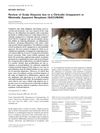
January 2006 in “Acta dermato-venereologica” SACUMAN, a rare condition causing hair loss without clear signs, is often misdiagnosed and needs scalp biopsies for accurate detection.
3 citations
,
September 2024 in “Brain and Behavior” This study found that combining ASA with conditioned medium from adipose tissue-derived MSCs may offer a promising approach for protecting against hippocampal injuries, suggesting potential synergistic therapeutic benefits that merit further investigation.
 October 2023 in “Journal of the Endocrine Society”
 This case report highlights the potential benefits of unilateral adrenalectomy in treating primary bilateral macronodular adrenal hyperplasia, noting a high rate of remission and low risk of recurrence.
26 citations
,
April 2006 in “Cephalalgia” Botulinum A toxin injections reduced pain and promoted hair regrowth in a woman with a rare form of alopecia areata.
 8 citations
,
June 2016 in “Journal of Cosmetic Dermatology”
8 citations
,
June 2016 in “Journal of Cosmetic Dermatology” The study concluded that serum AMH is a useful tool for diagnosing polycystic ovarian morphology in women with persistent acne, potentially replacing transvaginal ultrasound, though it does not correlate with hyperandrogenemia.
October 2025 in “Journal of Cosmetic Dermatology” In this study, researchers found that type A botulinum toxin injections can reduce hypertrophic scars effectively, though more high-quality studies are needed to confirm the precision and stability of these therapeutic effects.
 4 citations
,
July 1994 in “Clinics in Dermatology”
4 citations
,
July 1994 in “Clinics in Dermatology” This review discusses the emergence and impact of eosinophilia-myalgia syndrome related to L-tryptophan and offers insights into environmental factors affecting sclerodermatous conditions, with no new research findings presented.