 1 citations
,
October 2014 in “Annals of oncology”
1 citations
,
October 2014 in “Annals of oncology” This case series found that paclitaxel and nab-paclitaxel may be safe and effective chemotherapy options for hemodialysis patients with unresectable advanced or recurrent gastric cancer.
April 2022 in “Reactions Weekly” 2 citations
,
January 2015 56 citations
,
January 2023 in “Genes & Diseases” This study discusses a hypothesis for repurposing non-cancer drugs and combining micronutrients to target cancer and cancer stem cells with fewer side effects, suggesting a potential new approach for more effective cancer therapy.
12 citations
,
May 2015 in “Journal of the National Comprehensive Cancer Network” This article provides a narrative on managing dermatologic side effects from cancer therapies and suggests strategies that oncologists could adopt, but it reports no new clinical findings.
This abstract provides information on various oral contraceptives, their potential hazardous interactions, and possible side effects, without presenting new research findings.
13 citations
,
September 2022 in “International Journal of Molecular Sciences” This study identifies five compounds, including gemcitabine and methylene blue, that inhibit SADS-CoV and suggests their potential for developing antiviral drugs against future outbreaks.
This case study observed that a patient with multiple refractory inflammatory conditions, including psoriasis, alopecia areata, and psoriatic arthritis, experienced significant improvements after three months of treatment with upadacitinib. The report suggests potential benefits of upadacitinib for similar conditions, recommending further clinical trials.
5 citations
,
July 2007 in “PubMed” This report describes a case of alopecia totalis associated with lopinavir/ritonavir in an HIV-positive patient, which reversed after discontinuation of the drug.
19 citations
,
September 2013 in “Psychoneuroendocrinology” Blocking CYP17A1 enzyme may help improve certain brain function issues related to dopamine.
February 2020 in “Oncology Times” This article reviews antibody drug conjugates for cancer treatment, describing their mechanism, recent approvals, and ongoing research efforts, but reports no new clinical results.
October 2018 in “The American Journal of Gastroenterology” This case report highlights a rare instance of late dumping syndrome following fundoplication in an adult, diagnosed using an oral glucose tolerance test, illustrating its potential for reducing diagnostic delays.
 6 citations
,
February 2016 in “British Journal of Dermatology”
6 citations
,
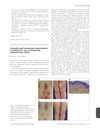
February 2016 in “British Journal of Dermatology” A woman with a drug allergy to anakinra was successfully desensitized, allowing her to continue treatment without allergic reactions.
1 citations
,
October 2019 in “Journal of Thoracic Oncology” This study concludes that combining chemotherapy with immune checkpoint inhibitors is additive rather than synergistic in terms of adverse events for advanced non-small cell lung cancer patients.
This abstract details known indications, categories, and potential reactions for various drugs, including anorexiants, estrogens, NSAID analgesics, cardiac glycosides, and migraine preventives, without reporting new clinical results.
6 citations
,
June 1983 in “Cancer” This study found that a chemotherapy regimen combining CMFVP and ACP treatments for unresectable metastatic breast cancer yielded a 66.7% overall response rate, with premenopausal women responding more favorably than postmenopausal women.
1 citations
,
May 2022 in “The FASEB journal” This article discusses the development of targeted prodrug conjugates aimed at selectively attacking cancer cells while avoiding healthy ones, but reports no experimental results yet.
19 citations
,
August 2023 in “Journal of Dermatological Treatment” This case study reports that abrocitinib therapy led to clinical remission of alopecia universalis in a patient with a history of drug-induced DRESS, suggesting its potential as a treatment option.
 April 2024 in “JEADV clinical practice”
 This study reports a case where a patient with rheumatoid arthritis and alopecia areata saw significant improvement in both conditions after switching to daily upadacitinib treatment, specifically achieving complete hair regrowth within six months.
 November 2024 in “Circulation”
 This study found that GLP1-RAs, while not triggering significant safety signals, were reported more often for suicide, hair loss, and aspiration events compared to some other diabetes medications.
 March 2026 in “Clinical Cosmetic and Investigational Dermatology”
 In this case study, treatment with the selective JAK1 inhibitor upadacitinib significantly improved symptoms in a patient with refractory alopecia areata, vitiligo, ankylosing spondylitis, and allergic asthma-nasal syndrome, though a transient liver function abnormality was noted.
November 2022 in “bioRxiv (Cold Spring Harbor Laboratory)” This study found that prostaglandin E2 pretreatment may reduce radiotherapy-induced alopecia by enhancing hair follicle self-repair through transient G1 arrest, suggesting a potential preventive treatment.
 October 2015 in “Elsevier eBooks”
 Pramipexole can cause side effects like dizziness, sleepiness, hallucinations, and low blood pressure, and it's important to educate patients and keep doses low.
 11 citations
,
June 2023 in “Drug Delivery and Translational Research”
11 citations
,
June 2023 in “Drug Delivery and Translational Research” In this study, researchers developed and tested a gel containing apocynin-loaded nanoparticles that showed promising results in treating rheumatoid arthritis in rats, suggesting potential for novel topical treatments in inflammatory conditions.
This study found that a short-term treatment with all-trans retinoic acid may effectively stabilize platelet counts in idiopathic thrombocytopenic purpura patients experiencing fluctuations during thrombopoietin receptor agonist therapy.
7 citations
,
February 2023 in “Exploration of Medicine” This review discusses various strategies for drug repurposing in tuberculosis treatment, highlighting significant potential but reports no new clinical results.
23 citations
,
December 2013 in “Molecular cancer therapeutics” This study found that AR-positive breast cancer cell lines are more sensitive to the dual PI3K/mTOR inhibitor NVP-BEZ235 compared to AR-negative cells.
November 2001 in “Oncology Times” The committee unanimously voted against recommending approval of the injectable cisplatin/epinephrine gel IntraDose for certain head and neck cancer patients, citing insufficient clinical benefit and concerns about toxicity in this study.
 2 citations
,
April 2023 in “Curēus”
2 citations
,
April 2023 in “Curēus” This study presents a case of a 24-year-old man who developed mild transaminitis and rhabdomyolysis within 24 hours of starting valproic acid for seizures, with symptom resolution following drug cessation.
November 2021 in “Research Square (Research Square)” This study found that 4-aminopyridine significantly improves skin wound healing by enhancing various cellular and molecular processes, suggesting its potential for rapid translational development in wound treatment.