 January 2018 in “Elsevier eBooks”
 The document concludes that alopecia has various forms, each with specific treatments, but no definitive cure for certain types like CCCA has been proven.
 44 citations
,
February 2015 in “Journal of the American Academy of Dermatology”
44 citations
,
February 2015 in “Journal of the American Academy of Dermatology” This study found that combination therapy with diphenylcyclopropenone and anthralin was more effective for complete hair regrowth in chronic extensive alopecia areata than diphenylcyclopropenone alone, despite more common side effects.
135 citations
,
March 2000 in “Journal of Biological Chemistry” This review discusses the roles of the Agouti and Agouti-related proteins in pigmentation and energy regulation and reports no new experimental findings.
 November 2009 in “Journal of Pediatric Nursing”
 This case report describes a 6 1/2-year-old girl with significant height growth and early pubic hair development.
50 citations
,
December 2017 in “Nanoscale” This study found that polymeric micelle formulations significantly improved the targeted delivery of adapalene to hair follicles compared to standard Differin® products, which suggests potential advantages in treating hair follicle-related conditions and reducing side effects.
 November 2025 in “SKIN The Journal of Cutaneous Medicine”
 In this study, UPA at doses of 15 mg and 30 mg showed higher efficacy than placebo for treating severe alopecia areata in adults and adolescents over 24 weeks, with a safety profile similar to approved uses.
5 citations
,
January 2015 in “Case reports in medicine” In this case report, a novel missense mutation c.1360G>C (p.Ala454Pro) in the MBTPS2 gene was identified in a boy with typical IFAP syndrome and severe atopic features, although no phenotype/genotype correlation was established.
January 2024 in “Journal of the American Academy of Dermatology” Gabapentin helps with scalp itch, dutasteride works for frontal fibrosing alopecia, and more research is needed for better PCA treatments.
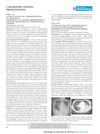 May 2025 in “The Journal of Rheumatology”
 This case report highlights a rare instance of diffuse alveolar hemorrhage in a patient with catastrophic antiphospholipid syndrome, emphasizing the importance of early recognition and multidisciplinary management.
July 2026 in “Editora Pasteur eBooks” This narrative review explores current understanding and management of female pattern hair loss, highlighting the role of genetic and environmental factors, and discussing diagnostic approaches like trichoscopy alongside emerging therapeutic strategies.
April 2024 in “Institutional Repositories DataBase (IRDB)” This study identified 11 previously unreported ABCA12 variants associated with varying severities of autosomal recessive congenital ichthyoses and expanded the phenotype spectrum of ichthyosis linked to these variants.
 March 2005 in “Journal of The American Academy of Dermatology”
 Diphencyprone treatment protocols could be simplified as no harm occurred despite not fully following them.
December 2004 in “Annales d Urologie” This article examines the PCPT study on whether daily finasteride can reduce prostate cancer incidence, describing its methodology and findings but reporting no new clinical results.
February 2025 in “Archives of Dermatological Research” This study observed that fibrosing alopecia in a pattern distribution shows varied histological features and may resemble lichen planopilaris with initial diffuse distribution, potentially leading to scarring alopecia.
 26 citations
,
March 2009 in “Dermato-endocrinology”
26 citations
,
March 2009 in “Dermato-endocrinology” This review discusses the evaluation, clinical presentation, and cutaneous manifestations of congenital adrenal hyperplasia, focusing on differential diagnosis challenges with polycystic ovary syndrome, and reports no new clinical findings.
 6 citations
,
October 2019 in “Case Reports in Dermatology”
6 citations
,
October 2019 in “Case Reports in Dermatology” This report describes a case of fibrosing alopecia in a pattern distribution in a postmenopausal woman, highlighting its distinction from other forms of lichen planopilaris and pattern hair loss.
April 2024 in “International Journal of Women’s Dermatology” This study suggests that lichen planopilaris should be considered as a potential diagnosis in African American women with scarring alopecia, often displaying an "arrowhead" distribution pattern, which may guide treatment strategies.
1 citations
,
May 2024 in “Skin Appendage Disorders” This study describes trichoscopic findings in 11 dark-skinned women with central centrifugal cicatricial alopecia and highlights the potential of trichoscopy for early diagnosis and treatment.
 14 citations
,
September 2009 in “International Journal of Dermatology”
14 citations
,
September 2009 in “International Journal of Dermatology” This study found a potential link between staphylococcal carrier status and dermatitis cruris pustulosa et atrophicans, a chronic folliculitis primarily affecting the legs.
 1 citations
,
February 2013 in “Clinical pediatrics”
1 citations
,
February 2013 in “Clinical pediatrics” The baby’s hair loss was due to a rare genetic condition, not treatable by usual methods.
 8 citations
,
June 2012 in “Australasian Journal of Dermatology”
8 citations
,
June 2012 in “Australasian Journal of Dermatology” In this study, two patients with localized hair thinning showed histopathological signs typical of alopecia areata, responding to corticosteroid treatment similarly to classical cases.
 February 2014 in “Plastic and Reconstructive Surgery”
 This abstract provides no new research findings; it appears to be text related to the American Society of Plastic Surgeons' educational resources.
 32 citations
,
June 2019 in “Frontiers in Endocrinology”
32 citations
,
June 2019 in “Frontiers in Endocrinology” This review discusses the overlapping clinical features and diagnostic challenges of non-classic adrenal hyperplasia and polycystic ovary syndrome without presenting original research findings.
19 citations
,
October 1996 in “International Journal of Dermatology” This study concluded that pseudopelade is an autosomal dominant condition, distinct from other forms of alopecia, characterized by atrophic hair follicle loss and notable familial association.
20 citations
,
April 2000 in “Experimental dermatology” This study observed that overexpression of the enzyme ODC in transgenic mice caused hair loss and skin changes similar to human papular atrichia, suggesting that ODC might be involved in a critical hair follicle function pathway.
7 citations
,
January 2015 in “PubMed” This study found that patients with alopecia areata had higher plasma osteopontin levels compared to healthy controls, but complete recovery after DPCP treatment did not significantly reduce these levels.
2 citations
,
January 2024 in “Journal of the American Academy of Dermatology” Treating primary cicatricial alopecia is difficult and requires evidence-based methods.
February 2026 in “Chemical Engineering Journal” This study found that a novel nano-engineered platform, PCA, significantly promoted hair regeneration in an androgenetic alopecia mouse model by enhancing angiogenesis and hair follicle stem cell proliferation, showing promise for future hair regrowth treatments.
 January 1983 in “Elsevier eBooks”
 This article reviews the discovery and various physiological effects of cyproterone acetate, reporting its established indications for several androgen-driven conditions but providing no new clinical data.
 1 citations
,
July 1997 in “The Lancet”
1 citations
,
July 1997 in “The Lancet” This study suggests that a newly discovered protein, AMY117, found in Alzheimer's disease brain lesions may be crucial in the disease's development and progression.