March 2026 in “Jurnal Biomedika dan Kesehatan” In this pilot study of Indonesians, the rs1998076 genetic variant was not significantly linked to androgenetic alopecia, though the GG genotype showed a non-significant trend toward higher odds, while clinical factors like age and hypertension were correlated with increased risk.
 3 citations
,
January 2018 in “Postępy Dermatologii i Alergologii”
3 citations
,
January 2018 in “Postępy Dermatologii i Alergologii” This study suggests that SRD5A2 polymorphisms may increase the risk of acne in individuals with normal serum testosterone levels, particularly in the Chinese population.
This study found that inhibiting AP-1 transcription factors in mice causes squamous tumors to transform into sebaceous tumors and regulates tumor cell lineage.
130 citations
,
January 2000 in “Nature biotechnology”  August 2020 in “Pakistan Journal of Zoology”
 This study identified a novel genetic mutation, c.429delC in the hairless gene, associated with atrichia with papular lesions in two Pakistani families.
37 citations
,
August 1999 in “Journal of Investigative Dermatology” This study identified a nonsense mutation in the zinc-finger domain of the hairless gene associated with congenital atrichia in a Japanese family, indicating a potential genetic cause for this rare form of alopecia.
This study found that mutations in the PADI3 gene, which is important for hair shaft formation, may contribute to central centrifugal cicatricial alopecia among patients.
This article discusses the role of epimorphin as a key morphoregulator for various epithelial cells in tubulogenesis and reports no experimental results on its signaling pathways.
20 citations
,
December 1999 in “Journal of Investigative Dermatology” Mutations in the hHb6 gene cause the hair disorder monilethrix.
 July 2022 in “Postepy biochemii”
 This review discusses the current state of research on genetic markers for predicting human phenotypic traits from DNA samples for forensic purposes and reports no new experimental findings.
 51 citations
,
January 2012 in “Annals of Dermatology”
51 citations
,
January 2012 in “Annals of Dermatology” This review discusses characteristics of androgenetic alopecia in Asian patients and includes algorithmic management guidelines, but reports no new clinical findings.
 October 2025 in “Scientific Reports”
 In this study of 131 healthy men aged 30 to 45, no relationship was found between androgen receptor gene polymorphisms related to androgen sensitivity and biological age markers, suggesting that other factors may influence the aging process independently of these genetic variations.
 November 2025 in “PubMed”
 This study identified nine pathogenic variants in the PADI3 gene, and variants in the S100A3 and TCHH genes, which may disrupt protein function and contribute to central centrifugal cicatricial alopecia.
29 citations
,
June 2016 in “Experimental Dermatology” This study provides suggestive evidence that duplications in the MCHR2 gene may be involved in the pathogenesis of alopecia areata.
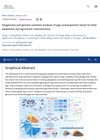
This research developed a pig graph pangenome assembly of 27 genomes, revealing the importance of structural variations in adaptation and breed-specific traits, with BTF3 identified as a key gene influencing intramuscular fat and meat quality.
 9 citations
,
March 2009 in “Psychoneuroendocrinology”
9 citations
,
March 2009 in “Psychoneuroendocrinology” This study found that variations in the androgen receptor gene influenced memory function in women, with GGN repeat polymorphisms significantly affecting logical memory performance only in females.
26 citations
,
May 2020 in “JCI Insight” In this study, single-cell sequencing revealed clonal expansions of CD4+ and CD8+ T cells in murine and human alopecia areata, supporting the development of predictive models for human disease.
8 citations
,
April 2018 in “Journal of the European Academy of Dermatology and Venereology” This letter discusses azathioprine-induced alopecia and leukopenia potentially linked to NUDT15 polymorphisms, reporting no new clinical results.
143 citations
,
January 2007 in “The American Journal of Human Genetics” This study identified four genetic loci on chromosomes 6, 10, 16, and 18 that may contribute to susceptibility for alopecia areata and suggested shared genetic factors with psoriasis.
September 2024 in “Clinical Case Reports” This case report highlights a rare presentation of APS-1 in a 28-year-old Pakistani male with cardiovascular and pulmonary symptoms, illustrating the importance of early recognition and multidisciplinary management for improved patient outcomes.
 January 2009 in “Egyptian Journal of Medical Human Genetics”
 This study, conducted among Egyptians, found a borderline significant association between the Stul polymorphism of the androgen receptor gene and androgenetic alopecia in males, with higher androgen receptor expression in balding scalp areas.
5 citations
,
May 2014 in “Clinical and Experimental Dermatology” This study found that novel compound heterozygous mutations in the desmoplakin gene lead to hair shaft abnormalities and can result in lethal cardiomyopathy.
January 2009 in “Journal of Clinical Dermatology” This study suggests that variations in CAG repeat numbers in the androgen receptor gene may not significantly influence the risk of androgenetic alopecia in Korean males.
 6 citations
,
November 2022 in “Forensic Science Medicine and Pathology”
6 citations
,
November 2022 in “Forensic Science Medicine and Pathology” This study demonstrated that genetic markers can predict human ear morphology with moderate to good accuracy, potentially aiding forensic identification in crime scene investigations where traditional DNA matches are unavailable.
February 2024 in “Zagazig University Medical Journal” This study found that TCF7L2 gene polymorphism is linked to alopecia areata, but no significant difference in treatment outcomes was observed between PRP and conventional therapy among different genotypes.
2 citations
,
July 2024 in “Frontiers in Veterinary Science” In this study, researchers using a multi-omics approach identified specific proteins involved in the hair follicle cycle of Inner Mongolia Cashmere Goats, finding that API5 affects apoptosis, while ribosomal proteins are highly expressed during the resting stage, providing insights into hair follicle growth and apoptosis.
January 2008 in “Padua Research Archive (University of Padua)” This study observed that hereditary factors were associated with acne duration but not severity, and found a potential role of CYP450 1A1 polymorphisms in acne pathogenesis.
 January 2024 in “Journal of camel practice and research/Journal of Camel Practice and Research”
 This study analyzed the KRTAP7 gene in four Indian camel breeds and found that the gene sequences were identical across breeds, with no observed SNPs in coding or non-coding regions.
 May 2026 in “BMC Medicine”
 This study found that ACOD1 deficiency in dermal papilla cells promotes mitochondrial dysfunction and contributes to cellular senescence in androgenetic alopecia, suggesting ACOD1 as a potential therapeutic target and 4-octyl itaconate as a promising treatment option for AGA.
July 2026 in “Journal of Investigative Dermatology” Alopecia totalis/universalis involves more intense immune activity and inflammation than patchy alopecia areata.