 101 citations
,
October 2016 in “Nanomedicine: Nanotechnology, Biology and Medicine”
101 citations
,
October 2016 in “Nanomedicine: Nanotechnology, Biology and Medicine” This review reports on the dual aspect of fullerene in skincare, highlighting its beneficial antioxidant properties as well as potential toxicity and skin cell reactions, while identifying areas for future research.
 76 citations
,
January 2007 in “American Journal of Clinical Dermatology”
76 citations
,
January 2007 in “American Journal of Clinical Dermatology” This review discusses the dermatologic features of PCOS as potential early indicators of the syndrome and notes that treatment of these conditions may enhance quality of life and psychological well-being, but it reports no new clinical results.
 67 citations
,
April 2007 in “Journal der Deutschen Dermatologischen Gesellschaft”
67 citations
,
April 2007 in “Journal der Deutschen Dermatologischen Gesellschaft” This article reviews the development and formulation of shampoos, emphasizing their dual role as cosmetic and medicinal products, but presents no new experimental findings.
 60 citations
,
March 2014 in “Veterinary dermatology”
60 citations
,
March 2014 in “Veterinary dermatology” This study reported that the prevalence of atopic dermatitis in cats was higher than previously suggested, with severe nonseasonal pruritus most common, and certain breeds were predisposed.
 47 citations
,
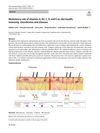
September 2023 in “Pharmacological Reports”
47 citations
,
September 2023 in “Pharmacological Reports” In this review, researchers explored the roles of vitamins A, B3, C, D, and E in skin immunity, highlighting their potential as therapeutics for skin diseases due to their antioxidant, anti-inflammatory, and antimicrobial properties.
47 citations
,
June 2015 in “Contact Dermatitis” This review discusses the need for an updated 'European hair cosmetic series' to include common contact allergens and remove outdated substances based on current evidence and regulations, but it reports no new results.
 37 citations
,
May 2016 in “Deutsches Arzteblatt International”
37 citations
,
May 2016 in “Deutsches Arzteblatt International” This review outlines various causes and manifestations of hair loss, highlighting that each type has distinct underlying mechanisms and requires specific treatment approaches, without reporting new clinical results.
 11 citations
,
October 2021 in “Journal of Herbmed Pharmacology”
11 citations
,
October 2021 in “Journal of Herbmed Pharmacology” This review examines the therapeutic benefits, chemical composition, and medicinal uses of Delphinium species, along with their toxic effects; it reports no new clinical results.
 10 citations
,
January 2016 in “Elsevier eBooks”
10 citations
,
January 2016 in “Elsevier eBooks” This chapter reviews the role of nanoparticles in wound healing, exploring current therapies, developments, and future directions, but reports no new clinical results.
 8 citations
,
April 2019 in “International journal of scientific research in biological science”
8 citations
,
April 2019 in “International journal of scientific research in biological science” This review discusses the natural habitat, taxonomy, phytochemical components, pharmacological activities, and potential medical applications of Tridax procumbens but reports no new experimental findings.
 8 citations
,
September 2016 in “Asian journal of beauty & cosmetology”
8 citations
,
September 2016 in “Asian journal of beauty & cosmetology” In this study, the methanol-ultrasound extract of Dendropanax morbifera leaf showed potential for use in functional cosmetics and hair growth products due to its high antioxidant capacity and effects on growth factor expression without cytotoxicity.
6 citations
,
January 2024 in “Frontiers in Bioengineering and Biotechnology” This study developed a smart PVA-TPE/HA-AMP/SF/ALG wound dressing that shows promise in infected wound healing by providing bacterial resistance, promoting cell proliferation, and modulating inflammation through various signaling pathways, potentially reducing scar formation.
 6 citations
,
November 2014 in “The journal of investigative dermatology/Journal of investigative dermatology”
6 citations
,
November 2014 in “The journal of investigative dermatology/Journal of investigative dermatology” This review highlights Stephen Rothman's influential role in transforming dermatology into a rigorous scientific discipline but does not report new clinical research outcomes.
 3 citations
,
January 2023 in “Agriculture and Natural Resources”
3 citations
,
January 2023 in “Agriculture and Natural Resources” This study found that flower extracts of Wedelia trilobata may serve as a promising active ingredient for cosmeceutical products due to their antioxidant, anti-inflammatory, and antimicrobial properties.
 2 citations
,
February 2023 in “Research Square (Research Square)”
2 citations
,
February 2023 in “Research Square (Research Square)” In this study, a newly engineered scaffold, PADM-MX-Ag-Si@Dox, demonstrated potential as a multifunctional biomaterial for postoperative melanoma treatment by controlling drug release, enhancing wound healing, and enabling real-time tumor surveillance through temperature, pH, and electrical stimuli.
 1 citations
,
November 2023 in “Naunyn-Schmiedeberg's archives of pharmacology”
1 citations
,
November 2023 in “Naunyn-Schmiedeberg's archives of pharmacology” This review focused on the bioactive compounds and pharmacological properties of Lawsonia inermis (henna) and found that it contains various beneficial compounds with potential therapeutic applications, such as antioxidant and anti-inflammatory effects, indicating a need for further investigation into its medical benefits.
 1 citations
,
September 2015 in “Clinics in Dermatology”
1 citations
,
September 2015 in “Clinics in Dermatology” This article offers a question-by-question guide to assist clinicians in diagnosing hair shaft disorders, presenting no new clinical results.
 July 2026 in “International Journal of Applied Pharmaceutics”
 This review discusses the dermatological and systemic adverse effects of hair dye use, particularly focusing on the common allergen para-phenylenediamine, and reports no new clinical data.
 July 2026 in “Discover Food”
 This review critically examines scientific evidence on the health benefits of rosemary bioactives, finding potential in managing age-related diseases and skin aging conditions, and discusses their application in functional foods and aromatherapy, along with associated safety concerns.
 June 2026 in “International Journal of Drug Delivery Technology”
 In this study, researchers developed a polyherbal hair growth oil using botanical substances and base oils like coconut and castor oil, finding it to be stable, non-irritating, and suggesting potential hair-growing properties through mechanisms such as scalp blood flow improvement and anti-inflammatory effects.
 June 2026 in “Frontiers in Materials”
 This review examines advancements in "smart" hydrogel dressings for complex wound healing, highlighting innovations in materials that provide multifunctionality, such as responsive drug delivery and regenerative capabilities. The study also addresses potential challenges in clinical application, like manufacturing and regulatory hurdles.
 January 2026 in “International journal of research and scientific innovation”
 In this laboratory study, researchers developed a multifunctional organic hair cream with various natural extracts, finding that the cream with 15% extracts demonstrated higher physical stability, hair strength, and antimicrobial activity compared to lower concentration samples and synthetic alternatives.
 January 2026 in “Journal of Pharmacognosy and Phytochemistry”
 This review suggests that standardized herbal shampoos may offer a safe and sustainable alternative to synthetic products due to their natural saponins and multifunctional benefits, though challenges in consistency and shelf-life persist.
 December 2025 in “Babcock University Medical Journal”
 This study found that in patients with Alopecia Areata, CD27 and IL-35 levels were significantly higher in those with bacterial infections, suggesting they may be useful as immunological biomarkers.
 November 2025 in “Journal of Neonatal Surgery”
 This study developed an herbal hair oil containing plant extracts such as Aloe barbadensis and Nigella sativa, reporting it showed good antioxidant and antimicrobial activity, suggesting potential benefits for hair growth and hair fall prevention.
 October 2025 in “International Journal of Novel Research and Development”
 In this review, the authors discussed herbal hair cosmetics, highlighting natural ingredients like hibiscus and aloe vera that may nourish hair and improve scalp health without synthetic chemicals' side effects.
 April 2025 in “International Journal for Research in Applied Science and Engineering Technology”
 This study developed a herbal face pack using natural ingredients like neem, turmeric, and sandalwood, and concluded that it can be a safe and effective alternative to chemical-based skincare products after evaluating its stability, spreadability, and non-irritant properties.
 April 2025 in “International Journal of Advanced Research in Science Communication and Technology”
 This study developed a herbal shampoo using Reetha, Amla, Neem, Bringraj, Jatamanasi, and Aloe vera, reporting that the shampoo met pharmacognostical standards and showed increased hair growth activity, excellent washing and conditioning effects at 1% concentration, and stability with no skin irritation.
This study reviews the pharmacological potential of Bacopa monniera, highlighting its extensive therapeutic effects such as antioxidant, anti-inflammatory, and memory enhancement properties, which are primarily attributed to its diverse bioactive compounds.
 January 2025 in “International Journal of Herbal Medicine”
 This review highlights that while dandruff affects over 50% of humans and cannot be fully eradicated, it can be controlled through chemical treatments that may cause side effects or herbal remedies such as Neem and Tea tree oil, which have longstanding use in hair care.