28 citations
,
February 2021 in “Stem Cell Research & Therapy” This study found that conditioned medium from placental cells and sub-cultured placental tissue promoted angiogenesis in human umbilical vein endothelial cells in vitro, with early pregnancy cells having a more significant effect.
1 citations
,
March 2023 in “Journal of the American College of Cardiology” 2 citations
,
July 2023 in “AACE Clinical Case Reports” In this case study, researchers identified a Leydig cell tumor in a 56-year-old postmenopausal woman with virilization symptoms by using ovarian vein sampling, as imaging was nonrevealing, and confirmed the tumor's location using testosterone ratios, which supported previous findings.

Flubendazole in a nanoemulsion can potentially treat lung cancer and cryptococcal meningitis effectively and safely.
 January 2026 in “The Operating Room Global Journal”
 This review found that image-guided techniques in regenerative aesthetic procedures may enhance accuracy and patient outcomes compared to traditional methods, but more high-quality randomized trials are needed to establish standardized protocols.
 April 2026 in “Journal of Aesthetic Medicine”
 This study found that the MIRA technique, using ultrasound-guided needle adjustments, improved cellulite treatment outcomes compared to standard methods in women with stage 3 cellulite, evidenced by greater reductions in adipose thickness and other skin irregularities, along with higher patient satisfaction.
March 2022 in “Oncology Times” In this study, tebentafusp-tebn improved overall survival in patients with metastatic uveal melanoma compared to standard therapies, despite higher rates of significant adverse events.
 8 citations
,
February 2020 in “Fertility and Sterility”
8 citations
,
February 2020 in “Fertility and Sterility” This study discusses treatment approaches for refractory Asherman syndrome, highlighting the potential role of CD133+ bone marrow-derived stem cells in conjunction with hysteroscopy for endometrial regeneration and improved pregnancy outcomes.
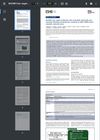 June 2024 in “ESMO Gastrointestinal Oncology”
 The BAYONET trial is a phase II study designed to assess the efficacy and safety of combining encorafenib, binimetinib, and cetuximab for patients with BRAF V600E-mutant metastatic colorectal cancer that is resistant to encorafenib plus cetuximab; results are not yet reported.
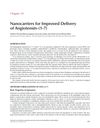 January 2015 in “Elsevier eBooks”
 This chapter reviews the use of liposomes and cyclodextrins to improve the delivery and effectiveness of the peptide angiotensin-(1-7) in various therapeutic applications and reports no new experimental results.
1 citations
,
May 2024 in “Pediatric Blood & Cancer” In this case study, a transition to the MEK inhibitor trametinib successfully stabilized disease and reduced toxicity in a patient with refractory kaposiform lymphangiomatosis after prolonged sirolimus and steroid treatment.
5 citations
,
January 2024 in “Aesthetic Surgery Journal Open Forum” This review notes that while ATX-101 showed a favorable safety profile for reducing submental fat in clinical trials, serious adverse events related to procedures have been reported in real-world use, prompting recommendations for improved management and prevention strategies.
 5 citations
,
January 2024 in “Journal of Cancer”
5 citations
,
January 2024 in “Journal of Cancer” In this phase II clinical study, combining anlotinib with standard platinum-based chemotherapy showed promising outcomes and prognosis in treating extensive small-cell lung cancer, with high disease control and response rates.
 August 2009 in “Australian Prescriber”
 This article discusses dutasteride, a new drug for managing benign prostatic hyperplasia, and highlights the need for further experience to confirm its safety and efficacy.
 January 2024 in “Wiadomości Lekarskie”
 This review discusses the potential of augmented reality to advance vascular and endovascular surgery by improving 3D anatomical understanding and reducing patient risk, but notes that further research is needed to overcome current technological limitations.
 January 2024 in “Wiadomości Lekarskie”
 This study reports that while primary treatment for uveal melanoma has a very high success rate, treating distant metastases, particularly in the liver, remains challenging. Tebentafusp, dependent on HLA-A expression, is the first drug to extend patient survival.
 December 2007 in “Röntgenpraxis”
 This review discusses various treatments for androgenic alopecia, highlighting FDA-approved options and other commonly used therapies, but reports no new clinical results.
 June 2026 in “Current Oncology Reports”
 This review highlights the potential of Sacituzumab Tirumotecan, an antibody-drug conjugate, in treating gynecologic cancers, with ongoing Phase III trials indicating a manageable safety profile and future results expected to shed light on its effectiveness in improving survival and response rates.
1 citations
,
January 2023 in “Annals of Indian Academy of Neurology” This case report describes a middle-aged woman whose scalp condition, cutis verticis gyrata, was an early sign of systemic amyloidosis that went undiagnosed until after she experienced a stroke.
 November 2022 in “Journal of the Endocrine Society”
 This case study reports a rare instance of an estradiol-secreting adrenocortical carcinoma in a 58-year-old male, causing feminization and Marie-Antoinette syndrome, with potential paraneoplastic aortitis.
June 2025 in “British Journal of Dermatology” This case report details a probable severe adverse event associated with ritlecitinib for alopecia areata, highlighting risks of pulmonary emboli, infection, atrial fibrillation, and acute kidney injury despite an absence of known risk factors.
April 2019 in “Journal of the Endocrine Society” This case report highlighted rapid virilization in a woman with adrenocortical carcinoma, stressing the importance of androgen evaluation to suspect underlying ovarian or adrenal tumors.
March 2026 in “Pharmaceutical Biology” This review discusses the potential of asiaticoside from Centella asiatica for enhancing wound healing after endoscopic submucosal dissection and highlights delivery strategies to improve its gastrointestinal application; it reports no new clinical results.
This study found that conditioned medium from human placental cells or tissue promoted angiogenesis in HUVECs in vitro, with early-pregnancy placental cells and whole placental tissue showing more significant effects.
 17 citations
,
April 2017 in “International Journal of Biological Macromolecules”
17 citations
,
April 2017 in “International Journal of Biological Macromolecules” This study found that alginate beads containing monoolein demonstrated promising potential for managing wet wounds by better absorbing excess exudate and delivering adenosine locally, favoring drug localization in damaged porcine skin compared to an aqueous solution without affecting skin viability.
 March 2026 in “International Journal of Ayurvedic Medicine (Hyderabad)”
 In this case report, a novel Ayurvedic preparation of Catharanthus roseus, used alongside conventional chemotherapy, was associated with tumor stability and improved general health in a patient with advanced esophageal squamous cell carcinoma.
December 2025 in “Journal of Inflammation Research” This study found that BAMO acupuncture combined with Simiao pill can help restore normal prostate tissue structure in mice by reducing DHT production, promoting apoptosis, and decreasing inflammatory responses.
 2 citations
,
January 2020 in “Libri Oncologici Croatian Journal of Oncology”
2 citations
,
January 2020 in “Libri Oncologici Croatian Journal of Oncology” In this study, PRP injections into the muscular layer of rabbits' intestinal walls improved anastomosis regeneration with less adhesion compared to PRP soaking, though further research is needed to determine the best application method.
 June 1995 in “International Journal of Gynecology & Obstetrics”
 This article lacks an abstract and reports no new findings.
16 citations
,
November 2018 in “The journal of pain/Journal of pain” This study found that in a rat model, 14,15-EET may alleviate central poststroke pain by enhancing thalamic inhibition through neurosteroid signaling, potentially outperforming gabapentin in early-stage treatment.