24 citations
,
January 2007 in “The FASEB Journal” This study developed a rat model for catamenial epilepsy, suggesting that neurosteroid withdrawal may increase seizure frequency and help test new treatments.
21 citations
,
December 2019 in “PloS one” In this study, the authors concluded that the VCD-induced follicular depletion rat model can effectively simulate the perimenopause transition, with hormonal changes distinguishing early/mid-transition from late transition to estropause.
 October 2011 in “InTech eBooks”
 This article reviews idiopathic hypogonadotropic hypogonadism (IHH), discussing its genetic and pathophysiological features, and it does not present new clinical results.
3 citations
,
February 1992 in “Journal of veterinary medicine. Series A” This study found that an adult female farm-raised blue fox exhibited an abnormal hair growth cycle and seasonal estradiol variation, with a delayed winter coat cycle resulting in spring shedding.
May 2025 in “VETERINARY SCIENCE TECHNOLOGIES OF ANIMAL HUSBANDRY AND NATURE MANAGEMENT” In this study, researchers determined that poor feed quality and nutritional deficiency, especially low vitamin A levels, were leading causes of impaired reproductive function in nutria, with deficiencies most pronounced during February-March and linked to clinical signs like growth retardation and alopecia.
 2 citations
,
May 2006 in “Women's Health Medicine”
2 citations
,
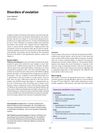
May 2006 in “Women's Health Medicine” This article provides an overview of ovulation disorders, discussing ovarian, hypothalamic, and endocrine defects but reports no new clinical findings.
14 citations
,
September 2017 in “Hormones and behavior” This study found that the estrous cycle influences the effect of the δ-GABAAR agonist THIP in reducing binge drinking behavior in female mice, with receptor expression elevated during diestrus.
13 citations
,
August 2016 in “Reproduction” In this study, nandrolone decanoate treatment in rats caused persistent diestrus and altered steroid receptor expression and sex hormones, especially at higher doses, with partial reversibility at lower doses over time.

This study found that while prepubescent female goats showed strong olfactory responses to active buck hair, this sensory stimulation alone did not advance the onset of puberty.
31 citations
,
November 1965 in “Journal of Mammalogy” This study found that in mink, the pituitary gland is essential for normal seasonal pelage cycles, and manipulating hormone levels can affect hair growth and type.
 April 2024 in “International Journal of Advanced Multidisciplinary Research and Studies”
 This study outlines a multidisciplinary approach to investigate primary amenorrhea, emphasizing the necessity to consider medical history, physical examination, and potential hormonal or anatomical causes, and recommends early referral in cases of chromosomal abnormalities or persistent amenorrhea following the development of secondary sexual characteristics.
14 citations
,
February 2013 in “Veterinary dermatology” This study reports that alopecia areata is a rare and typically cosmetic condition in horses, affecting breeds such as Appaloosas and quarter horses, with a possible seasonal pattern of worsening in spring and summer.
January 2013 in “Reproductive Biology” This study found that Anovlar effectively reduced pain in severe dysmenorrhea cases and regulated cycles in oligomenorrhea patients, but some side effects and occasional treatment failures were reported.
 4 citations
,
August 2017 in “The Nurse Practitioner”
4 citations
,
August 2017 in “The Nurse Practitioner” This article discusses the systematic diagnostic evaluation of secondary amenorrhea and provides guidance for referral considerations; it reports no new research findings.
 16 citations
,
April 1978 in “Genetics Research”
16 citations
,
April 1978 in “Genetics Research” This study found that asebic mice exhibit abnormal sebaceous gland differentiation and insufficient sebum production due to defective regulation of cell processes, despite possessing normally developing sebaceous glands initially.
1 citations
,
December 1971 in “PubMed” April 2016 in “The FASEB Journal” This study found that blocking androgen receptors in male rats during the perinatal period led to permanently increased estrogen and ER-a expression in the hypothalamus, affecting sexual preference in adulthood.
8 citations
,
August 2015 in “Endocrine”  16 citations
,
July 1992 in “The journal of experimental zoology/Journal of experimental zoology”
16 citations
,
July 1992 in “The journal of experimental zoology/Journal of experimental zoology” This study found that adrenal hormones appear to inhibit winter fur growth onset in mink and may affect the duration of inactivity between fur growth periods.
This study found that premenopausal exercising women with oligomenorrhea had lower triiodothyronine levels and truncal fat percentage compared to other groups, suggesting distinct energetic and reproductive profiles.
April 2015 in “The FASEB Journal” In this study, perinatal androgen deprivation in male rats led to elevated estrogen levels and a lack of sexual motivation towards gonadally-intact female rats.
 52 citations
,
June 2013 in “The Journal of Clinical Endocrinology and Metabolism”
52 citations
,
June 2013 in “The Journal of Clinical Endocrinology and Metabolism” This study defined menstrual phase-specific reference intervals for circulating androgen levels in young women, highlighting that anovulatory females showed higher androgen, LH, and FSH levels compared to ovulatory females.
 1 citations
,
January 2010 in “Clinica Veterinaria De Pequenos Animales”
1 citations
,
January 2010 in “Clinica Veterinaria De Pequenos Animales” In this case report, treatment with antibiotics, finasteride, and prostate omentalization restored fertility in a 6-year-old German Shepherd with prostatitis and astenoteratozoospermia, avoiding surgical castration.
68 citations
,
April 1965 in “General and Comparative Endocrinology” This study found that the pituitary gland is crucial for normal pelage color cycles in weasels, with certain hormones influencing regrowth of pigmented or white hair after molting.
49 citations
,
March 2012 in “Journal of Pharmacology and Experimental Therapeutics” This study developed a novel mouse model of catamenial epilepsy by manipulating neurosteroid levels and demonstrated that withdrawal increases seizure susceptibility, potentially linked to changes in GABAA receptor-subunit plasticity.
90 citations
,
January 2002 in “Dermatology” This study describes the kenogen phase, where hair follicles rest after shedding, and finds its duration and frequency are greater in individuals with androgenetic alopecia, potentially contributing to baldness.
 22 citations
,
June 1993 in “Calcified Tissue International”
22 citations
,
June 1993 in “Calcified Tissue International” This study found that women with hyperandrogenic amenorrhea do not show reduced bone mineral density compared to controls, indicating they may be protected from osteopenia.
1 citations
,
February 2015 in “Revista Acadêmica Ciência Animal” This case report describes the presence of a teratoma within an equine antral follicle and suggests that the ovary maintained functionality despite the teratoma, as indicated by active antral follicles and recent ovulation.
 January 2024 in “Women's health science journal”
 This source provides a comprehensive overview of amenorrhea, detailing its classification, potential causes such as hormonal imbalances and structural abnormalities, and the various management strategies including hormone therapy and lifestyle modifications tailored to its underlying causes.