Search
for
Sort by
Research
240-270 / 1000+ results
research Anabolic-androgenic steroids. Mechanism of action and clinical effects
This study provides a comprehensive analysis of anabolic-androgenic steroids, reporting that their use enhances muscle mass but is associated with significant health issues including cardiac muscle hypertrophy, liver disease, and changes in gender characteristics, emphasizing the need for patient awareness of these risks.
research The PDE4 inhibitor, apremilast, suppresses experimentally induced alopecia areata in human skin in vivo
Apremilast may help treat hair loss in alopecia areata.
research DRUG POLYMORPHISM IDENTIFICATION USING FOURIER TRANSFORM-RAMAN SPECTROSCOPY: A COMPARATIVE STUDY OF LAMIVUDINE AND FINASTERIDE DRUGS
This study examined the effectiveness of FT-Raman spectroscopy for detecting polymorphism in Lamivudine and Finasteride, highlighting its advantages over other methods due to its capability to provide sharp, well-resolved spectral bands and reduced sampling issues.

research Direct hair growth promoting effects of mycophenolic acid
Mycophenolic acid may help hair grow by activating pathways important for hair growth.

research Efficacy, Safety, and Tolerability of Upadacitinib in Adults and Adolescents With Severe Alopecia Areata: Results From the Randomized, Placebo-Controlled, Double-Blind Phase 3 Program (UP-AA)
In this study, UPA at doses of 15 mg and 30 mg showed higher efficacy than placebo for treating severe alopecia areata in adults and adolescents over 24 weeks, with a safety profile similar to approved uses.
research Metformin/dopamine derived bioactive carbon dots accelerate bacteria‐infected wound healing
In this study, carbon dots derived from metformin and dopamine (MD‐CDs) effectively promoted healing in bacterial-infected wounds by inhibiting infection, expediting inflammation-to-healing transition, enhancing cell proliferation and migration, and fostering collagen deposition and hair follicle regeneration.
research Association between angiotensin‐converting enzyme gene insertion deletion polymorphism and androgenetic alopecia susceptibility among Egyptian patients: A preliminary case‐controlled study
This study found that the ACE gene I/D polymorphism may serve as a genetic susceptibility indicator for androgenetic alopecia in an Egyptian patient group.
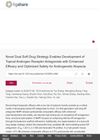
research Novel DualSoftDrug Strategy Enables Developmentof Topical Androgen Receptor Antagonists with Enhanced Efficacy andOptimized Safety for Androgenetic Alopecia
This study reports that the newly optimized AR antagonist 39 demonstrated effective hair growth and safety in a mouse model of androgenetic alopecia, showing comparable efficacy to pyrilutamide with faster response and favorable pharmacokinetics, due to innovative structural design and dual metabolic inactivation strategy.
research Acute Localised Exanthematous Pustulosis
This report describes a case of acute localised exanthematous pustulosis in a 19-year-old boy after using amoxicillin-clavulanic acid, with new dermoscopic features identified.
research De novo mutation in the mitochondrial tRNALeu(UUR) gene (A3243G) with rapid segregation resulting in MELAS in the offspring
This report documents a 14-year-old Chinese boy with mitochondrial encephalopathy, lactic acidosis, stroke-like episodes, and a de novo A3243G mitochondrial DNA mutation, highlighting the condition's multisystem involvement without ragged red fibers in muscle biopsy.
research Reduced plakoglobin increases the risk of sodium current defects and atrial conduction abnormalities in response to androgenic anabolic steroid abuse
This study suggests that male sex and androgenic steroid use increase the risk of atrial arrhythmias in individuals with arrhythmogenic right ventricular cardiomyopathy, especially those with desmosomal gene mutations.

research Male Pattern Baldness
This review discusses available treatments for androgenetic alopecia in men, like finasteride and 5% minoxidil, and notes that hair growth results are unpredictable and often driven by industry-sponsored studies.
research Efficacy and Tolerability of a Topical Gel Containing Mimicking Growth Factors Oligopeptides, Caffeine, Taurine and an Iron-Chelating Complex in Subjects with Androgenetic Alopecia Treated with Topical Minoxidil or Oral Finasteride: a Prospective, 6-Month, Randomized, Assessor-Blinded, 4-Arm, Parallel Group Study
In this study, the addition of a topical gel containing growth-factor mimicking oligopeptides and other ingredients showed improved efficacy in subjects with androgenic alopecia using minoxidil or finasteride compared to drug treatment alone.
research PLATELET-RICH PLASMA VS. MINOXIDIL IN ANDROGENETIC ALOPECIA: COMPARATIVE EFFECTIVENESS, SAFETY, AND PATIENT SATISFACTION – A SYSTEMATIC REVIEW
research PLATELET-RICH PLASMA VS. MINOXIDIL IN ANDROGENETIC ALOPECIA: COMPARATIVE EFFECTIVENESS, SAFETY, AND PATIENT SATISFACTION – A SYSTEMATIC REVIEW
research Myocyte Androgen Receptor Modulates Body Composition and Metabolic Parameters
In this study, selective overexpression of androgen receptors in muscle cells increased lean muscle mass and reduced fat mass in transgenic rodents, suggesting a potential target for drug development.
research 549 Temporary cell cycle arrest in human scalp hair follicles and their epithelial stem cells by ALRN-6924: A novel strategy to selectively protect p53-wildtype cells against paclitaxel-induced alopecia
This study found that ALRN-6924, a clinical-stage dual inhibitor, can selectively protect human scalp hair follicles from paclitaxel-induced toxicity and damage by inducing transient cell cycle arrest in healthy cells without affecting cancer cells, potentially reducing chemotherapy-induced alopecia.

research Hormonal Control of Cardiac Action Potential Phase 1 Currents in the Brugada Syndrome
In this study, testosterone was found to increase the risk of arrhythmias in a rat heart model, while finasteride reduced this arrhythmogenic effect.

research Platelet-rich plasma
This study found that platelet-rich plasma may be an effective adjuvant treatment for androgenetic alopecia, especially when combined with antiandrogenetic medications and topical minoxidil, though factors like patient age and family history could influence outcomes.
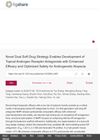
research Novel DualSoftDrug Strategy Enables Developmentof Topical Androgen Receptor Antagonists with Enhanced Efficacy andOptimized Safety for Androgenetic Alopecia
In this study, researchers optimized the soft drug AR antagonist 14-P1 to create candidate 39, which demonstrated effective AR antagonism and safety in a hair-growth mouse model, showing similar efficacy to pyrilutamide but with quicker onset and a lower risk of systemic toxicity.

research Recent positive selection of a human androgen receptor/ectodysplasin A2 receptor haplotype and its relationship to male pattern baldness
This study suggests that the AGA risk haplotype in Europeans was driven to high frequency by positive selection, likely associated with a variant in the EDA2R gene.
research Observation of cultured amelanotic melanocytes from hair follicles by atomic force microscopy
This study observed that amelanotic melanocytes from human hair follicles appeared morphologically immature, suggesting they might not transfer melanosomes into keratinocytes.

research Adenosine A2B receptor: A pathogenic factor and a therapeutic target for sensorineural hearing loss
Blocking adenosine A2B receptor may prevent or treat hearing loss.
research Regulation of immune response genes in the skin of allergic and clinically tolerant individuals exposed to p‐phenylenediamine
This study indicates that individuals exposed to PPD mount varying immune responses, with either tolerance, subclinical inflammation, or allergy, suggesting no true non-responders to PPD.
research Identifying the Active Components and Mechanisms of Persicae Semen in Treating Androgenetic Alopecia: Insights from Network Pharmacology and Experimental Evaluations
This study elucidated the multi-component and multi-target mechanisms by which TR and Am may provide therapeutic benefits for treating androgenetic alopecia.

research Impact of a Novel Dietary Supplement on Efficacy of Pharmacological Treatments for Androgenic Alopecia: A Real‐Life, Multicenter, Randomized, Assessor‐Blinded Trial on 225 Subjects
This study found that a novel dietary supplement, AGA-P, when combined with minoxidil and finasteride, significantly improved the clinical efficacy of these drugs for treating mild-to-severe androgenic alopecia compared to drug treatment alone over six months.
research 75527 Vision at Risk? Ophthalmologic Safety of Anti-Androgens in Androgenic Alopecia
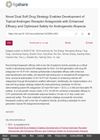
research Novel DualSoftDrug Strategy Enables Developmentof Topical Androgen Receptor Antagonists with Enhanced Efficacy andOptimized Safety for Androgenetic Alopecia
In this study, a dual soft drug design strategy improved the AR antagonist candidate 39, showing potent AR antagonism and good safety in a mouse hair-growth model, with similar efficacy to pyrilutamide but faster response.

research Novel DualSoftDrug Strategy Enables Developmentof Topical Androgen Receptor Antagonists with Enhanced Efficacy andOptimized Safety for Androgenetic Alopecia
In a mouse hair-growth model, this study found that the optimized compound 39 matched the efficacy of pyrilutamide for androgenic alopecia, with faster response and maintained safety, suggesting it as a promising topical AR antagonist with reduced systemic toxicity risk.