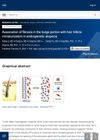
 February 2021 in “Journal of The American Academy of Dermatology”
 This study observed that fibrosis occurs in the bulge region of hair follicles affected by androgenetic alopecia and is correlated with the hair miniaturization process.
 July 2026 in “bioRxiv (Cold Spring Harbor Laboratory)”
 This study identified a new FAK isoform, FAKΔe4, which is regulated by ECM stiffness and affects cell migration, invasion, and mechanosensing in human-derived data and engineered models.
 March 2025 in “International Journal of Trichology”
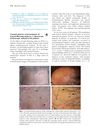
 This case report describes the first observed instance of fibrosing alopecia in a pattern distribution in a child, suggesting the condition is not solely androgen dependent.
 March 2011 in “European Urology Supplements”
 Gene variation affects prostate issues and hair loss.
 5 citations
,
September 2014 in “Journal of Pharmaceutical Sciences”
5 citations
,
September 2014 in “Journal of Pharmaceutical Sciences”  1 citations
,
April 2021 in “Journal of The American Academy of Dermatology”
1 citations
,
April 2021 in “Journal of The American Academy of Dermatology” Some overweight or obese men with long-term frontal fibrosing alopecia may have abnormal sex hormone levels.
 November 2023 in “International Journal of Pharmaceutics”
 This study reported that a novel ionic liquid delivery system combining ferulic acid and finasteride enhanced the solubility, skin permeation, and effectiveness in promoting hair regrowth in androgenetic alopecia mice, suggesting an improved topical treatment approach.
This study highlights the successful design of recombinant fortilin constructs for potential drug development targeting atherosclerotic plaque formation in cardiovascular disease.
January 2020 in “Medpluse International Journal of Anatomy” This study found that among adolescents, hairline recession tends to start at the Geheimratsacken angles around age 14-15, with the most notable recession occurring at the Left Geheimratsacken Angle.
 8 citations
,
March 2017 in “Experimental Dermatology”
8 citations
,
March 2017 in “Experimental Dermatology” In this exploratory study, researchers found slightly increased levels of inflammatory markers in scalp skin affected by androgenetic alopecia, suggesting differential gene expression involved in hair cycle and keratin production.
 September 2024 in “Turkish Journal of Dermatology”
 In this study, researchers found that males with alopecia areata had a significantly lower 2D to 4D finger length ratio compared to healthy controls, suggesting this ratio might predict alopecia areata development, though it did not correlate with disease severity.
 1 citations
,
April 2022 in “AACE clinical case reports”
1 citations
,
April 2022 in “AACE clinical case reports” This case report describes a 36-year-old Pakistani phenotypic female diagnosed with 46,XY 5-alpha-reductase deficiency, highlighting that such disorders of sexual development can manifest with symptoms like obesity, hirsutism, and amenorrhea later in life due to unique circumstances.
 October 2012 in “Faculty Opinions – Post-Publication Peer Review of the Biomedical Literature”
 Six new genes linked to early hair loss were found, which also surprisingly connect to Parkinson's disease and lower fertility.
14 citations
,
January 2014 in “Indian Journal of Dermatology Venereology and Leprology” Frontal fibrosing alopecia can affect men's beards and leads to permanent hair loss.
 3 citations
,
February 2022 in “Cureus”
3 citations
,
February 2022 in “Cureus” This study observed an alopecia syphilitica-like pattern of hair loss in a woman with frontal fibrosing alopecia, suggesting it may be another atypical presentation of the condition.
 7 citations
,
March 2020 in “PloS one”
7 citations
,
March 2020 in “PloS one” This study demonstrates that α-parvin is crucial for epidermal morphogenesis and hair follicle development by mediating integrin-dependent adhesion and actin organization in keratinocytes.
 10 citations
,
August 2011 in “Clinics”
10 citations
,
August 2011 in “Clinics” This article presents a dissenting opinion, arguing that the case described by Dr. Molina et al. was diffuse alopecia areata, not acute alopecia areata as claimed, emphasizing the importance of distinct clinical differences.
 28 citations
,
June 2010 in “European Journal of Cancer”
28 citations
,
June 2010 in “European Journal of Cancer” This study found that androgenic alopecia at an early age was associated with a lower risk of prostate cancer, contrary to assumptions about androgens' role.
April 2019 in “Journal of Investigative Dermatology” Targeting immune pathways like JAK/STAT may help treat frontal fibrosing alopecia.
39 citations
,
February 1990 in “The journal of cell biology/The Journal of cell biology” This study identified trichohyalin as an early differentiation marker in hair follicles, with potential structural roles related to alpha-helical formations, based on the partial characterization of its cDNA in sheep.
27 citations
,
September 2013 in “The FASEB Journal” This study reports that the loss of the protein Memo in mice leads to a reduced lifespan and suggests that Memo is a key regulator of FGFR signaling and vitamin D production.
9 citations
,
January 2023 in “Journal of Clinical Medicine” This study presents a validated questionnaire, the FFA-QLI, which effectively assesses and differentiates the quality of life impact among patients with frontal fibrosing alopecia, showing greater sensitivity in identifying severe cases than the DLQI.
 18 citations
,
June 2017 in “Journal of The American Academy of Dermatology”
18 citations
,
June 2017 in “Journal of The American Academy of Dermatology” In this study, trichoscopy consistently identified typical findings of frontal fibrosing alopecia, revealing three unusual clinical patterns in 18.4% of patients, which may aid in the differential diagnosis when clinical presentations are atypical.
January 2021 in “Figshare” This study used Density Functional Theory to calculate finasteride's molecular properties, finding the GGA/PW91 method aligns well with experimental data and identifying key reactive sites for chemical interactions.
48 citations
,
April 2008 in “Human Molecular Genetics” This study found that although progerin expression in mouse skin causes significant nuclear shape changes in keratinocytes, it does not result in alopecia or common skin abnormalities seen in human Hutchinson–Gilford progeria syndrome.
 5 citations
,
March 2005 in “Journal of The American Academy of Dermatology” 44 citations
,
January 1999 in “Advances in pharmacology”
5 citations
,
March 2005 in “Journal of The American Academy of Dermatology” 44 citations
,
January 1999 in “Advances in pharmacology” This chapter reviews recent findings on androgen receptor function, structure, and interactions, highlighting post-translational modifications and mutations related to prostate cancer, but reports no new experimental results.
 April 2023 in “The journal of investigative dermatology/Journal of investigative dermatology”
 This study suggests that Elf5 plays a crucial role in regulating stem cell processes involved in skin and hair follicle development and regeneration, impacting cell proliferation and differentiation.
 October 2012 in “Faculty Opinions – Post-Publication Peer Review of the Biomedical Literature”
 Six new genes linked to early hair loss were found, which also surprisingly connect to Parkinson's disease and lower fertility.
 62 citations
,
April 2008 in “Neurobiology of aging”
62 citations
,
April 2008 in “Neurobiology of aging” This study identified a new genetic locus, ahl4, on distal Chromosome 10 that contributes to the early-onset, severe hearing loss in A/J mice compared to B6 mice.