 January 2025 in “Clinical Cosmetic and Investigational Dermatology”
 This study found that pediatric alopecia areata patients with atopic predisposition showed heightened immune and inflammatory responses, including significant immune cell infiltration, compared to adults and healthy controls.
 November 2021 in “Revista Ibero-Americana de Humanidades, Ciências e Educação”
 This paper evaluates the therapeutic response of androgenetic alopecia to topical application of specific compounds using digital drug delivery but reports no new clinical results.
December 2025 in “Egyptian Reviews for Medical and Health Sciences .” This study found that, among patients in Ismailia, Egypt, patchy alopecia areata was the most common form, with a significant positive correlation between the number of lesions and disease severity, and noted males predominantly affected by this condition.
 2 citations
,
June 2024 in “Frontiers in Plant Science”
2 citations
,
June 2024 in “Frontiers in Plant Science” This study found that RALF peptides, through liquid-liquid phase separation, form condensates with pectin and other proteins, playing a pivotal role in plant development and stress response regulation.
 January 2019 in “LASER THERAPY”
 Laser technologies improve medical treatments and outcomes.
 November 2023 in “Research Portal Denmark”
 This review highlights the variability and unpredictability of alopecia areata, ranging from single scalp patches to total body hair loss, and notes the 2022 approval of the first AA-specific drug, baricitinib, potentially spurring new research into targeted treatments.
 21 citations
,
June 2017 in “Journal of The American Academy of Dermatology”
21 citations
,
June 2017 in “Journal of The American Academy of Dermatology” This study reviewed existing articles to assess the efficacy of topical diphenylcyclopropenone immunotherapy for alopecia areata, but it did not report new clinical results.
In this study conducted among high school students in rural Eskişehir, Turkey, alopecia prevalence was 37.4% and was associated with factors such as oily scalp and irregular menstruation, negatively affecting quality of life.
5 citations
,
July 2024 in “Pediatric Dermatology” This study reports that dupilumab significantly reduced alopecia areata severity in pediatric patients with atopic dermatitis, indicating potential as an effective treatment option, though further research on long-term safety and optimal use is needed.
3 citations
,
June 2024 in “Allergy” This article contains no new research findings and does not create or analyze any new data.
September 2025 in “Blood Advances” This study found that targeting androgen receptors with prostate cancer drugs ARN509 and finasteride induced remission and increased survival in a leukemia mouse model, suggesting a potential new treatment approach for acute myeloid leukemia.
 February 2025 in “Cermin Dunia Kedokteran”
 This article reviews acute disseminated encephalomyelitis, a neurological condition with demyelination of the central nervous system, and reports no new clinical findings; diagnosis is made by exclusion.
August 2020 in “International Journal of Dermatology and Venereology” This study found that platelet-rich plasma injections improved alopecia severity scores in women with androgenetic alopecia after six months, though further research is needed to confirm these results.
 July 2026 in “Frontiers in Medicine”
 This study describes a new treatment algorithm for alopecia areata that includes both disease severity and quality-of-life considerations, highlighting recent therapeutic advances and the need for future validation and access equity.
88 citations
,
January 2001 in “Dermatology” This study found that the monophasic oral contraceptive ethinylestradiol/chlormadinone acetate was more effective in treating mild to moderate papulopustular acne in women than ethinylestradiol/levonorgestrel.
April 2022 in “Journal of evolution of medical and dental sciences” In this study, intralesional triamcinolone acetonide was found to be more effective than platelet rich plasma and placebo for moderate to severe alopecia areata, but had a higher relapse rate.
 1 citations
,
January 2016 in “Hair therapy & transplantation”
1 citations
,
January 2016 in “Hair therapy & transplantation” In this study, male participants with early androgenetic alopecia experienced a significant increase in hair growth rate after applying topical lipoid cepharanthine lotion for six months.
 1 citations
,
November 2025 in “Clinical Chemistry and Laboratory Medicine (CCLM)”
1 citations
,
November 2025 in “Clinical Chemistry and Laboratory Medicine (CCLM)” This study developed a new measurement procedure using isotope dilution-liquid chromatography-tandem mass spectrometry for accurate quantification of DHEAS in human serum or plasma, demonstrating high selectivity, sensitivity, and low measurement uncertainty, making it suitable for routine standardization and clinical evaluation.
4 citations
,
July 2024 in “Pharmacology Research & Perspectives” In this phase 2a study of adults with alopecia areata, researchers observed that ritlecitinib treatment did not result in significant differences in brainstem auditory evoked potential changes or axonal swelling compared to placebo, suggesting the dog toxicity findings may not be clinically relevant in humans.
9 citations
,
April 2023 in “Experimental Dermatology” This study found that adding allergen immunotherapy to conventional treatment may reduce relapse-related hair loss in house dust mite-allergic alopecia areata patients over a 3-year period.
July 2026 in “Journal of the American Academy of Dermatology” 2 citations
,
November 2024 in “JAAD Case Reports” Anti-PD-L1 immunotherapy can cause hair loss and unexpected hair color change, but treatment can restore hair growth and color.
 1 citations
,
July 2023 in “Al-Azhar Medical Journal”
1 citations
,
July 2023 in “Al-Azhar Medical Journal” This study observed a significant association between antigliadin antibodies (IgA and IgG) and alopecia areata severity, suggesting that serological tests could help diagnose subclinical celiac disease in these patients, with IgA and IgG showing 100% sensitivity and specificity at specific cutoff points.
 13 citations
,
October 2017 in “Biomedicine & Pharmacotherapy”
13 citations
,
October 2017 in “Biomedicine & Pharmacotherapy” In this study, ethyl acetate fraction of Eclipta alba was found to inhibit adipogenesis and reduce dyslipidemia in hamsters, suggesting potential as an herbal treatment for obesity.
63 citations
,
March 2020 in “Clinical Cosmetic and Investigational Dermatology” This study suggests that the prevalence of alopecia areata in the US remains similar to high estimates from the 1970s, with significant implications for quality of life.
June 2025 in “British Journal of Dermatology” This study reported significant challenges in the UK care system for alopecia areata patients, including inconsistent care pathways, long waiting times, inadequate access to specialists, and insufficient resources, particularly affecting referral processes and treatment access.
 2 citations
,
October 2020 in “Journal of Investigative Dermatology Symposium Proceedings”
2 citations
,
October 2020 in “Journal of Investigative Dermatology Symposium Proceedings” This study reports promising preliminary trends in the safety and efficacy of a botanical drug candidate for pediatric alopecia areata, but conclusive results are not yet available.
 52 citations
,
February 2006 in “Archives of Dermatology”
52 citations
,
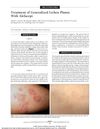
February 2006 in “Archives of Dermatology” This case report describes a 25-year-old woman with widespread lichen planus who did not respond to multiple systemic treatments, including antihistamines, hydroxychloroquine sulfate, and corticosteroids.
August 2023 in “Clinical and Experimental Dermatology” This study evaluated online resources for alopecia areata patients and highlighted the value of directing them to Alopecia UK, National Alopecia Areata Foundation, and Health Talk for psychological support.
 June 2023 in “Dermatology and therapy”
 This study found that most dermatologists in the Middle East manage mild to severe alopecia areata primarily with potent topical corticosteroids and identified long-term disease control and improved efficacy as key unmet needs.