1 citations
,
April 2025 in “Skin Health and Disease” This study is collecting real-world data to evaluate abrocitinib and conventional systemic treatments in moderate-to-severe atopic dermatitis across five European registers over a three-year period.
 3 citations
,
January 2023 in “Dermatology Practical & Conceptual”
3 citations
,
January 2023 in “Dermatology Practical & Conceptual” In this study, the researchers reported that ischemia-modified albumin and IMA/albumin levels may not effectively predict disease severity in patients with alopecia areata.
October 2020 in “The American journal of gastroenterology” This case study reports a previously undescribed cause of drug-induced autoimmune hepatitis triggered by para-aminobenzoic acid (PABA), emphasizing the need for caution with this supplement.
 109 citations
,
May 2011 in “Dermatologic Therapy”
109 citations
,
May 2011 in “Dermatologic Therapy” This article reviews the characteristics, associations, and diagnostic criteria for alopecia areata and reports no new clinical findings; the authors note the disease's unpredictable course and variable prognosis.
July 2026 in “JDDG Journal der Deutschen Dermatologischen Gesellschaft” This study developed a guideline for diagnosing and treating alopecia areata, revealing that 0.21% of the German population had the condition in 2020, with approximately 70,000 new cases diagnosed that year.
June 1985 in “Journal of the American Academy of Dermatology”  December 2023 in “Journal of Ayub Medical College Abbottabad”
 In this study, Ritlecitinib was reported as a newly approved treatment for alopecia areata that can be used in patients aged 12 and older; after 24 weeks, it resulted in 80% or more scalp hair coverage in treated patients compared to a placebo.
 2 citations
,
April 2024 in “Dermatology Practical & Conceptual”
2 citations
,
April 2024 in “Dermatology Practical & Conceptual” This study found that Janus Kinase inhibitors, tofacitinib and baricitinib, showed effectiveness and safety in treating severe alopecia areata in a real-world setting, with optimal tolerability noted in younger individuals.
 27 citations
,
April 2018 in “Journal of autoimmunity”
27 citations
,
April 2018 in “Journal of autoimmunity” In this study, iNKT10 cells were found to play a significant role in preventing and treating alopecia areata in a humanized mouse model, suggesting these cells could have potential in managing related autoimmune disorders.
 1 citations
,
August 2021 in “Journal of The American Academy of Dermatology”
1 citations
,
August 2021 in “Journal of The American Academy of Dermatology” In this study, baricitinib treatment led to significant regrowth of scalp, eyebrow, and eyelash hair in alopecia areata patients compared to placebo, with higher effectiveness seen at the 4-mg dose.
 59 citations
,
December 2016 in “Clinical, Cosmetic and Investigational Dermatology”
59 citations
,
December 2016 in “Clinical, Cosmetic and Investigational Dermatology” This review discusses the clinical features and treatment challenges of acne keloidalis nuchae, a form of chronic scarring folliculitis, and reports no new results.
7 citations
,
May 2012 in “Journal of veterinary diagnostic investigation” This study reports that vitamin A deficiency can cause dermatologic issues like alopecia and orthokeratosis in Angus calves, and affected calves improved with vitamin A supplementation.
In this study, researchers found that crude extracts from Avicennia marina and its component avicequinone C inhibit mechanisms contributing to androgenic alopecia in vitro, including 5α-reductase activity and DHT-AR interactions, potentially promoting hair growth and delaying the catagen phase in human dermal papilla cells.
 April 2024 in “Research Square”
 This study observed that children with alopecia areata had higher anxiety and depression scores, and their families showed more neglectful parenting styles compared to healthy controls.
 12 citations
,
August 2019 in “Dermatitis”
12 citations
,
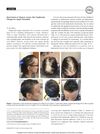
August 2019 in “Dermatitis” This case report describes a 42-year-old woman with atopic dermatitis, whose alopecia areata reactivated rapidly after starting dupilumab, possibly indicating an unrecognized adverse effect in AD patients.
 January 2026 in “Biomedicines”
 This study identified increased expression of ACAA1 and its regulation by hsa-miR-1343-3p, linking androgenetic alopecia to lipid metabolism pathways, particularly through PPAR signaling, in scalp tissues.
2 citations
,
May 2025 in “Archives of Dermatological Research” This retrospective cohort study found no significant association between Janus kinase inhibitors and increased malignancy risk in alopecia areata patients, but traditional immunosuppressants were linked to higher risks of internal and hematologic malignancies.
 1 citations
,
January 2023 in “Cutis”
1 citations
,
January 2023 in “Cutis” This article highlights disparities in the prevalence of alopecia areata among people with skin of color and suggests this information could help dermatologic providers address challenges in treating this population.
 April 2025 in “Veterinary Dermatology”
 This study observed that dermoscopy is a useful technique for distinguishing between infundibular keratinising acanthoma and follicular cysts in dogs, with specific dermoscopic features noted for each.
4 citations
,
July 2024 in “The Journal of Dermatology” This study found that patients with alopecia areata in Dubai experience significant disease and economic burdens, especially when comorbid with psychological conditions, despite frequent dermatologist consultations and topical steroid prescriptions.
7 citations
,
February 2024 in “The Journal of Physiology” This study suggests that male sex and androgenic steroid use increase the risk of atrial arrhythmias in individuals with arrhythmogenic right ventricular cardiomyopathy, especially those with desmosomal gene mutations.
 August 2026 in “Journal of Clinical Medicine”
 In this study, researchers found that the management of alopecia areata in Poland is inadequate, despite following international guidelines, due to limited access to advanced treatments and insufficient use of severity assessments and psychosocial support.
This study highlights that azelaic acid, initially recognized for skin hypopigmentation, shows potential in treating various skin conditions due to its complex mechanisms, even though these are not yet fully understood, indicating a need for further research.
1 citations
,
April 2024 in “Journal of Clinical Medicine” This study found that patients with severe alopecia areata demonstrated reduced corneal sensitivity and increased corneal staining, and exhibited altered topographic and biomechanical eye parameters compared to controls, suggesting a possible increased risk of keratoconus and the necessity for regular ophthalmological exams.
53 citations
,
July 2018 in “Drug design, development and therapy” This review summarizes existing evidence on the efficacy and safety of JAK inhibitors for treating alopecia areata and emphasizes the need for improved topical formulations.
 1 citations
,
December 2017 in “The journal of investigative dermatology. Symposium proceedings/The Journal of investigative dermatology symposium proceedings”
1 citations
,
December 2017 in “The journal of investigative dermatology. Symposium proceedings/The Journal of investigative dermatology symposium proceedings” This review discusses the clinical challenges in treating alopecia areata with off-label therapies, highlighting the need to consider new research on JAK inhibitors, but reports no new clinical results.
69 citations
,
May 2002 in “Journal of Investigative Dermatology” This study suggests that congenital atrichia with papular lesions may be more common than previously thought and proposes diagnostic criteria including the observation of hypopigmented whitish streaks on the scalp.
 9 citations
,
May 2019 in “Journal of dermatological treatment”
9 citations
,
May 2019 in “Journal of dermatological treatment” This article reviews characteristics and mental health impacts of alopecia areata but provides no new clinical findings; future research is encouraged.
 August 2024 in “Skin Appendage Disorders”
 This study introduces "alopecia areata in a male or female pattern distribution" as a new clinical subtype of alopecia areata, observed in three adult cases, to enhance diagnostic precision and treatment personalization.
 January 2025 in “International Journal of Dermatology Sciences”
 In this study, nail changes, particularly pitting, were associated with moderate to severe cases of alopecia areata and a positive family history, highlighting potential genetic factors in the condition.