 2 citations
,
January 2022 in “bioRxiv (Cold Spring Harbor Laboratory)”
2 citations
,
January 2022 in “bioRxiv (Cold Spring Harbor Laboratory)” This study found that low temperatures and nitrogen deficiency trigger root hair elongation through a molecular mechanism involving the receptor kinase FERONIA and the TOR Complex 1.
5 citations
,
March 2020 in “Thoracic Cancer” In this phase I study, CT-707, a new ALK inhibitor, showed a 77% response rate among Chinese patients with advanced ALK-rearranged non-small cell lung cancer, suggesting clinical effectiveness despite some adverse events like diarrhea and liver enzyme elevation.
14 citations
,
March 2022 in “Plant Cell & Environment” In this study, the authors reported that AtRXR3, a phosphorus-inducible DUF506 protein, modulates root hair growth under phosphorus stress by interacting with calmodulin and influencing calcium oscillations.
July 2025 in “Journal of Investigative Dermatology” Reduced AhR signaling in HS tunnels leads to persistent inflammation and microbial imbalance.
 2 citations
,
January 2025 in “Pharmaceutical Research”
2 citations
,
January 2025 in “Pharmaceutical Research” This article reviews the possible therapeutic activities of Angelica gigas Nakai root extracts and their components, noting their potential effects on neuro-cognitive, metabolic, and other health conditions, and reports no new clinical results.
 1 citations
,
March 2023 in “International journal of rheumatic diseases”
1 citations
,
March 2023 in “International journal of rheumatic diseases” This study observed that first-degree relatives of SLE patients display unique clinical and immunological profiles, showing elevated ANA titers and specific autoantibody patterns compared to healthy individuals.
 5 citations
,
November 2020 in “medRxiv (Cold Spring Harbor Laboratory)”
5 citations
,
November 2020 in “medRxiv (Cold Spring Harbor Laboratory)” In this study, the authors reported that dutasteride significantly reduced total remission time for COVID-19 symptoms in men compared to placebo, especially for fatigue and loss of taste or smell.
This case report describes a young female with Rhupus syndrome, characterized by symptoms of both Systemic Lupus Erythematosus and Rheumatoid Arthritis, who achieved clinical remission with treatment.
July 2026 in “Journal of the American Academy of Dermatology”  July 2018 in “Hair transplant forum international”
 This abstract contains only author affiliations and mentions the Asian Association of Hair Restoration Surgeons, without presenting any new research findings.
5 citations
,
January 2025 in “Science Advances” In this study, researchers observed that acute stress increased levels of the enzyme 5αR2 in the medial prefrontal cortex of male rats, affecting stress reactivity, but this effect was not seen in females.
This review discusses drug repositioning for cardiometabolic disorders and reports no new clinical findings; the authors emphasize its potential benefits, such as known safety profiles and reduced development costs compared to new drug development.
 18 citations
,
May 2015 in “Australasian Journal of Dermatology”
18 citations
,
May 2015 in “Australasian Journal of Dermatology” This study found that topical application of Serenoa repens extract increased hair count in men with androgenetic alopecia, suggesting it could be an alternative for those unable to use standard medications.
 1 citations
,
April 2021 in “bioRxiv (Cold Spring Harbor Laboratory)”
1 citations
,
April 2021 in “bioRxiv (Cold Spring Harbor Laboratory)” This study identified the NAC transcription factor RD26 as a critical regulator of drought-induced root hair growth restriction in Arabidopsis thaliana, with a similar mechanism observed in tomatoes, indicating evolutionary conservation.
March 2014 in “The Journal of Urology” In this study, treatment with a 5a-reductase inhibitor increased CD8+ T cell infiltration in benign prostatic hyperplasia tissues, suggesting an impact on inflammatory responses.
 11 citations
,
January 2020 in “BMC pediatrics”
11 citations
,
January 2020 in “BMC pediatrics” This case report identified two new SLC39A4 mutations in twin patients with acrodermatitis enteropathica, suggesting that different mutations in this gene may lead to varying clinical manifestations of the disorder.
 4 citations
,
December 2019 in “Minerva Urology and Nephrology”
4 citations
,
December 2019 in “Minerva Urology and Nephrology” This study found that patients with non-muscle invasive bladder cancer who were treated with 5-alpha reductase inhibitors had lower recurrence rates and higher recurrence-free survival rates compared to untreated patients.
1 citations
,
September 2023 in “Frontiers in Genetics” This study presents a rare case where a patient with a heterozygous mutation in the HTRA1 gene, typically considered non-pathogenic, exhibited severe symptoms and typical features of CARASIL, expanding the understanding of this condition.
November 2007 in “Hospital pharmacy” This article discusses the importance of increasing awareness about specific adverse drug reactions, prevention methods, and the promotion of reporting ADRs to the FDA's MEDWATCH program; it reports no new results.
 June 2026 in “Frontiers in Immunology”
 In this case report, a 57-year-old man with severe atopic dermatitis, vitiligo, and alopecia areata showed rapid and significant improvement after treatment with the JAK1 inhibitor upadacitinib, suggesting its potential as an effective monotherapy for these co-existing conditions when conventional therapies fail.
5 citations
,
October 2024 in “Reumatismo” This study reports a notable case of a patient with psoriatic arthritis and alopecia universalis who experienced significant improvement in both conditions after treatment with the JAK1 selective inhibitor upadacitinib, suggesting its potential efficacy for alopecia universalis, especially in cases involving inflammatory arthritis.
 November 2024 in “SKIN The Journal of Cutaneous Medicine”
 This study reports that ritlecitinib was prescribed to a diverse group of patients, including adolescents and adults with and without prior treatment for Alopecia Areata, in the first three months after FDA approval, potentially expanding care options for this condition.
 January 2024 in “American journal of clinical dermatology”
 This study reports that ritlecitinib, when used for up to 24 months in patients aged 12 and older with alopecia areata, has an acceptable safety profile, with a similar proportion of adverse events in both ritlecitinib and placebo groups in the placebo-controlled cohort.
 13 citations
,
December 2012 in “Canadian Urological Association Journal”
13 citations
,
December 2012 in “Canadian Urological Association Journal” This report from a consensus meeting concluded that while 5-alpha reductase inhibitors are beneficial for BPH treatment and prostate cancer risk reduction, their role in clinical practice should be more widely integrated into prostate management guidelines.
This study found that a short-term treatment with all-trans retinoic acid may effectively stabilize platelet counts in idiopathic thrombocytopenic purpura patients experiencing fluctuations during thrombopoietin receptor agonist therapy.
 4 citations
,
January 2011 in “Annals of Dermatology”
4 citations
,
January 2011 in “Annals of Dermatology” This article discusses the role of HR gene mutations in differentiating atrichia with papular lesions from alopecia universalis, but presents no new experimental results.
 18 citations
,
April 2001 in “Bioorganic & Medicinal Chemistry Letters”
18 citations
,
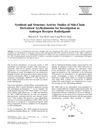
April 2001 in “Bioorganic & Medicinal Chemistry Letters” This study identified the N-(iodopropenyl) derivative 13 as a promising candidate for development as a radioiodinated androgen receptor ligand due to its binding affinity.
November 2025 in “Journal of Investigative Dermatology” Certain immune cells in atopic dermatitis skin could be targeted for treatment.
4 citations
,
June 2020 in “Processes” This study suggests that G. sibiricum has potent aldose reductase inhibitory activity, primarily due to kaempferol rhamnosides, and may be further explored as a natural treatment for diabetes-related complications.
 14 citations
,
November 2014 in “European journal of medicinal chemistry”
14 citations
,
November 2014 in “European journal of medicinal chemistry” This study identified 30 new compounds with significant androgen receptor binding affinity through a combination of virtual screening and in vitro testing.