 January 2023 in “International Journal of Pharmaceutical and Clinical Research”
 This review highlights the potential of follicular targeting as a novel approach for treating hirsutism, focusing on its ability to improve outcomes and reduce side effects, but reports no new clinical results.
 October 2022 in “Journal of advanced research in medicine”
 This case study reports that a 52-year-old woman with Sheehan syndrome improved after receiving hormone replacement therapy, highlighting its importance for patients with similar symptoms.
 September 2022 in “Curēus”
 This case report describes a 61-year-old female with hyperandrogenic symptoms, where an ovarian hemangioma with stromal luteinization was identified and surgically removed, resulting in improved symptoms.
 October 2021 in “Acta Scientific Medical Sciences”
 This case report describes an isolated DHEA-S secreting adrenocortical carcinoma in a 52-year-old woman who presented without typical hyperandrogenic symptoms.
 November 2020 in “Elsevier eBooks”
 This source outlines various antiandrogen and androgen inhibitor drugs used to treat cutaneous disorders of hyperandrogenism, detailing their mechanisms, uses, dosages, and side effects, with emphasis on spironolactone, finasteride, dutasteride, and oral contraceptives.
 April 2020 in “Journal of the Endocrine Society”
 This case report emphasizes the importance of recognizing non-classic congenital adrenal hyperplasia as a cause of hyperandrogenism and the need for genetic counseling given potential familial implications.
 October 2019 in “Journal of Evolution of Medical and Dental Sciences”
 This case report describes a 56-year-old male with chronic watery diarrhea, hyperpigmentation, and alopecia, in whom colonoscopy revealed multiple polypoidal lesions from the distal transverse colon to the rectum.
 January 2019 in “Springer eBooks”
 Acne can appear or persist in adulthood due to hormonal changes, external factors, or substance use, and requires appropriate treatment.
 February 2018 in “InTech eBooks”
 This article discusses the unclear aspects of diagnosing and treating polycystic ovarian syndrome and emphasizes a multidisciplinary approach but reports no clinical results.
This source outlines common health issues in weanling gerbils, including skin infections often tied to beta-hemolytic Staphylococcus aureus, and obesity-related conditions like diabetes, as well as respiratory infections and musculoskeletal problems, without detailing specific new study results.
 January 2017 in “Springer eBooks”
 The document explains various skin conditions and their treatments.
 December 2016 in “Springer eBooks”
 This review examines the clinical features, causes, diagnosis, and treatment of Chrousos syndrome but reports no new experimental findings on this condition.
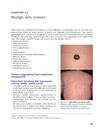
This chapter classifies various benign skin tumors and discusses their characteristics, treatment indications, and potential for recurrence, but reports no new clinical findings.
 January 2016 in “Dermatology Review”
 This review details various skin manifestations linked to different endocrine disorders but does not report any new clinical results.
 July 2015 in “Cambridge University Press eBooks”
 The document concludes that treatments for female hair loss and excess body hair are available, but managing expectations is important.
 January 2014 in “Side effects of drugs annual”
 This review discusses the 2011 publications on the side effects of sex hormones and related compounds, without reporting new clinical results.
 November 2013 in “John Wiley & Sons, Ltd eBooks”
 The document concludes that accurate diagnosis of male and female gonadal disorders is crucial for effective treatment and better patient outcomes.
 August 2013 in “Gastroenterology”
 This case report highlights a 60-year-old patient's diagnosis with Cronkhite-Canada syndrome, characterized by gastrointestinal polyps, diarrhea, weight loss, brittle nails, alopecia, and skin changes, which showed improvement with treatment.

This review discusses polycystic ovary syndrome, highlighting its associations with hyperandrogenism, chronic anovulation, polycystic ovaries, and increased risks of infertility and metabolic disorders, and reports no new clinical results.
 October 2012 in “Semina. Ciências Agrárias”
 This case report details a 7-year-old Shih Tzu with pituitary-dependent hyperadrenocorticism, where initial trilostane treatment did not improve skin conditions, necessitating a dosage increase.

This review describes the link between obesity and gastrointestinal conditions, highlighting the need for more research to understand their pathophysiology and develop new treatments; it presents no new findings.
 January 2012 in “S. Karger AG eBooks”
 This article reviews treatment processes and outcomes for transsexualism, reporting improved quality of life and reduced gender dysphoria post-gender reassignment, though increased psychiatric risks remain compared to the general population.
 December 2011 in “Drug Research”
 The document shows the state of pharmaceutical patents as of 1999, focusing on treatments for various diseases.
 December 2011 in “The Diabetes Educator”
 This article describes how a new blood glucose management service at the NIH Clinical Center improved safety and patient outcomes for hospitalized patients with diabetes.
 October 2010 in “Reproductive Biomedicine Online”
 A new method can almost perfectly distinguish adenomyosis from similar conditions using blood tests.
 May 2010 in “Current Women's Health Reviews”
 This article reviews the challenges and importance of diagnosing and managing PCOS, especially in adolescent girls, and reports no new clinical findings; the authors emphasize early intervention.
 November 2009 in “Medical & surgical dermatology”
 This study found that haploinsufficiency of SPINK5 can lead to Netherton syndrome when a single null mutation combines with homozygous G1258A polymorphisms, suggesting it acts as a genuine mutation affecting LEKTI function.
 June 2008 in “Springer eBooks”
 The document concludes that permanent hair loss conditions are complex, require early specific treatments, and "secondary permanent alopecias" might be a more accurate term than "secondary cicatricial alopecia."
 January 2006 in “Actas Urológicas Españolas”
 This retrospective study observed no significant difference in the prevalence of incidental prostate cancer between suprapubic prostatectomy and transurethral prostate resection groups, with most tumors being well differentiated and early-stage.
 June 2021 in “Archives of Advances in Biosciences”
 This study suggests that finasteride at doses of 5 mg/kg BW or higher may adversely affect spermatogenesis and male fertility in NMRI mice.