October 2025 in “Frontiers in Medicine” This study confirmed known adverse events and identified new ones related to ixekizumab, offering preliminary safety insights for its clinical use, but noted limitations such as potential underreporting and confounding factors in the spontaneous adverse event reporting systems.
January 2008 in “Summit (Simon Fraser University)” This article describes viDA Therapeutics Inc.'s focus on developing new drugs for age-related conditions using their proprietary granzyme-based approach but reports no clinical outcomes, primarily discussing their funding and business strategy.
 March 2026 in “Clinical Cosmetic and Investigational Dermatology”
 In this case study, treatment with the selective JAK1 inhibitor upadacitinib significantly improved symptoms in a patient with refractory alopecia areata, vitiligo, ankylosing spondylitis, and allergic asthma-nasal syndrome, though a transient liver function abnormality was noted.
 October 2025 in “Pharmaceutical Development and Technology”
 In this study, cetirizine hydrochloride was formulated into niosomal and cubosomal gels, showing potential for off-label use in treating androgenic alopecia due to effective skin permeation and acceptable safety profiles; cubosomal gels exhibited superior permeation compared to niosomal gels.
1 citations
,
April 2023 in “Heliyon” In this study, a 68-year-old man with muscle-invasive bladder cancer and renal insufficiency achieved a partial radiological response to neoadjuvant therapy with gemcitabine and Disitamab Vedotin, without significant adverse events, highlighting a potential alternative for cisplatin-ineligible patients.
 1 citations
,
May 2025 in “The Journal of Rheumatology”
1 citations
,
May 2025 in “The Journal of Rheumatology” In this case report, two female patients with refractory systemic lupus erythematosus showed significant improvement after treatment with the JAK inhibitor upadacitinib, indicating potential as a promising option for difficult cases, although further research is needed to confirm its broader safety and efficacy.
 6 citations
,
May 2023 in “Drugs”
6 citations
,
May 2023 in “Drugs” This study reports that baricitinib was more effective than placebo in promoting hair growth in adults with severe alopecia areata after 36 weeks of treatment in clinical trials.
 December 2025 in “npj Breast Cancer”
 In the phase 3 CAPItello-291 trial, capivasertib combined with fulvestrant significantly increased progression-free survival in patients with advanced breast cancer with specific genetic alterations, but the authors highlight that managing side effects like diarrhea, rash, and hyperglycemia is crucial for optimizing treatment adherence and outcomes.
 June 2024 in “ESMO Gastrointestinal Oncology”
 The BAYONET trial is a phase II study designed to assess the efficacy and safety of combining encorafenib, binimetinib, and cetuximab for patients with BRAF V600E-mutant metastatic colorectal cancer that is resistant to encorafenib plus cetuximab; results are not yet reported.
 1 citations
,
March 2024 in “Skin health and disease”
1 citations
,
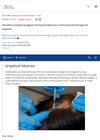
March 2024 in “Skin health and disease” This study found that vibration assisted analgesia reduced pain during intralesional corticosteroid therapy for hair loss, enabling treatment in a broader range of patients, including those with needle phobia.
 6 citations
,
January 2016 in “Springer eBooks”
6 citations
,
January 2016 in “Springer eBooks” Invasomes effectively deliver drugs through the skin and have potential for improved treatments.
January 2022 in “SSRN Electronic Journal” In this case study, a neoadjuvant therapy combining gemcitabine and Disitamab Vedotin proved effective and safe for a muscle-invasive bladder cancer patient with severe renal insufficiency, who could not tolerate platinum-based treatments. The study suggests this regimen may be a viable alternative, pending further research.
 April 2026 in “Frontiers in Medicine”
 This study analyzed data from the FDA Adverse Event Reporting System and found that enfortumab vedotin, used for urothelial carcinoma, is linked to various cutaneous adverse events, including severe reactions like Stevens–Johnson syndrome, typically occurring early in treatment and predominantly affecting elderly male patients.

This article discusses ongoing research efforts to develop natural anti-androgenetic alopecia treatments using bioactive compounds from medicinal plants but reports no new clinical results.
 5 citations
,
December 2014 in “Medicine and Pharmacy Reports”
5 citations
,
December 2014 in “Medicine and Pharmacy Reports” This study found that antiandrogenic therapy with Melleva 35 for three months was effective in reducing hair loss and improving acne in women with both Androgenetic Alopecia and Acne Vulgaris.
1 citations
,
September 2023 in “Laboratornye Zhivotnye dlya nauchnych issledovanii (Laboratory Animals for Science)” This review highlights the emerging IgY-technology, based on extracting antibodies from bird egg yolks for passive immunization, noting its commercialization potential for treating diseases like dental caries and celiac disease, and pointing out its underappreciation in Russia.
This study suggests bee venom acupuncture therapy may enhance hair follicle growth by increasing the expression of cytokines, enzymes, and receptors associated with the hair growth cycle.
9 citations
,
January 2015 in “Indian Dermatology Online Journal” This case report highlights the successful treatment of Kaposi varicelliform eruption in a pemphigus vulgaris patient using intravenous acyclovir, alongside antibiotics, resulting in healing of skin lesions with scarring.
4 citations
,
October 2024 in “Journal of the American Academy of Dermatology” Abrocitinib may help treat alopecia areata effectively with mild side effects.
7 citations
,
August 2024 in “Clinical and Experimental Dermatology” In this retrospective study conducted at a trichology clinic, the off-label use of upadacitinib for at least 24 weeks was found to have a promising efficacy and safety profile for treating severe alopecia areata in adolescents.
July 2026 in “Journal of the American Academy of Dermatology” This study observed that upadacitinib demonstrated significant efficacy and favorable safety for treating alopecia areata over 12 months in a real-world setting, with patients having an atopic background showing better early response; no serious adverse events were reported.
September 2023 in “Journal of the American Academy of Dermatology”  April 2018 in “Journal of Investigative Dermatology”
 In this study, researchers identified CENPV as a new CYLD interacting partner that localizes to primary cilia and regulates acetylated tubulin levels, offering insights into the pathogenesis of skin appendage tumors.
 February 2026 in “Journal of Sylva Indonesiana”
 This study found that the heartwood extract of Avicennia marina demonstrated strong antioxidant activity, with an IC50 value of 61.50 µg/mL, suggesting potential for development into supplements or topical applications targeting degenerative diseases related to oxidative stress.
September 2002 in “Oncology Times” This study presented at the ASCO Annual Meeting reported that the epidermal growth factor receptor antibody ABX-EGF showed preliminary efficacy in renal cell cancer patients, with tolerable side effects, while bortezomib demonstrated clinical benefit in a significant proportion of multiple myeloma patients.
February 2026 in “Biomaterials” BOOST is a promising, easy-to-use treatment for diabetic foot ulcers that improves healing by reducing inflammation and promoting blood vessel growth.
 August 2009 in “Australian Prescriber”
 This article discusses dutasteride, a new drug for managing benign prostatic hyperplasia, and highlights the need for further experience to confirm its safety and efficacy.
2 citations
,
September 2024 in “Internal Medicine Journal” In this case study, upadacitinib treatment for a patient with coexisting ulcerative colitis and alopecia universalis resulted in significant hair regrowth and maintained UC remission, suggesting potential for treating similar dual-diagnosed cases.
 36 citations
,
June 2014 in “Experimental Neurology”
36 citations
,
June 2014 in “Experimental Neurology” This review outlines the main findings from clinical trials on teriflunomide's efficacy and safety for relapsing multiple sclerosis, noting clinical considerations and exploring its mechanisms based on various studies.
 January 2025 in “Geneesmiddelenbulletin”
 This 104-week follow-up trial found that baricitinib is effective and safe for treating severe alopecia areata but requires continuous use to sustain hair regrowth. The drug is included in the NVDV guidelines and reimbursed by Dutch insurers for this purpose.