January 2009 in “Journal of Zhengzhou University” This study found that lipid and acne inhibitive cream improved the skin condition in a rabbit ear acne model, showing significant changes in follicular cornification.
3 citations
,
January 2011 in “Yearbook of Dermatology and Dermatologic Surgery” August 2026 in “Clinical Case Reports” In this case report, a patient with diffuse alopecia areata experienced complete hair regrowth after treatment with oral abrocitinib, with no adverse effects observed.
 April 2020 in “International journal of research in dermatology”
 This case report presents an 8-year-old girl with congenital atrichia, marked by complete hair loss and papular lesions, linked to mutations in the human hairless gene.
 15 citations
,
December 2016 in “Advanced Pharmaceutical Bulletin”
15 citations
,
December 2016 in “Advanced Pharmaceutical Bulletin” This study found that N-acetyl-glucosamine-loaded nanostructured lipid carriers showed promise for skin lightening in healthy volunteers by reducing melanin distribution.
1 citations
,
August 2021 in “Journal of Investigative Dermatology” ASLAN004 was safe and well-tolerated, supporting further development for treating certain diseases.
2 citations
,
January 2018 This article discusses diffuse alopecia areata, highlighting its autoimmune characteristics, more intense inflammation, and challenges in diagnosis, but presents no new clinical findings.
22 citations
,
June 2010 in “Experimental Dermatology” This study reported that patients with alopecia areata have reduced expression of the melanocortin receptor MC2R in their scalp tissues compared to normal scalp, indicating potential involvement in the condition's pathophysiology.
41 citations
,
September 1951 in “Annals of Internal Medicine” This review discusses the interrelationship between the anterior pituitary's adrenocorticotropic hormone (ACTH) and the adrenal cortex, but reports no new experimental findings.
 January 2011 in “International Journal of Trichology”
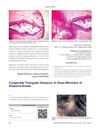
 The document concludes that doctors should recognize congenital triangular alopecia to avoid unnecessary treatments, as it does not respond to steroids like alopecia areata does.
 January 2026 in “BULLETIN OF STOMATOLOGY AND MAXILLOFACIAL SURGERY”
 In this randomized controlled trial, both Botulinum Toxin-A and Triamcinolone Acetonide showed substantial effectiveness in treating patchy Alopecia Areata, but Botulinum Toxin-A avoided complications while Triamcinolone led to skin atrophy in 16.7% of patients.
This study examined epidemiological data on patients with frontal fibrosing alopecia in Greece and found demographic patterns consistent with international studies.
 3 citations
,
September 2017 in “Pediatric Dermatology”
3 citations
,
September 2017 in “Pediatric Dermatology” This article discusses contact dermatitis linked to alopecia and hyperpigmentation, but it reports no new clinical results.
 13 citations
,
January 2011 in “International Journal of Trichology”
13 citations
,
January 2011 in “International Journal of Trichology” CTA is often mistaken for AA but doesn't respond to steroids and may require hair transplantation.
44 citations
,
April 2019 in “Journal of the American Academy of Dermatology” This study observed that cyclosporine showed a trend toward improving alopecia areata symptoms compared to placebo, but the difference was not statistically significant.
 April 2019 in “Journal of The American Academy of Dermatology” July 2026 in “Journal of Investigative Dermatology”
 Baricitinib effectively stops hair loss and promotes regrowth in acute alopecia areata.
January 2025 in “Figshare” This meta-analysis concluded that compound glycyrrhizin combined with conventional treatments improved hair regrowth in patients with alopecia areata, though it was associated with mild adverse events like edema.
7 citations
,
May 1977 in “Deutsche medizinische Wochenschrift/Deutsche Medizinische Wochenschrift” This article discusses the mechanisms and therapeutic use of antiandrogens, specifically cyproterone acetate and chlormadinone acetate, in gynecological treatments without reporting new clinical results.
March 2026 in “Al-Azhar International Medical Journal /Al-Azhar International Medical Journal” In this study, patients with resistant alopecia areata treated with 35% trichloroacetic acid showed significantly better outcomes compared to those receiving superficial cryotherapy, with TCA demonstrating "excellent" results in 37.5% of cases versus 6.25% for cryotherapy.
109 citations
,
April 1997 in “Archives of Dermatological Research” The researchers reported that mast cell and nerve fiber interactions in mouse skin are highly selective for nerve fiber types and vary depending on the hair cycle phase.
46 citations
,
April 1987 in “Brain Research” This study suggests that hair-follicle afferent axons can be presynaptically inhibited by boutons containing the enzyme glutamic acid decarboxylase, which is linked to the synthesis of γ-aminobutyric acid.
16 citations
,
August 2017 in “Lupus” This case report and literature review highlights an unusual acne-like presentation of chronic cutaneous lupus erythematosus that doesn't improve with standard acne treatments, emphasizing the importance of considering CCLE in atypical acneiform eruptions.
5 citations
,
May 2024 in “Journal of Allergy and Clinical Immunology Global” In this case study, a 29-year-old male with severe atopic dermatitis and alopecia universalis experienced an excellent response to treatment with upadacitinib, indicating it may be a promising option for similar patients.
 4 citations
,
November 2018 in “JAAD case reports”
4 citations
,
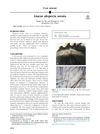
November 2018 in “JAAD case reports” This report presents a case of alopecia areata manifesting in a linear pattern, deviating from the typical presentation of sharply demarcated round patches.
3 citations
,
November 2020 in “Dermatologic Therapy” This study found that intralesional triamcinolone acetonide was more effective than saline for hair regrowth in scalp alopecia areata, with 10 mg/mL showing the best response but more side effects.
 January 2025 in “Dermatology Review”
 This case report from the provided study details a previously unreported adverse effect of salivary gland inflammation potentially linked to acitretin therapy for generalized pustular psoriasis, suggesting further research is needed to explore this association.
April 2025 in “Indian Journal of Paediatric Dermatology” This case report describes a 7-month-old girl diagnosed with acrodermatitis enteropathica, linked to low zinc levels, whose skin lesions improved significantly after zinc supplementation.
40 citations
,
May 2010 in “American Journal of Clinical Dermatology” This study reports that four Indian patients with acne keloidalis nuchae also exhibited acanthosis nigricans, suggesting a potential link to metabolic syndrome, though further research is needed to confirm this association.
74 citations
,
August 2002 in “Clinical Endocrinology” In this study, low doses of cyproterone acetate with ethinylestradiol were as effective as low-dose flutamide in reducing acne severity in hyperandrogenic women, while finasteride was less effective.