 1 citations
,
August 2013 in “Springer eBooks”
1 citations
,
August 2013 in “Springer eBooks” Birth control pills and anti-androgen medications help manage hair growth, acne, and hair loss in women with PCOS.
 July 2026 in “Journal of Ovarian Research”
 In this review, researchers provided a comprehensive analysis of anti-androgen therapies for polyendocrine metabolic ovarian syndrome (PMOS/PCOS), examining their efficacy and safety while proposing a phenotype-guided management framework and highlighting research gaps, such as long-term cardiovascular safety and predictive biomarkers.
 June 2026 in “Reproduction and Fertility”
 In this study, researchers highlighted that PCOS involves not only hormonal imbalances but also significant changes in the microbiome and immune system, which complicate its impact on fertility and suggest potential for new diagnostic and therapeutic strategies.
June 2026 in “IP Indian Journal of Clinical and Experimental Dermatology” This study observed that a significant proportion of women with acne vulgaris also met the criteria for PCOS, suggesting a notable link between the two conditions.
 June 2026 in “International Journal of Innovative Technologies in Social Science”
 In this narrative review, the authors highlighted that AI-supported electronic health record analysis could help recognize Polycystic Ovary Syndrome/Polyendocrine Metabolic Ovarian Syndrome earlier, but also warned that these systems might perpetuate historical biases if not properly validated and interpreted.
June 2026 in “Health Nanotechnology” This narrative review suggests that nanoformulated phytochemicals hold promise for managing polycystic ovarian syndrome, but their efficacy and safety compared to standard treatments require further validation through clinical studies.
June 2026 in “Biomedical and Therapeutics Letters” This review discusses AMH and ovarian morphology as complementary markers in diagnosing PCOS/PMOS and reports no new clinical results, highlighting the need for a multidomain approach in diagnosis and treatment.
 June 2026 in “International Journal of Homoeopathic Sciences”
 In this case report, a woman with PCOS, hypothyroidism, and hair loss after miscarriage experienced significant improvement in hair health and confidence following individualized homeopathic treatment, nutritional correction, and hair therapy at Dr Batra’s® Homeopathy Clinic.
May 2026 in “Quality in Sport” This study suggests that berberine may offer multiple benefits for women with polycystic ovary syndrome by improving metabolic and hormonal profiles, though further research is needed on its long-term effects on reproductive outcomes.
 May 2026 in “Zenodo (CERN European Organization for Nuclear Research)”
 This review provides an educational resource on Polycystic Ovary Syndrome, detailing its pathophysiology and complications, and reports no new clinical results.
 May 2026 in “Zenodo (CERN European Organization for Nuclear Research)”
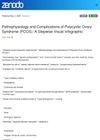
 This infographic reviews the pathophysiology and complications of PCOS, illustrating how genetic and environmental factors contribute to its development, and highlights associated metabolic and neuroendocrine effects.
May 2026 in “Journal of Investigative Dermatology” In this study, genetic factors associated with hirsutism were identified, suggesting that both androgen-dependent and independent mechanisms may contribute to excessive hair growth in women.
May 2026 in “Journal of Pharmacognosy and Phytochemistry” This review discusses the renaming of Polycystic Ovary Syndrome to Polyendocrine Metabolic Ovarian Syndrome, reflecting its broader recognition as a multisystem metabolic-endocrine disorder, and reports no new clinical results.
 April 2026 in “Biomolecules”
 This review highlights recent advancements in molecular understanding and treatment approaches for PCOS, including innovative drug delivery systems and AI-driven precision medicine, but provides no new clinical results.
 March 2026 in “Inflammopharmacology”
 This study found that ursolic acid at 50 mg/kg improved biochemical, hormonal, and ovarian histopathological markers in a rat model of PCOS, suggesting its potential as a therapeutic option.
 March 2026 in “International Journal of Innovative Technologies in Social Science”
 This study reviewed literature to evaluate how regular physical activity affects women with PCOS, finding that both aerobic and resistance exercises can significantly improve insulin resistance, body composition, cardiorespiratory fitness, and mental health while reducing PCOS symptoms.
March 2026 in “Endocrine Metabolic & Immune Disorders - Drug Targets” This study found that in women with PCOS, a combination of finasteride and spironolactone significantly improved all health-related quality of life scales and reduced hyperandrogenism within four months, supporting its role alongside lifestyle measures.
 March 2026 in “Zenodo (CERN European Organization for Nuclear Research)”
 This study investigates the potential effects of Shatpushpa oil MatraBasti on menstrual regulation and obesity in women with polycystic ovary syndrome; results are yet to be determined.
 March 2026 in “Zenodo (CERN European Organization for Nuclear Research)”
 This study aims to evaluate the effects of Shatpushpa (Anethum sowa) oil in women aged 18 to 35 with PCOS, focusing on its potential to restore estrogen function, regulate menstrual cycles, reduce excess adipose tissue, and balance hormonal levels, but results are not yet reported.
February 2026 in “Expert Review of Endocrinology & Metabolism” This review discusses the dermatologic manifestations and management of polycystic ovary syndrome, underscoring the need for mechanism-based, personalized treatments and integrated mental health support, but reports no new clinical results.
 February 2026 in “World Journal of Interdisciplinary Innovation Sciences”
 This systematic review found that cinnamon supplementation may modestly improve insulin sensitivity and potentially reduce hyperandrogenism in women with PCOS, but stresses the need for large-scale clinical trials.
 January 2026 in “AYUSHDHARA”
 This case study highlights that an Ayurvedic treatment approach involving Basti Chikitsa and Tilmooladi Churna over 3 months may improve menstrual regularity and hormonal profiles in a woman with polycystic ovary syndrome.
January 2026 in “Journal of Education Health and Sport” This review assesses whether using letrozole alongside physical activity and nutrition is clinically beneficial for enhancing ovulation outcomes in women with PCOS-related infertility, but it doesn't report specific results from the evaluation.
 January 2026 in “International Journal of Unani and Integrative Medicine”
 This review correlates modern biomedical and Unani medical perspectives on PCOS, suggesting that integrating both approaches might improve symptom management and quality of life for affected women, though it reports no new clinical results.
January 2026 in “International Journal of Gynaecology Sciences” This review discusses the proposal to rename Polycystic Ovary Syndrome as PolyMetabolic Ovarian Syndrome and reports no new clinical results, highlighting diagnostic misconceptions and the importance of personalized management.
 December 2025 in “Journal of Education Health and Sport”
 This review discusses the potential of green tea, especially its catechin EGCG, in reducing PCOS symptoms like insulin resistance and androgen levels, but reports no new clinical results and emphasizes the need for further research.
December 2025 in “Biomedicines” In this study, researchers identified two person-centered sexual function profiles among women, linked to physical and psychological factors, with PCOS showing greater, though not significant, presence in the dysfunction profile. The dysfunction was associated with higher adiposity and body-image distress.
 December 2025 in “Scientific Reports”
 In this study, researchers observed that DHEA-induced PCOS rats experienced significant changes in gut microbiota and metabolic profiles, particularly affecting steroid and lipid metabolism, suggesting the gut-ovary axis may play a role in the pathogenesis of PCOS.
 December 2025 in “Zenodo (CERN European Organization for Nuclear Research)”
 This review reports that anti-androgens, often combined with contraception, are supported for managing PCOS symptoms related to high androgen levels, but uncertainties remain about long-term safety and metabolic effects, indicating a need for future research on various treatment approaches.
 December 2025 in “Zenodo (CERN European Organization for Nuclear Research)”
 This review addresses the use of anti-androgens in managing symptoms of polycystic ovary syndrome, noting both their clinical effectiveness and associated safety concerns, while highlighting the need for more research into their long-term safety and metabolic effects.