4 citations
,
November 2020 in “Case reports in dermatology” This report summarizes recent cases of the rare condition erythromelanosis follicularis faciei et colli to illustrate its varied clinical presentations.
 3 citations
,
June 2022 in “European journal of human genetics”
3 citations
,
June 2022 in “European journal of human genetics” This study reports the first cases of recessive KRT17-related pachyonychia congenita involving all ectodermal derivatives in seven members of two consanguineous Pakistani families.
 July 2014 in “Plastic and Reconstructive Surgery”
 The rib-sparing technique in breast reconstruction may lead to more complications without reducing the need for further surgery.
11 citations
,
January 2021 in “British Journal of Dermatology” This report describes a new case of syndromic ichthyosis caused by compound heterozygous mutations in AP1B1, detailing the associated clinical features and molecular consequences in the patient.
September 2023 in “Journal of the American Academy of Dermatology”  4 citations
,
January 2015 in “Dermatology”
4 citations
,
January 2015 in “Dermatology” This study concluded that using an erbium:YAG laser for calvarium trepanation and granulation tissue induction is comparable to the rose head burr, offering a beneficial alternative method.
 22 citations
,
November 2011 in “Journal of Analytical Toxicology”
22 citations
,
November 2011 in “Journal of Analytical Toxicology” This review discusses the relevance of human androgen receptor action in sports doping and examines the potential of cell-based biological assays for detecting androgenic anabolic steroid use, without presenting new research findings.
17 citations
,
July 2022 in “BMC Genomics” This study found that overexpression of the FA2H gene in cashmere goats' hair follicle cells may enhance hair proliferation and regulate genes affecting cashmere fineness.
May 2026 in “Journal of Medicinal Chemistry” In this study, the authors developed a novel PROTAC named dAR-6–1, which demonstrated superior hair regeneration in an AGA mouse model compared to minoxidil, highlighting its promise as a therapy due to potent AR degradation and excellent skin permeability.
January 2018 in “OPen Access Repositorium der Universität Ulm (OPARU) (Ulm University)” This study found that zebrafish can completely regenerate their ventricular myocardium within four weeks, with Wnt/β-catenin signaling playing a critical role in cardiomyocyte dedifferentiation and proliferation.
 January 2024 in “PloS one”
 This study found that rat hair-follicle-associated pluripotent stem cells can be successfully differentiated into beating atrial and ventricular cardiomyocytes by using specific combinations of growth factors and inhibitors in culture, demonstrating their potential to form functional myocardial fibers similar to adult heart cells.
19 citations
,
May 2016 in “Cytotechnology” February 2009 in “Journal of Investigative Dermatology” EGFR is essential for organized skin nerve growth and branching.
1 citations
,
April 2023 in “International journal of molecular sciences” In this study, AMACO was found to be non-essential for the formation or function of anchoring cords in mice, despite its presence in the structure.
 4 citations
,
December 2013 in “The Journal of Dermatology”
4 citations
,
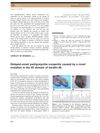
December 2013 in “The Journal of Dermatology” This letter to the editor discusses a case of delayed-onset pachyonychia congenita linked to a new mutation in keratin 6b but presents no new research findings.
 1 citations
,
November 2008 in “Acta crystallographica”
1 citations
,
November 2008 in “Acta crystallographica” This study reports the crystallization of the human androgen receptor's ligand-binding domain with nonsteroidal ligands, which may aid in understanding the differences in binding compared to steroidal ligands.
September 2005 in “Revue de Stomatologie et de Chirurgie Maxillo-faciale” September 2023 in “Journal of the American Academy of Dermatology”  1 citations
,
January 1970
1 citations
,
January 1970 This review discusses the structure, expression, regulation, and potential functions of the nuclear receptor coactivator NcoA4 in cancerous and non-cancerous pathologies, but reports no new results.
 1 citations
,
December 2018 in “Journal of genetic medicine”
1 citations
,
December 2018 in “Journal of genetic medicine” In this case report, a 20-year-old male with tricho-rhino-phalangeal syndrome was found to have a de novo frameshift mutation in the TRPS1 gene, highlighting the challenges in diagnosing this rare disorder.
372 citations
,
December 2004 in “Nature Genetics” 4 citations
,
April 2012 in “The journal of investigative dermatology/Journal of investigative dermatology” This study developed a mouse model lacking keratin 16 to replicate palmoplantar lesions, which may help uncover the molecular mechanisms driving these lesions in pachyonychia congenita and focal non-epidermolytic palmoplantar keratoderma.
January 2021 in “Skin Appendage Disorders”  January 2024 in “Wiadomości Lekarskie”
 This research explores the impact of advanced technologies, such as machine learning and robotics, on cardiothoracic surgery, noting that innovations like artificial hearts and enhanced circulatory support systems may improve patient outcomes by aiding diagnostics, surgery planning, and postoperative care.
 September 2021 in “Clinical research in dermatology”
 This review discusses frontal fibrosing alopecia and reports no new clinical results; the authors highlight the need for randomized controlled trials on 5AR inhibitors to assess their efficacy and safety.
 5 citations
,
June 2023 in “BMC genomics”
5 citations
,
June 2023 in “BMC genomics” This study found that a specific genetic mutation in the Fgf5 gene may contribute to the long-hair trait in Angora rabbits by reducing the binding capacity of the FGF5 protein.
 28 citations
,
October 2004 in “Differentiation”
28 citations
,
October 2004 in “Differentiation” This study identified a large deletion in the desmoglein 4 gene as the genetic basis of the Iffa Credo "hairless" rat's skin phenotype, linking it to lanceolate hair mutations.
18 citations
,
September 2018 in “The Journal of Agricultural Science” In this study, the presence of certain KAP15-1 gene variants in sheep was associated with differences in wool yield and fiber characteristics.
 9 citations
,
January 2023 in “International Journal of Biological Sciences”
9 citations
,
January 2023 in “International Journal of Biological Sciences” This study suggests that CTHRC1, a protein expressed in cardiac fibroblasts, may improve wound repair and prevent cardiac rupture after myocardial infarction by activating a specific signaling pathway.
 December 2000 in “British Journal of Dermatology”
 This article contains no abstract or new findings.