 3 citations
,
May 2013 in “Journal of the American Association of Nurse Practitioners”
3 citations
,
May 2013 in “Journal of the American Association of Nurse Practitioners” This review evaluates six primary studies on androgenetic alopecia treatments and suggests topical minoxidil or finasteride as first-line options, recommending further research into treatments and practice guidelines.
 2 citations
,
December 2017 in “Bangladesh Journal of Pharmacology”
2 citations
,
December 2017 in “Bangladesh Journal of Pharmacology” In this study, N. sativa oil and decoction significantly protected against chemotherapy-induced alopecia in albino rats.
 January 2002 in “Dermatologic Surgery”
 This study found that using topical minoxidil before and after facelift surgery may help prevent temporal hair loss without increasing other complication risks.
 370 citations
,
September 1999 in “The New England Journal of Medicine”
370 citations
,
September 1999 in “The New England Journal of Medicine” This article discusses the treatment of androgenetic alopecia and alopecia areata with finasteride and minoxidil but reports no new clinical results.
 15 citations
,
October 2003 in “Dermatologic Surgery”
15 citations
,
October 2003 in “Dermatologic Surgery” This study found that combining drug therapy with hair grafts can regress male androgenetic alopecia from Hamilton type V to type III.
 November 2003 in “Dermatologic Surgery”
 This study suggests that combining drugs with hair grafts may effectively regress male androgenetic alopecia from Hamilton type V to type III when evaluated using the Dynamic Multifactorial Classification.
 1 citations
,
July 2017 in “Global journal of pharmacy & pharmaceutical sciences”
1 citations
,
July 2017 in “Global journal of pharmacy & pharmaceutical sciences” The study explored niosome formulations containing minoxidil and tretinoin and found increased drug stability and controlled release, suggesting potential as an effective drug delivery system for treating hair loss.
 421 citations
,
April 2012 in “The New England Journal of Medicine”
421 citations
,
April 2012 in “The New England Journal of Medicine” Alopecia Areata is an autoimmune condition causing hair loss with no cure and treatments that often don't work well.
 49 citations
,
February 2019 in “The Journal of Clinical Endocrinology and Metabolism”
49 citations
,
February 2019 in “The Journal of Clinical Endocrinology and Metabolism” This review offers evidence-based recommendations for diagnosing and treating female pattern hair loss, emphasizing clinical assessment and starting treatment with minoxidil, while noting that measurement of certain hormones and vitamins is optional.
 14 citations
,
January 1985 in “International Journal of Dermatology”
14 citations
,
January 1985 in “International Journal of Dermatology” The cause of alopecia areata was unknown, and while various treatments existed, no best treatment was agreed upon.
 9 citations
,
August 2018 in “Journal der Deutschen Dermatologischen Gesellschaft”
9 citations
,
August 2018 in “Journal der Deutschen Dermatologischen Gesellschaft” This study provides the most comprehensive review to date of published cases of frontal fibrosing alopecia, emphasizing a notable association with thyroid disease.
 8 citations
,
January 2003 in “Plastic and Reconstructive Surgery”
8 citations
,
January 2003 in “Plastic and Reconstructive Surgery” This study reports that follicular unit grafting techniques, specifically creating a frontal forelock, achieved excellent and undetectable results in patients with advanced male pattern hair loss, leading to high patient satisfaction.
 3 citations
,
September 1989 in “Journal of Investigative Dermatology”
3 citations
,
September 1989 in “Journal of Investigative Dermatology” This study found that methyl nonanoate and methyl caprate significantly enhanced the skin penetration of minoxidil compared to solutions with other common enhancers like Azone, DMSO, or DEET.
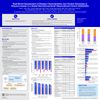
In this retrospective study of alopecia areata patients across several European countries, researchers observed a notable reduction in SALT scores, but few patients reached or maintained a clinically significant SALT score of ≤20, indicating potentially limited effectiveness of current treatments for extensive hair loss.
 December 2023 in “Azerbaijan Pharmaceutical and Pharmacotherapy J”
 This study formulated a minoxidil-loaded submicron emulsion-based topical gel, which demonstrated effective in vitro release, ex vivo permeation, and stability, suggesting it may offer a targeted treatment approach for alopecia compared to traditional methods.
January 2022 in “Indian Dermatology Online Journal” This study suggests that low-dose oral minoxidil could be a safe and effective option for male and female-patterned hair loss, potentially benefiting those unable to tolerate topical treatments.
 48 citations
,
May 1999 in “International Journal of Dermatology”
48 citations
,
May 1999 in “International Journal of Dermatology” This article reviews the diagnosis and management of alopecia areata but reports no new research findings.
 36 citations
,
May 2011 in “Dermatologic therapy”
36 citations
,
May 2011 in “Dermatologic therapy” This review discusses topical and intralesional treatments for alopecia areata, providing a management strategy based on patient age and disease severity, but reports no new clinical results.
 29 citations
,
January 1993 in “Dermatologic Clinics”
29 citations
,
January 1993 in “Dermatologic Clinics” This paper reviews diffuse androgen-dependent alopecia and chronic telogen effluvium in women, highlighting diagnostic challenges and management issues, but reports no new clinical findings; the authors suggest effective treatments are available.
 19 citations
,
September 2020 in “Pharmaceutics”
19 citations
,
September 2020 in “Pharmaceutics” This study investigated a new formula called SV-loaded nanospanlastics for topical application to treat androgenic alopecia. It showed similar effectiveness to minoxidil lotion but with fewer adverse effects when used to enhance dermal delivery and efficacy of sodium valproate.
 18 citations
,
January 2007 in “Pharmaceutical Biology”
18 citations
,
January 2007 in “Pharmaceutical Biology” This study found that petroleum ether extracts of Citrullus colocynthis reduced hair growth initiation time and advanced more hair follicles to the anagen phase in albino rats compared to untreated controls and minoxidil.
 16 citations
,
January 2017 in “Acta dermatovenerologica Alpina, Pannonica et Adriatica (Tiskana izd.)”
16 citations
,
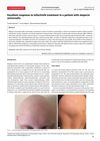
January 2017 in “Acta dermatovenerologica Alpina, Pannonica et Adriatica (Tiskana izd.)” This case study reports that a 23-year-old woman with alopecia universalis experienced complete hair regrowth after six months of treatment with tofacitinib, a JAK-3 inhibitor.
 1 citations
,
June 2017 in “Journal of The American Academy of Dermatology”
1 citations
,
June 2017 in “Journal of The American Academy of Dermatology” PRP treatment for hair loss shows promise, with 58% of patients satisfied and most noticing improvement within 6 months.
 February 2021 in “Journal of pharmaceutical and biological sciences”
 This article reviews multiple treatments for alopecia areata, highlighting their variable efficacy and safety without any being curative; it reports no new clinical findings.
 March 2014 in “Journal of the American Academy of Dermatology”
 Alopecia areata is relatively common in children, has a variable course, and shows different responses to treatment; thyroid testing is recommended for those affected.
 January 2003 in “Elsevier eBooks”
 Androgens and other hormones affect hair growth and skin conditions like acne.
 July 1988 in “Journal of The American Academy of Dermatology”
 This article reviews therapeutic advances published between December 1986 and December 1987 but reports no new research findings; readers are advised to consult the original articles before considering new therapies.
 14 citations
,
August 2013 in “Facial Plastic Surgery Clinics of North America”
14 citations
,
August 2013 in “Facial Plastic Surgery Clinics of North America” This review discusses current and emerging medical therapies for androgenetic alopecia but reports no new clinical findings, emphasizing the importance of stabilizing the condition as a complement to surgical hair restoration.
 1 citations
,
November 2014
1 citations
,
November 2014 This chapter reviews patchy hair loss due to skin disease, nail disorders related to chronic trauma, and treatments for small carcinomas, but it reports no new clinical findings.
 July 2012 in “Springer eBooks”
 The document concludes that proper diagnosis and treatment of nonscarring alopecias can improve quality of life and hair regrowth is possible as the hair follicle remains intact.