 45 citations
,
April 2019 in “International Immunology”
45 citations
,
April 2019 in “International Immunology” This review discusses the mechanisms behind alopecia areata and primary cicatricial alopecia and reports no new clinical results, aiming to guide the development of targeted treatments.
 191 citations
,
May 2018 in “British journal of dermatology/British journal of dermatology, Supplement”
191 citations
,
May 2018 in “British journal of dermatology/British journal of dermatology, Supplement” This study reviewed recent theories on alopecia areata's pathogenesis, highlighting its autoimmune nature due to immune privilege disruption in hair follicles, and noted current treatments have limited efficacy with high relapse rates, underscoring the need for further research into its mechanisms for better therapies.
6 citations
,
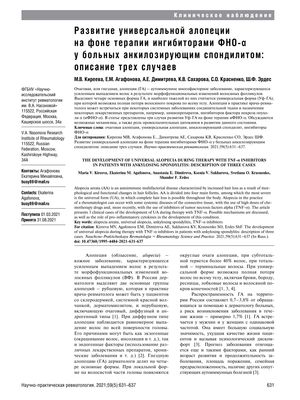
May 2018 in “Zeitschrift für Rheumatologie” This case report describes a 56-year-old woman with rheumatoid arthritis who developed alopecia universalis during treatment with the TNF inhibitor adalimumab, with no hair regrowth after stopping the medication.
 290 citations
,
December 2017 in “Journal of The American Academy of Dermatology”
290 citations
,
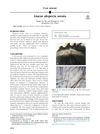
December 2017 in “Journal of The American Academy of Dermatology” This article reviews the epidemiology, clinical evaluation, and pathogenesis of alopecia areata and highlights recent advancements, but it does not report new clinical findings.
 238 citations
,
November 2016 in “Journal of The American Academy of Dermatology”
238 citations
,
November 2016 in “Journal of The American Academy of Dermatology” In this study, tofacitinib was reported to improve scalp hair regrowth in patients with severe alopecia areata, alopecia totalis, and alopecia universalis, showing a higher response in alopecia areata.
37 citations
,
October 2014 in “JAMA dermatology” This case report describes a woman with alopecia universalis, resistant to multiple treatments, who experienced successful hair regrowth with adalimumab, suggesting potential mechanisms for future investigation.
701 citations
,
August 2014 in “Nature medicine” This study found that JAK inhibitors promote hair regrowth in both mice and human alopecia areata cases by blocking key immune pathways involved in disease development.
 33 citations
,
June 2012 in “Journal of Crohn's and colitis”
33 citations
,
June 2012 in “Journal of Crohn's and colitis” This review discusses the role of immune responses, especially Th1 cytokines, in alopecia areata pathogenesis and reports no new research findings.
61 citations
,
June 2010 in “Journal of the European Academy of Dermatology and Venereology” This study highlights cases of alopecia areata that developed during anti-TNF-α therapy, suggesting a potential link or increased frequency, particularly among individuals with a personal or family history of autoimmune diseases.
 391 citations
,
January 2010 in “Journal of The American Academy of Dermatology”
391 citations
,
January 2010 in “Journal of The American Academy of Dermatology” This article reviews the clinical presentation and histopathologic features of alopecia areata and proposes a hypothesis for its development, but it reports no new clinical results.
161 citations
,
March 1992 in “International Journal of Dermatology” This study analyzed survey responses from 800 alopecia areata patients and found a possible genetic association with increased insulin-dependent diabetes mellitus in relatives but not in the patients themselves.