 5 citations
,
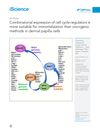
January 2021 in “iScience”
5 citations
,
January 2021 in “iScience” Using a combination of specific cell cycle regulators is better for safely keeping hair root cells alive indefinitely compared to cancer-related methods.
 8 citations
,
March 2020 in “Frontiers in Cell and Developmental Biology”
8 citations
,
March 2020 in “Frontiers in Cell and Developmental Biology” This study developed a DPC cell line by introducing mutant CDK4, Cyclin D1, and TERT, making it a promising tool to study downstream signaling pathways activated by testosterone in androgenetic alopecia.
 53 citations
,
February 2020 in “Expert Opinion on Pharmacotherapy”
53 citations
,
February 2020 in “Expert Opinion on Pharmacotherapy” This review discusses pharmacologic and non-pharmacologic treatments for androgenetic alopecia, noting that current medications like finasteride and minoxidil can slow hair loss but only partially restore hair growth, with early treatment offering better outcomes.
 13 citations
,
June 2018 in “Current Urology Reports”
13 citations
,
June 2018 in “Current Urology Reports” This review suggests that while finasteride for male pattern hair loss was previously considered safe, there is now evidence associating 5-α reductase inhibitors with significant sexual and reproductive side effects.
 19 citations
,
January 2016 in “Annals of Dermatology”
19 citations
,
January 2016 in “Annals of Dermatology” This study found that dutasteride 0.5 mg was generally well-tolerated and led to overall improvement in male patients aged 18 to 41 with androgenic alopecia in a Korean clinical practice setting.
 171 citations
,
July 2007 in “Journal of Investigative Dermatology”
171 citations
,
July 2007 in “Journal of Investigative Dermatology” The researchers reported that DHT-inducible DKK-1 may play a significant role in DHT-driven balding by inhibiting hair follicle cell growth and promoting apoptosis in androgenetic alopecia.

