29 citations
,
January 2019 in “Journal of the European Academy of Dermatology and Venereology”
29 citations
,
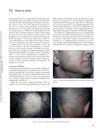
January 2019 in “Journal of the European Academy of Dermatology and Venereology” This study found that trichoscopic examination is useful for diagnosing and monitoring systemic lupus erythematosus, with severe diffuse non-scarring alopecia indicating active disease.
 46 citations
,
June 2018 in “American Journal of Clinical Dermatology”
46 citations
,
June 2018 in “American Journal of Clinical Dermatology” This review summarizes the clinical, trichoscopic, and histopathological features of alopecia types associated with cutaneous and systemic lupus erythematosus and explores their links to disease activity, but it reports no new clinical results.
 16 citations
,
February 2018 in “Journal of The American Academy of Dermatology”
16 citations
,
February 2018 in “Journal of The American Academy of Dermatology” This study found that scalp involvement in dermatomyositis consistently shows a nonscarring pattern with chronic telogen effluvium, featuring telangiectasia and mucin deposition as universal histologic markers.
 30 citations
,
December 2017 in “Clinical, Cosmetic and Investigational Dermatology”
30 citations
,
December 2017 in “Clinical, Cosmetic and Investigational Dermatology” This study found significant differences in hair density, non-vellus hair diameter, and percentage of miniaturized hair between normal women and those with female pattern hair loss, particularly in the midscalp and parietal areas.
36 citations
,
November 2016 in “European journal of dermatology/EJD. European journal of dermatology” This review examines systemic drugs that can cause changes in hair color and emphasizes the importance of reporting these adverse events, but it does not include new clinical outcomes.
 6 citations
,
October 2016 in “Journal of Chemotherapy”
6 citations
,
October 2016 in “Journal of Chemotherapy” This case report describes a rare instance of alopecia universalis occurring eight weeks after discontinuing pegylated interferon α and ribavirin therapy, highlighting the need for awareness among healthcare providers.
 10 citations
,
September 2014 in “European Journal of Dermatology”
10 citations
,
September 2014 in “European Journal of Dermatology” This case report describes a 29-year-old woman with longstanding alopecia areata who experienced improvement in her scalp hair loss after 7 years of topical treatment with squaric acid dibutylester.
 30 citations
,
October 2013 in “Lupus”
30 citations
,
October 2013 in “Lupus” This study identified distinct clinical and dermatoscopic features to differentiate non-scarring patchy alopecia in SLE from alopecia areata, emphasizing the value of serological tests in diagnosis.
 3 citations
,
January 2013 in “Journal of the European Academy of Dermatology and Venereology”
3 citations
,
January 2013 in “Journal of the European Academy of Dermatology and Venereology” This letter to the editor discusses a previous clinical and histopathological analysis of four cases of severe diffuse non-scarring hair loss in systemic lupus erythematosus, reporting no new study results.
 35 citations
,
October 2012 in “Dermatologic Clinics”
35 citations
,
October 2012 in “Dermatologic Clinics” This article reviews the impact of different forms of alopecia on patients with systemic autoimmune diseases and reports no new clinical findings; it emphasizes the need for attentive management of alopecia-related symptoms.
4350 citations
,
May 2012 in “Arthritis & Rheumatism” This study found that the new SLICC classification criteria for systemic lupus erythematosus were more sensitive and resulted in fewer misclassifications than the current ACR criteria, although they had lower specificity.
 15 citations
,
December 2011 in “Journal of the European Academy of Dermatology and Venereology”
15 citations
,
December 2011 in “Journal of the European Academy of Dermatology and Venereology” In this study, severe diffuse hair loss in patients with systemic lupus erythematosus was associated with distinct clinical, dermoscopic, and histopathological features, which improved alongside treatment of the underlying condition.
 34 citations
,
June 2007 in “The Journal of Dermatology”
34 citations
,
June 2007 in “The Journal of Dermatology” This study observed that non-scarring diffuse hair loss was common in systemic lupus erythematosus patients, but did not find a significant relationship with the SLE Disease Activity Index.
 309 citations
,
May 1993 in “Journal of The American Academy of Dermatology”
309 citations
,
May 1993 in “Journal of The American Academy of Dermatology” This study concluded that horizontal sections of scalp biopsy specimens provide more diagnostic information for male pattern androgenetic alopecia than vertical sections and can predict hair regrowth potential following topical minoxidil therapy.