Choose your topical antiandrogen and tell me why 8/6/2024
The conversation is about choosing a topical antiandrogen for hair loss, with options including RU58841, CB0301, Pyrolutamide, Alfatradiol, and Fluridil. Users discuss their preferences and reasons for selecting specific treatments.
View this post in the Community →
Similar Community Posts Join
5 / 5 resultscommunity Is there a topical androgen receptor blocker so we don't have to fuck with the enzyme and destroy our allopregnanolone, but go and hit the end target straight?
The conversation discusses topical androgen receptor blockers for hair loss, mentioning Clascoterone, Pyrilutamide, GT20029, and RU58841. Ketoconazole's effectiveness and application methods are also debated.
community I interviewed Kintor: GT20029 Clinical Trial Pictures. As well as KX826.
GT20029 and KX826 are promising hair loss treatments, with GT20029 increasing hair count and KX826 showing significant results. KX826 may be a good alternative for those who can't use finasteride or dutasteride, though results vary.
community Pyrilutamide vs Topical Finasteride
Topical finasteride is currently more effective than pyrilutamide for hair loss. Combining treatments like topical finasteride and pyrilutamide may enhance results due to different mechanisms.
community Serious question, is there nothing that can be done if Dutasteride doesn’t help to stop my hair loss?
A 25 year old male who has been using finasteride and dutasteride for two years to treat his hair loss, with no success. Other treatments such as oral minoxidil, topical anti-androgens, RU58841, latanoprost, topical estrogen, CB 03 01, microneedling, keto 2% shampoo, vitamin D, Omega 3, B vitamins and probiotics were discussed.
community Are there ever going to be any oral DHT blocking treatments in the future?
The discussion revolves around the need for future oral DHT blockers for hair loss treatment that don't have the side effects of current options like Finasteride and Dutasteride. One user suggests that the future of hair loss treatment will likely be topical anti-androgens, as they can target hair follicles without affecting the entire system.
Related Research
6 / 6 results
research RU 58841, a new specific topical antiandrogen: A candidate of choice for the treatment of acne, androgenetic alopecia and hirsutism
This study found that the topically applied non-steroidal antiandrogen RU 58841 may reduce androgen-dependent skin conditions in a hamster model with minimal systemic effects.
research RU 58841-myristate–prodrug development for topical treatment of acne and androgenetic alopecia.
This study reports that RU 58841-myristate, a new antiandrogen prodrug formulated with solid lipid nanoparticles, shows potential for targeting hair follicles in preclinical laboratory settings.
research A controlled study of the effects of RU58841, a non-steroidal antiandrogen, on human hair production by balding scalp grafts maintained on testosterone-conditioned nude mice
This study found that the non-steroidal antiandrogen RU58841 increased hair growth rates and promoted hair cycle initiation in balding human scalp grafts on testosterone-conditioned nude mice, indicating a positive effect on hair growth.
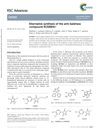
research Alternative synthesis of the anti-baldness compound RU58841
A new, less toxic and more efficient method to create the anti-baldness compound RU58841 was developed in 2014.
research Dose-dependent and long term effects of RU58841 (androgen receptor blocker) on hair growth in the bald stumptailed Macaque.
In this study using a macaque model, RU58841 at a 5% concentration significantly increased hair density, thickness, and length in the frontal bald scalp over six months.
research Significance of RU58841 as a therapeutic agent effecting androgen receptor molecular interactions in human hair follicles.
RU58841, a substance from France, can potentially block the effects of hormones that cause hair loss and excessive hair growth, performing better than a similar substance, cyproterone acetate.