May 2023 in “Current Applied Science and Technology”
 In this animal study, researchers found that exposure to a CO2 laser at various power levels caused significant skin damage in rats, including severe burns, coagulation, and tissue obliteration, with higher laser doses resulting in more pronounced injuries.
 14 citations
,
January 2014 in “Cells Tissues Organs”
14 citations
,
January 2014 in “Cells Tissues Organs” This study found that single high-dose irradiation in mice induced more severe acute skin injury and hair depigmentation, while fractional doses led to longer-term damage in the dermis and subcutis.
 128 citations
,
August 2015 in “Cell Stem Cell”
128 citations
,
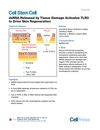
August 2015 in “Cell Stem Cell” The researchers reported that dsRNA from damaged skin activates TLR3, promoting hair follicle regeneration, while TLR3-deficient animals fail to initiate this process, suggesting potential therapeutic approaches for hair neogenesis.
 December 2024 in “Cell Communication and Signaling”
 This study found that subcutaneous adipose tissue-derived extracellular vesicles (AT-EVs) protect skin from photodamage by enhancing fibroblast proliferation and reducing oxidative stress compared to those from adipose-derived stem cells.
This study found that the loss of papillary fibroblasts in the skin due to UV radiation is mainly caused by an uncontrolled inflammatory response, with T cells helping fibroblast survival.