 4 citations
,
January 2014 in “RSC Advances”
4 citations
,
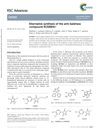
January 2014 in “RSC Advances” A new, less toxic and more efficient method to create the anti-baldness compound RU58841 was developed in 2014.
3 citations
,
July 1969 in “PubMed” This study found that unilateral neutron irradiation in pigs significantly decreased the uptake of radioactive zinc in blood, impaired growth, and led to decreased organ weights and hair pigmentation changes on the irradiated side.
 114 citations
,
October 2009 in “Gastroenterology”
114 citations
,
October 2009 in “Gastroenterology” This review discusses zinc's role as an essential trace element in human nutrition, particularly its importance in total parenteral nutrition, and reports no new clinical results.
 January 2008 in “Информационно-управляющие системы”
 This review outlines the physiological roles of zinc transporters and their involvement in human diseases, emphasizing their molecular, biochemical, and genetic mechanisms without presenting new research findings.
April 2024 in “Актуальні питання педіатрії акушерства та гінекології” This study concluded that inositol use in women with polycystic ovary syndrome and obesity may improve metabolic profiles and reproductive function as part of a comprehensive treatment approach.
March 1995 in “Proceedings of the British Society of Animal Science” This review discusses zinc's role in dog nutrition, emphasizing that zinc absorption may be improved when provided as an amino acid chelate rather than an inorganic source, but reports no new results.
This study found that supplementing dog food with zinc methionyl glycinate at 160 ppm improved hair growth rate, zinc levels in plasma and hair, and hair condition more than lower doses or sulfate form.
1 citations
,
January 2003 in “Chinese Journal of Pharmaceuticals” This study developed a new synthetic route for finasteride that omits the costly reagent 2,2′ dipyridyl disulfide, achieving an overall yield of 16%.
21 citations
,
June 1983 in “Pediatric clinics of North America/The Pediatric clinics of North America” This article discusses various clinical presentations and underlying mechanisms of zinc deficiency but reports no new research findings; biochemical signs often precede clinical symptoms.
 January 2023 in “Postepy Dermatologii I Alergologii”
 This review discusses the roles and deficiency symptoms of zinc in human health, emphasizing its dietary importance and potential benefits of supplementation, but reports no new clinical findings.
 3 citations
,
January 2003 in “Synthetic Communications”
3 citations
,
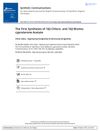
January 2003 in “Synthetic Communications” This research describes the synthesis of 16β-chloro- and 16β-bromo-cyproterone acetate, detailing the chemical processes involved, but reports no clinical outcomes.
 April 1978 in “Pediatric research”
 This study found that zinc levels in hospitalized patients with significant weight loss did not correlate with taste perception or vitamin A status, even in those with reduced taste acuity.
 9 citations
,
April 2023 in “Journal for Research in Applied Sciences and Biotechnology”
9 citations
,
April 2023 in “Journal for Research in Applied Sciences and Biotechnology” This narrative discusses the critical roles of zinc in both biological processes and industrial applications but provides no new research findings.
6 citations
,
July 2025 in “Cancer Medicine” This study reported that ZSYY001, a nanoparticle formulation of polymeric micellar paclitaxel, showed promising antitumor activity and was safe and well-tolerated in preclinical models and a phase I trial, without acute hypersensitivity reactions at doses up to 390 mg/m².
April 2022 in “SDÜ Tıp Fakültesi Dergisi” In this study, sodium benzoate at the No Adverse Effect Level dose adversely affected kidney and liver function and increased oxidative stress and genotoxicity in prepubertal rats.
 January 2024 in “Biochemistry Research International”
 This study found that compounds from Ziziphus spina-christi roots exhibited promising antibacterial and antioxidant activities, supporting its traditional medicinal use.
March 1995 in “Proceedings of the British Society of Animal Science” This review discusses zinc's role in dog metabolism and suggests that zinc from amino acid chelates might be better absorbed than from inorganic sources, but reports no new experimental results.
2 citations
,
May 2024 in “Nanomaterials” This study reports the synthesis of a hectorite/phenanthroline nanomaterial which acts as a potential fluorescent sensor for detecting Zn ions in water, offering a solution to the low solubility issue of traditional metal ion-detecting molecules.
 23 citations
,
November 2021 in “Journal of Bionic Engineering”
23 citations
,
November 2021 in “Journal of Bionic Engineering” This study found that PCL-Col/ZnO fibrous scaffolds enhanced wound healing and exhibited antibacterial properties, making them promising for use as a wound dressing.
February 2022 in “Journal of Innovative Science and Engineering (JISE)” This review discusses synthetic piezoelectric polymers within the smart polymer family, detailing their applications in various medical fields, but reports no new experimental results.
January 2024 in “Wiadomości Lekarskie” This study found that engaging in outdoor physical activities significantly reduced the odds of increased HbA1C levels, lower HDL-cholesterol, and obesity among patients with metabolic syndrome, suggesting potential health benefits for this population.
2 citations
,
March 2013 in “BMJ Case Reports” In this case study, zinc deficiency persisted despite supplementation in a patient with severe malnutrition and empyema, potentially due to nutrient absorption competition and proton pump inhibitor use.
 May 2025 in “Birth Defects Research”
 This study investigated the effects of YWS1903 in pregnant rats and found that high doses led to fetal growth reduction and skeletal malformations, while lower doses did not cause significant issues, establishing a no observed adverse effect level at 60 mg/kg.
 20 citations
,
June 2022 in “Molecules”
20 citations
,
June 2022 in “Molecules” This review discusses three classes of thiazole-bearing compounds in drug development and presents preclinical findings but reports no new experimental results, highlighting the need for further drug discovery.
246 citations
,
April 1976 in “Annals of Surgery” In this study, a syndrome of zinc deficiency was observed in adults receiving intravenous feeding, with zinc supplementation improving symptoms except for delayed hair regrowth.
 April 2018 in “Assiut Veterinary Medical Journal/Maǧallaẗ Asyūṭ al-ṭibiyyaẗ al-baytariyyaẗ”
 This study found that fecal zinc concentration can serve as a biomarker for early diagnosis of zinc deficiency in lambs, complementing serum zinc evaluations.
 9 citations
,
December 2011 in “Potravinarstvo Slovak Journal of Food Sciences”
9 citations
,
December 2011 in “Potravinarstvo Slovak Journal of Food Sciences” This study identified significant morphological and sensory differences among 19 genotypes of Ziziphus jujube Mill. grown at the Slovak University of Agriculture, suggesting potential applications in organic agriculture and other practices.
 1 citations
,
January 2009 in “X-ray Structure Analysis Online”
1 citations
,
January 2009 in “X-ray Structure Analysis Online” A new compound was made that might help treat diseases related to male hormones.
 38 citations
,
November 2016 in “Aaps Pharmscitech”
38 citations
,
November 2016 in “Aaps Pharmscitech” This study found that the nanostructured lipid carrier formulation with a 70:30 solid to liquid lipid ratio significantly increased the dissolution rate, entrapment efficiency, and stability of spironolactone compared to its raw form.