 451 citations
,
March 2005 in “Endocrine Reviews”
451 citations
,
March 2005 in “Endocrine Reviews” This paper discusses the role of steroid sulfatase in hormone-dependent tumors and highlights the development of potent inhibitors, noting the commencement of a phase I trial for one inhibitor in postmenopausal breast cancer patients.
174 citations
,
July 2003 in “The Journal of Clinical Endocrinology & Metabolism” This study investigated genetic and phenotypic characteristics of androgen insensitivity syndrome in individuals with a 46,XY karyotype, documenting a range from complete to partial insensitivity.
 147 citations
,
January 2003 in “American journal of clinical dermatology”
147 citations
,
January 2003 in “American journal of clinical dermatology” This review discusses various forms of ichthyosis, including genetic and acquired types, detailing their characteristics, causes, and potential management strategies, but reports no new clinical results.
 138 citations
,
November 2015 in “Journal of Pharmacology and Experimental Therapeutics”
138 citations
,
November 2015 in “Journal of Pharmacology and Experimental Therapeutics” This review discusses the mechanisms associated with protoporphyrin IX in living cells and reports no clinical results; the authors emphasize its potential in cancer diagnosis and the risks of toxicity.
90 citations
,
May 2018 in “Molecular Cell” Caspase-3 helps control cell growth and organ size by activating YAP.
71 citations
,
January 2011 in “Orphanet Journal of Rare Diseases” This article reviews IFAP syndrome, an X-linked genetic disorder characterized by ichthyosis follicularis, alopecia, and photophobia, and reports no new clinical findings.
67 citations
,
April 1988 in “The Journal of Clinical Endocrinology & Metabolism” This study describes a family with X-linked gynecomastia and undervirilization in men, finding a subtle androgen receptor abnormality that may not always lead to infertility despite androgen resistance.
41 citations
,
January 1992 in “Journal of medical genetics” This study described seven male patients and six female carriers of keratosis follicularis spinulosa decalvans, highlighting distinct dermatological and ophthalmic markers including follicular hyperkeratosis and corneal dystrophy.
 37 citations
,
June 2002 in “The Laryngoscope”
37 citations
,
June 2002 in “The Laryngoscope” This study describes the otolaryngologic manifestations and multidisciplinary management strategies for 12 patients with ectodermal dysplasia, emphasizing the importance of early recognition for effective treatment.
 22 citations
,
January 2008 in “Physiological Research”
22 citations
,
January 2008 in “Physiological Research” This review discusses the role of steroid sulfatase in steroid hormone metabolism and highlights the need for more research on its expression and regulation, especially regarding hormone-dependent tumors.
 21 citations
,
July 2022 in “Orphanet journal of rare diseases”
21 citations
,
July 2022 in “Orphanet journal of rare diseases” This review discusses recent advancements in therapies for ichthyosis, highlighting promising prospects in protein replacement and gene therapy, but it reports no new clinical results.
 18 citations
,
August 2015 in “Biochemical and Biophysical Research Communications”
18 citations
,
August 2015 in “Biochemical and Biophysical Research Communications” This study found that the XEDAR receptor can activate the non-canonical NF-kB pathway involving p100 processing, which is regulated by interactions with TRAF proteins and specific kinases.
 17 citations
,
January 2011 in “Indian journal of dermatology, venereology, and leprology”
17 citations
,
January 2011 in “Indian journal of dermatology, venereology, and leprology” This paper describes a rare case of keratosis follicularis spinulosa decalvans in a nine-year-old girl, a condition typically more severe in males due to its X-linked inheritance.
 9 citations
,
March 2015 in “International reviews of immunology”
9 citations
,
March 2015 in “International reviews of immunology” This review discusses the relationship between ectodermal alterations and immunodeficiencies, particularly the roles of hyper-IgE syndrome, ectodermal dysplasia, and FOXN1 gene mutations, but it presents no new research findings.
5 citations
,
March 2005 in “Pediatric dermatology” Keratosis Follicularis Spinulosa Decalvans is a rare genetic disorder causing skin and hair issues, often inherited through the X chromosome.
 4 citations
,
May 2021 in “Journal of The American Academy of Dermatology”
4 citations
,
May 2021 in “Journal of The American Academy of Dermatology” This study found no significant genetic correlations between male pattern baldness and COVID-19 outcomes, suggesting that shared genetic factors may not explain the reported association.
1 citations
,
January 2022 in “Annals of Dermatology” In this case report, researchers identified a novel homozygous missense mutation in the MBTPS2 gene associated with the mild form of IFAP syndrome in a 7-year-old boy.
1 citations
,
January 2013 in “Indian journal of dermatology, venereology, and leprology” A girl inherited excessive body hair from her mother and grandmother.
 June 2026 in “World Journal of Clinical Pediatrics”
 This study highlights the importance of recognizing non-nutritional forms of rickets, which can manifest with subtle symptoms like alopecia and cataracts, and emphasizes that a comprehensive diagnostic approach, including genetic testing, can improve management and treatment outcomes.
 December 2023 in “Clinical Cosmetic and Investigational Dermatology”
 This case report describes an 8-year-old boy in Saudi Arabia diagnosed with IFAP syndrome, highlighting its distinct characteristics and distinguishing features from similar conditions, and notes successful genetic confirmation of the disorder.
 October 2023 in “Journal of dermatological science”
 This study highlights that mutations in the MBTPS2 gene can lead to dermatological disorders like IFAP syndrome and severe bone diseases such as X-Linked Osteogenesis Imperfecta, emphasizing the significance of understanding these genetic variants for disease mechanisms and associations.
This study identified several genetic mutations linked to hereditary skin and hair disorders in consanguineous families from remote areas of Pakistan, enhancing understanding of the molecular basis of these conditions.
 January 1982 in “Journal of The American Academy of Dermatology”
 Experts discussed treatments for skin conditions in children, emphasizing hydration, cautious medication use, and early intervention for infections.

This chapter reviews various skin disorders classified as Mendelian disorders of cornification and reports no new clinical findings, highlighting the complexity of genetics involved in inherited ichthyoses.
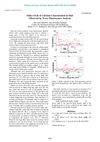
Hair can show daily calcium changes, linked to body calcium levels and influenced by hormones, and can help assess calcium metabolism issues.
January 2026 in “Immunological Reviews” This review discusses sex differences in immune responses and highlights mechanisms involving sex hormones, X-linked genes, and X-Chromosome Inactivation, but reports no new clinical findings.
 1 citations
,
September 2021 in “Cureus”
1 citations
,
September 2021 in “Cureus” This study found that the rs1128977 SNP in the RXRG gene may be linked to altered clinical characteristics such as higher HDL-cholesterol levels and increased body mass index in individuals with dyslipidemia.
 52 citations
,
October 2004 in “Veterinary dermatology”
52 citations
,
October 2004 in “Veterinary dermatology” This study found that 62% of neutered dogs with hair cycle arrest experienced partial to complete hair re-growth after melatonin treatment, but hair re-growth was not consistently linked to normal sex hormone levels.
23 citations
,
March 1958 in “JNCI Journal of the National Cancer Institute” This study observed that male-to-female skin grafts were consistently rejected in mice due to sex-linked histocompatibility antigens, suggesting potential applications for distinguishing between X- and Y-chromosome-carrying sperm.
15 citations
,
March 2000 in “The journal of investigative dermatology/Journal of investigative dermatology” This study found that vitamin D receptor expression is associated with proliferating keratinocytes, while retinoid X receptor α is linked to differentiating keratinocytes, suggesting differential targeting by vitamin D metabolites.