 April 2006 in “Dermatologic Clinics”
 This study found that white wax and its extract significantly promoted hair growth in a mouse model of androgenetic alopecia, outperforming finasteride by inhibiting 5α-reductase activity and enhancing cellular proliferation.
 20 citations
,
January 2017 in “Scientific reports”
20 citations
,
January 2017 in “Scientific reports” This study found that cetaceans have adapted their fibroblast growth factors to assist in low bone density, hypoxia tolerance, and the development of rigid flippers, reflecting significant evolutionary changes for aquatic life.
 July 2018 in “Elsevier eBooks”
 This review discusses the evolving understanding of frontal fibrosing alopecia as a generalized skin condition with diverse manifestations, and reports no new clinical results.
 October 2024 in “Skin Research and Technology”
 In this study, extracorporeal shock wave treatment for female pattern hair loss resulted in significant increases in hair count and thickness in 20 women, with 85% of participants perceiving improvements in hair volume.
December 2016 in “Anales del sistema sanitario de Navarra” This case study reports successful treatment of frontal fibrosing alopecia with daily 2.5mg finasteride in a 77-year-old woman.
 166 citations
,
April 2012 in “Journal of The American Academy of Dermatology”
166 citations
,
April 2012 in “Journal of The American Academy of Dermatology” This study reviewed clinical data from 60 patients with frontal fibrosing alopecia and found increasing prevalence and generally poor response to treatment, with the cause remaining unclear.
 September 2013 in “Hair transplant forum international”
 This abstract describes frontal fibrosing alopecia, a type of cicatricial alopecia identified in post-menopausal women, and reports no new clinical findings.
 April 2023 in “World Journal Of Advanced Research and Reviews”
 This study in Morocco found that all women with frontal fibrosing alopecia presented frontotemporal hairline recession, with trichoscopic features such as perifollicular erythema and follicular hyperkeratosis being indicative of the condition, and suggested a potential link between cosmetic products or emotional factors and the disease.
 4 citations
,
April 2018 in “Biotechnology Letters”
4 citations
,
April 2018 in “Biotechnology Letters” Human growth factor 20 can boost mouse whisker growth.
July 2026 in “Journal of Investigative Dermatology” 58 citations
,
April 1993 in “Developmental Biology” This study found that subcutaneous injections of basic fibroblast growth factor in neonatal mice delayed the development and hair growth cycles of hair follicles compared to controls.
This study reported that prompt diagnosis and treatment with 5-alpha-reductase inhibitors and topical immunomodulators are key to mitigating the effects of frontal fibrosing alopecia and preventing permanent hair loss.
18 citations
,
January 2013 in “Journal of Investigative Dermatology” WIF1 helps keep skin stem cells inactive to prevent excessive cell growth.
 39 citations
,
July 2015 in “British Journal of Dermatology”
39 citations
,
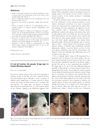
July 2015 in “British Journal of Dermatology” This article discusses the pseudo 'fringe sign' in frontal fibrosing alopecia, highlighting that it is not solely related to traction, and it reports no new clinical results.
May 2013 in “Faculty Opinions – Post-Publication Peer Review of the Biomedical Literature” This review discusses the role of BMP/Wnt signaling in regulating stem cell homeostasis and activation but reports no new experimental findings.
April 2019 in “Journal of Investigative Dermatology” This study found that frontal fibrosing alopecia involves distinct molecular changes, such as downregulation of steroid and cholesterol pathways and upregulation of fibrotic and immune response genes, which may help guide treatment strategies.
September 2023 in “World Rabbit Science” In this study using Angora rabbits, researchers found that the FRZB gene inhibits hair follicle development by modulating the Wnt/β-catenin signaling pathway, affecting the expression of various genes related to this pathway and altering cell proliferation and apoptosis.
2 citations
,
June 2024 in “Skin Appendage Disorders” This study identifies specific trichoscopic features such as empty follicles and perifollicular erythema in Caucasians with frontal fibrosing alopecia, which may assist in diagnosis and monitoring, but stresses the need for further research due to limited demographic data.
July 2024 in “Journal of Investigative Dermatology” JW0061 may be a new treatment for hair loss by promoting hair growth through WNT signaling.
April 2025 in “International Journal of Dermatology” This article proposes renaming frontal fibrosing alopecia to frontal fibrosing alopecia syndrome to better reflect its varied presentations and enhance understanding and treatment approaches.
 May 2024 in “International Seven Journal of Multidisciplinary”
 This review discusses fibrosing frontal alopecia, including its causes, mechanisms, and treatments, and emphasizes the need for further research to improve understanding and treatments; it reports no new clinical results.
August 2019 in “Journal of the American Academy of Dermatology” Frontal fibrosing alopecia may be caused by an autoimmune reaction and hormonal imbalance.
10 citations
,
November 2023 in “European Journal of Lipid Science and Technology” This study found that the ethanolic extract of walnut fruit diaphragm significantly improved lipid profiles, reduced oxidative stress, and had anti-inflammatory effects in hyperlipidemic rats.
 6 citations
,
January 2018 in “International Journal of Trichology”
6 citations
,
January 2018 in “International Journal of Trichology” This report describes the first known case of frontal fibrosing alopecia in a genetically unrelated couple, suggesting the potential role of environmental factors in its development.
 May 2019 in “Anais brasileiros de dermatologia/Anais Brasileiros de Dermatologia”
 This study reviewed 38 cases of frontal fibrosing alopecia, observing that diagnosis often occurs years after onset and is more prevalent in postmenopausal women.
April 2021 in “Journal of Investigative Dermatology” Blocking DPP4 can help prevent fat loss and skin fibrosis.
 November 2023 in “The journal of investigative dermatology/Journal of investigative dermatology”
 In this case series, researchers reported on the clinical characteristics and treatment approaches for Frontal Fibrosing Alopecia in four cases, emphasizing the importance of early identification and intervention to manage this scarring hair loss disorder that primarily affects the frontal hairline and eyebrows.
 May 2015 in “Journal of the American Academy of Dermatology”
 Certain drugs and supplements may contribute to hair loss in the frontal hairline in older women.
 24 citations
,
July 1994 in “Molecular Endocrinology”
24 citations
,
July 1994 in “Molecular Endocrinology” Researchers found an RNA transcript that might help control a growth factor linked to tumor development.
 1 citations
,
September 2021 in “CRC Press eBooks”
1 citations
,
September 2021 in “CRC Press eBooks” This chapter reviews trichoscopic-pathologic correlations in Frontal Fibrosing Alopecia and reports no new clinical results; the authors discuss genetics, clinical patterns, and unusual variants associated with this condition.