 8 citations
,
February 2025 in “Swiss Medical Weekly”
8 citations
,
February 2025 in “Swiss Medical Weekly” This study observed that integrating best practices for anabolic androgenic steroid users into Swiss primary care is feasible and well-accepted, though current doping laws hinder adequate medical care for this population.
 8 citations
,
December 2021 in “BMJ neurology open”
8 citations
,
December 2021 in “BMJ neurology open” This study on Alzheimer's patients found that chronic sodium selenate treatment (up to 23 months) was safe and well-tolerated, with most adverse events being mild, and suggested potential slowing of cognitive decline, though confirmation requires further controlled studies.
 7 citations
,
September 2014 in “Beni-Suef University Journal of Basic and Applied Sciences”
7 citations
,
September 2014 in “Beni-Suef University Journal of Basic and Applied Sciences” This study found that ethanolic and petroleum ether extracts of Cuscuta reflexa, as well as an isolate from these extracts, improved hair growth and follicle characteristics in androgen-induced alopecia in rats.
 7 citations
,
November 2007 in “Annales de Dermatologie et de Vénéréologie”
7 citations
,
November 2007 in “Annales de Dermatologie et de Vénéréologie” A man was diagnosed with a rare form of lupus after showing unique skin symptoms that responded well to treatment.
7 citations
,
September 2007 This study found that valproate sustained-release monotherapy provided effective short-term seizure control and was well tolerated in newly-diagnosed epileptic patients with partial seizures in the Gulf Cooperation Council countries.
 6 citations
,
August 2023 in “Behavioural and Cognitive Psychotherapy”
6 citations
,
August 2023 in “Behavioural and Cognitive Psychotherapy” This study observed that an 8-session mindfulness-based cognitive therapy reduced social anxiety and improved wellbeing in some individuals with alopecia areata, though effectiveness may depend on regular mindfulness practice.
6 citations
,
January 2005 in “Han-guk hyeonmigyeong hakoeji/Applied microscopy” This study found that the 16th-century mummified hair from a female mummy in Paju was remarkably well-preserved, with the hair's ultrastructural features maintained likely due to a calcium-rich surface coat.
6 citations
,
August 1985 in “Archives of dermatology” In this study, two cases of idiopathic hair casts in young girls responded well to 0.025% tretinoin lotion, with analyses suggesting an infrainfundibular origin for the lesions.
 5 citations
,
March 2020 in “Cell and Tissue Banking”
5 citations
,
March 2020 in “Cell and Tissue Banking” This study found that injecting a mixture of epidermal stem cells and dermal papilla cells can induce hair follicle regeneration and well-ordered epidermis formation in mice.
 4 citations
,
January 2022 in “BioMed Research International”
4 citations
,
January 2022 in “BioMed Research International” This review found that mesenchymal stem cells and their derived exosomes are a potentially safe and well-tolerated treatment for lung healing in patients with COVID-19.
3 citations
,
June 2017 in “Deep Blue (University of Michigan)” This study found that prenatal exposure to fluoride and lead, as well as maternal micronutrient intake, may influence sexual maturation in adolescents in a sex-specific manner.
2 citations
,
September 2025 in “Frontiers in Endocrinology” This review critically evaluates the evidence for SARMs' tissue selectivity and suggests their clinical benefits over traditional androgens are not yet well-supported by robust evidence, underscoring the need for further head-to-head trials.
 2 citations
,
September 2023 in “JMIR. Journal of medical internet research/Journal of medical internet research”
2 citations
,
September 2023 in “JMIR. Journal of medical internet research/Journal of medical internet research” This study reported that AutoML effectively modeled itching and pain development, as well as app use, in patients with chronic eczema or psoriasis using a smartphone monitoring app, revealing that factors like BMI, age, and disease activity significantly influenced app engagement.
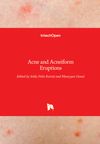 2 citations
,
January 2011 in “Elsevier eBooks”
2 citations
,
January 2011 in “Elsevier eBooks” This book reviews the various types of acne and acneiform conditions, as well as their treatment options, with expert insights from multiple fields.
1 citations
,
July 2026 in “Dermatology and Therapy” In this study, JAK inhibitors for treating alopecia areata and atopic dermatitis were generally well tolerated in a real-world setting, with most adverse events being mild or moderate and rare serious cases resembling the general population incidence.
1 citations
,
April 2025 in “Skin Appendage Disorders” This study found that patient-reported alopecia areata severity is associated with scalp and facial hair loss as well as emotional and financial burdens, suggesting that factors beyond just scalp hair loss should be considered.
1 citations
,
September 2023 in “Prostate International” In this study, a 12-week treatment with Angelicae Gigantis Radix and Glycyrrhizae Radix complex was well tolerated and showed therapeutic effects on moderate lower urinary tract symptoms in men.
1 citations
,
August 2023 in “Journal of Cutaneous Medicine and Surgery” This study demonstrated that topical anthralin at concentrations of 0.1% to 1% is effective and well-tolerated for treating pediatric alopecia areata, with 0.2% offering the best results and requiring at least six months of treatment to achieve substantial hair regrowth.
 1 citations
,
May 2023 in “Journal of the American Academy of Dermatology”
1 citations
,
May 2023 in “Journal of the American Academy of Dermatology” In this retrospective study, 75% of patients with alopecia areata responded well to an 8-week oral methylprednisolone tapering treatment, but 28.4% relapsed within an average of 5.5 months; young age and extensive alopecia predicted poorer responses, and low vitamin D was linked to relapse.
1 citations
,
November 2022 in “Animals” This study found that differences in skin transcriptomes between juvenile and adult mink, as well as between black and white mink, suggest genes regulating hair color are active during early development rather than adulthood.
 1 citations
,
January 2022 in “Pharmaceutical Sciences Asia”
1 citations
,
January 2022 in “Pharmaceutical Sciences Asia” This review highlights the potential of microneedles as a low-cost, well-tolerated method for transdermal drug delivery in dermatology, though further research is needed to establish their clinical efficacy.
1 citations
,
January 2020 in “IRIS UNIMORE (University of Modena and Reggio Emilia)” This study found that Aminexil clinical 5 significantly reduced hair loss in men and women with mild alopecia and was well tolerated with high subject satisfaction.
 1 citations
,
July 2018 in “Elsevier eBooks”
1 citations
,
July 2018 in “Elsevier eBooks” This review explores the current treatments for different types of alopecia, emphasizing the need for well-designed clinical trials and highlighting that most therapies are used off-label, as only androgenetic alopecia has FDA-approved drugs.
1 citations
,
May 2017 in “Journal of Clinical Oncology” This study found that applying BPM 31543 twice daily was safe, well-tolerated, and showed signs of reducing chemotherapy-induced alopecia in women receiving taxane-based chemotherapy.
 1 citations
,
March 2016 in “Health Communication”
1 citations
,
March 2016 in “Health Communication” Health experts should not ignore their own health issues and seeking treatment is important for their well-being and work.
1 citations
,
November 2007 in “Neuro-chirurgie/Neurochirurgie” This study found that cyproterone acetate treatment in late-pubertal trans-girls was safe, well-tolerated, and induced mild feminizing changes, with more pronounced effects when combined with estrogens.
July 2026 in “International Journal of Homoeopathic Sciences” This case study reports that a 30-year-old female with vitiligo showed marked improvement in skin pigmentation and overall well-being through individualized homeopathic treatment with Natrum muriaticum 200C, supported by photographic evidence and MONARCH scoring suggesting a causal relationship.
 June 2026 in “Zenodo (CERN European Organization for Nuclear Research)”
 This review found that hair loss is nearly universal by mid-life, significantly impacts psychological well-being, especially for women, and that users often discontinue the leading treatment, minoxidil, due to adherence issues.
June 2026 in “Journal of Cosmetic Dermatology” This study found that a combined treatment using autologous scalp‐derived micrografts and allogeneic dental pulp stem cell‐derived conditioned medium was well-tolerated and improved hair characteristics in 69.5% of patients with male androgenetic alopecia, particularly increasing hair diameter and hair number per follicular unit.
May 2026 in “SKIN The Journal of Cutaneous Medicine” In this study, Xtressé™ gummies were found to be safe and well tolerated, showing potential improvement in hair density among women with non-scarring alopecia over four months, while partially benefiting those with scarring alopecia; larger trials are encouraged.