 78 citations
,
June 2013 in “Science”
78 citations
,
June 2013 in “Science” This study found that mice lacking the Sept4/ARTS gene had more hair follicle stem cells and improved wound healing, suggesting apoptosis regulation as a potential target in regenerative medicine.
 July 2022 in “The journal of investigative dermatology/Journal of investigative dermatology”
 In this study, researchers found that TSPyV T antigens can disrupt normal cell differentiation and proliferation in hair follicles and interfollicular epidermis, possibly contributing to trichodysplasia spinulosa pathology.
 1 citations
,
April 2018 in “Journal of Investigative Dermatology”
1 citations
,
April 2018 in “Journal of Investigative Dermatology” This study found that Polycomb repressive complex 1 is crucial for skin development and stem cell specification, influencing gene activity beyond its known repressor functions.
32 citations
,
May 1999 in “Biochemical and Biophysical Research Communications” This study found that the gene BSSP, a serine protease, is predominantly expressed in sebaceous glands and is overexpressed in nude mouse skin.
November 2024 in “Journal of Investigative Dermatology” This study identified PTEN as a key regulator in non-healing venous leg ulcers, suppressing immune responses and lymphangiogenesis, suggesting its potential as a therapeutic target for promoting VLU healing.
 November 2022 in “Journal of Investigative Dermatology”
 In this study, analysis of over 800 Iranian patients with epidermolysis bullosa identified 15 with pathogenic PLEC variants, highlighting a correlation between variant locations and phenotypic manifestations of plectinopathies.
76 citations
,
February 2007 in “Cancer Research” This study reported that UVR induced PKCε phosphorylation of Stat3 in transgenic mice, suggesting a role in enhancing sensitivity to UVR-related skin cancer development.
 7 citations
,
July 2005 in “Journal of Dermatological Science”
7 citations
,
July 2005 in “Journal of Dermatological Science” This study identified a gene transcript overexpressed in dermal papilla cells, showing strong similarity to a mouse gene associated with adipose tissue in bombesin receptor subtype-3-deficient mice.
 13 citations
,
November 2012 in “PLoS ONE”
13 citations
,
November 2012 in “PLoS ONE” This study identified a novel recessive mutation in mice causing lethal congenital lamellar ichthyosis, with skin and hair follicle alterations similar to human congenital ichthyoses, linked to a specific genetic defect affecting Fatp4.
 12 citations
,
June 2020 in “Frontiers in Cell and Developmental Biology”
12 citations
,
June 2020 in “Frontiers in Cell and Developmental Biology” This study found that the PP2A-B55α regulatory subunit is crucial for ectodermal development in mice, with knockout embryos displaying severe neural and epidermal defects and failing to survive to birth.
 44 citations
,
February 2012 in “The journal of neuroscience/The Journal of neuroscience”
44 citations
,
February 2012 in “The journal of neuroscience/The Journal of neuroscience” This study observed that Ptprq mutant mice exhibit significant abnormalities in hair bundle structure and vestibular dysfunction, suggesting similar issues may contribute to hearing loss and vestibular problems in humans with PTPRQ mutations.

This study identified a genetic locus associated with rhabdomyosarcoma susceptibility in mice and found that specific differentiation markers are linked to the regression of basal cell carcinoma.

In this study with mice, simultaneous inactivation of Smad4 and PTEN genes led to rapid development of invasive forestomach squamous cell carcinomas, mirroring human esophageal SCCs.
In this study, researchers identified that the oncomodulin protein lineage, specifically the gene pvalb8, plays a crucial role in the development and function of auditory hair cells in zebrafish by promoting cell proliferation through the Wnt signaling pathway.
11 citations
,
April 2012 in “Journal of Investigative Dermatology” A specific mutation in PA-PLA1α causes abnormal hair growth.
September 2022 in “European Journal of Dermatology” This study identified a novel pathogenic splice-site variant of the LAMB3 gene in patients with junctional epidermolysis bullosa, highlighting the importance of gene sequencing for diagnosis.
11 citations
,
December 2017 in “Orphanet Journal of Rare Diseases” This study found a previously unreported ST14 gene mutation in a patient with ichthyosis-hypotrichosis syndrome, highlighting novel skin and hair characteristics and emphasizing the critical role of the Asp482 amino acid in matriptase activation.
 11 citations
,
November 2015 in “Experimental Dermatology”
11 citations
,
November 2015 in “Experimental Dermatology” This study reported that IL-6/STAT3 signaling influences p63 isoform expression in keratinocytes and is involved in wound-induced hair follicle neogenesis, highlighting the interplay between immune and developmental pathways.
34 citations
,
January 2004 in “Genomics” In this study, researchers identified a cluster of hair-specific keratin-associated protein genes within the 21q22.3 region, revealing a novel transcription mechanism involving TSPEAR/C21orf29 that may bypass typical transcriptional termination sites.
December 2009 in “Cancer Research” This study suggests that over-expression of Sp2 may limit stem cell differentiation and contribute to tumorigenic cell growth in mice.
18 citations
,
January 2018 in “BMC dermatology” This paper describes a case of epidermolysis bullosa simplex with muscular dystrophy associated with a novel PLEC mutation and diffuse alopecia, highlighting a potential genetic link that remains uncertain.
9 citations
,
July 2014 in “PubMed” This study found distinct localization patterns of S100 family proteins in hair follicles, suggesting their differential roles in normal hair follicle physiology.
 147 citations
,
September 2006 in “Developmental Cell”
147 citations
,
September 2006 in “Developmental Cell” This study found that Smad7 perturbs hair follicle development while promoting sebaceous gland formation by antagonizing Wnt/β-catenin signaling in transgenic mice.
16 citations
,
April 2024 in “Proceedings of the National Academy of Sciences” This study found that selectively targeting HDAC4 and HDAC7 in mice can reduce Th17 cell-mediated intestinal inflammation, suggesting a potential treatment approach for Th17-related inflammatory diseases like ulcerative colitis.
48 citations
,
August 1998 in “Developmental Biology” In this study, researchers created a mutant mouse lacking the first cut repeat in the Cux/CDP protein, resulting in curly vibrissae and wavy hair, supporting the role of Cux/CDP's DNA binding domains in gene regulation during development.
 April 2018 in “Journal of Investigative Dermatology”
 This study found that the RNA helicase DDX6 is essential for maintaining self-renewal in epidermal progenitor cells by promoting the translation of proliferation regulators and degrading differentiation-inducing mRNAs.
166 citations
,
September 2011 in “The Journal of Cell Biology” This study found that the p63 transcription factor plays a role in epidermal morphogenesis by regulating Satb1 expression, impacting chromatin architecture and gene expression in epidermal progenitor cells.
22 citations
,
April 2012 in “The American journal of pathology” This study found that the loss of Msx2 in knockout mice led to phenotypes similar to Peters anomaly and microphthalmia, suggesting that MSX2 plays a critical role in anterior segment development of the eye.
 25 citations
,
December 2018 in “Human Molecular Genetics”
25 citations
,
December 2018 in “Human Molecular Genetics” This study found that the PSEN1-P242LfsX11 mutation in hidradenitis suppurativa influences cytokine and chemokine expression in macrophages, potentially affecting inflammatory responses.
 6 citations
,
October 2012 in “Journal of Heredity”
6 citations
,
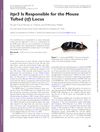
October 2012 in “Journal of Heredity” This study identified the Itpr3 gene as responsible for the tufted hair loss phenotype in the BTBR mouse strain.