4 citations
,
October 2023 in “Journal of Medicine and Life” In this study, UDCA treatment reduced inflammation, oxidative stress, and cartilage damage in rats with experimentally induced rheumatoid arthritis, suggesting potential anti-rheumatoid arthritis properties.
44 citations
,
September 2011 in “Journal of Pediatric Gastroenterology and Nutrition” This study reported four new cases of NISCH syndrome in a Moroccan family, confirming genetic variability in liver disease severity and suggesting potential benefits from early UDCA therapy.
June 2020 in “Jurnal Penyakit Dalam Indonesia” This case study highlights that primary biliary cholangitis in a patient with systemic lupus erythematosus can respond well to ursodeoxycholic acid therapy, and anti-DFS70 findings may require further evaluation for other nonsystemic autoimmune conditions.
 May 2014 in “La Revue de médecine interne”
 This article reviews the specific cosmetology needs and practices related to black skin, identifying associated complications, and emphasizes the need for a robust cosmetovigilance policy but reports no new clinical findings.
6 citations
,
June 2024 in “Medical Review” This review emphasized the significance of biliary fibrosis in hepatobiliary disorders, exploring its clinical manifestations, epidemiology, and cellular factors, and provided insights into current clinical trials and strategies for managing fibrosis-related cholangiopathies.
January 2024 in “Repositorio - Universidad de Ciencias Aplicadas y Ambientales UDCA.” This study reviews the effectiveness, viability, and safety of minoxidil and finasteride in treating androgenetic alopecia in women, aiming to provide insights for better management of this condition based on bibliographic comparisons.
 1 citations
,
June 2022 in “Ciencia Latina Revista Científica Multidisciplinar”
1 citations
,
June 2022 in “Ciencia Latina Revista Científica Multidisciplinar” This review provides updated information on primary psychiatric disorders with skin manifestations, highlighting a 30% psychiatric comorbidity prevalence in dermatology outpatients, but it reports no new research findings.
 88 citations
,
January 2011 in “Annals of Dermatology”
88 citations
,
January 2011 in “Annals of Dermatology” This review discusses the reclassification of pregnancy-related skin diseases and provides a management algorithm but reports no new clinical findings.
 26 citations
,
June 2012 in “The Journal of Obstetrics and Gynecology of India”
26 citations
,
June 2012 in “The Journal of Obstetrics and Gynecology of India” This review discusses various skin changes during pregnancy, noting that while most are benign and resolve after childbirth, some may require careful medical management for the safety of the mother and fetus; it reports no new results.
 24 citations
,
June 2011 in “International Journal of Dermatology”
24 citations
,
June 2011 in “International Journal of Dermatology” This review summarizes physiologic skin changes during pregnancy and specific pregnancy-related dermatoses but reports no new clinical results.
 9 citations
,
November 2018 in “Drug Discovery Today”
9 citations
,
November 2018 in “Drug Discovery Today” This review discusses insights from scar-free animal models and cellular factors in skin regeneration, suggesting potential strategies for developing scar-free treatments in clinical and cosmetic practices, but reports no new clinical results.
 2 citations
,
May 2017 in “Springer eBooks”
2 citations
,
May 2017 in “Springer eBooks” Pregnancy can cause skin changes and affect existing skin conditions, with limited treatment options due to the need for fetal safety.
 1 citations
,
January 2013 in “Surgical Science”
1 citations
,
January 2013 in “Surgical Science” This study observed that vitamin and iron deficiencies were similarly prevalent in the first post-surgical year for patients undergoing sleeve gastrectomy and Roux-en-Y gastric bypass, except for more frequent vitamin B6 deficiency in sleeve gastrectomy patients.
 February 2025 in “Quality in Sport”
 This review reports that pregnancy-specific dermatoses, including AEP, PEP, ICP, and PG, present overlapping clinical features and can significantly impact fetal outcomes, particularly ICP and PG, which are linked to preterm birth and stillbirth.
 January 2025 in “International Journal of Advancement in Life Sciences Research”
 In this cross-sectional study at a hospital in Nandyala, researchers identified nine drugs with potential new uses, noting that Aspirin and Dapagliflozin were most frequently repurposed, and observed changes in indications, dosage, and frequency, suggesting further clinical validation is needed for safety and efficacy.
 January 2017 in “Springer eBooks”
 The document explains various skin conditions and their treatments.
 January 2009 in “Springer eBooks”
 The document concludes that managing skin conditions during pregnancy is important and requires specialized care.
 November 2025 in “SKIN The Journal of Cutaneous Medicine”
 In this study, UPA at doses of 15 mg and 30 mg showed higher efficacy than placebo for treating severe alopecia areata in adults and adolescents over 24 weeks, with a safety profile similar to approved uses.
2 citations
,
September 2024 in “Internal Medicine Journal” In this case study, upadacitinib treatment for a patient with coexisting ulcerative colitis and alopecia universalis resulted in significant hair regrowth and maintained UC remission, suggesting potential for treating similar dual-diagnosed cases.
 17 citations
,
August 1979 in “Journal of The American Academy of Dermatology”
17 citations
,
August 1979 in “Journal of The American Academy of Dermatology” This study found that a histochemical stain using 4-dimethyl-aminocinnamaldehyde effectively distinguishes between plucked anagen and telogen hairs by causing the root ends of anagen hairs to develop a red color.
February 2026 in “UiTM Institutional Repositories (Universiti Teknologi MARA)” This study found that cis-urocanic acid can engage in non-enzymatic reactions with reactive sulphur species, forming new metabolites, and suggests sulphide donors may protect against UVB-related toxicity.
September 2026 in “Apollo Medicine” In this case report, researchers observed that a 35-year-old male with alopecia universalis achieved full regrowth of scalp, eyebrow, and facial hair with oral upadacitinib treatment after previous therapies failed to provide lasting relief.
1 citations
,
October 2024 in “Veterinary Dermatology” In this case report, researchers document the first known instance of a dog developing both uveodermatological syndrome and alopecia areata concurrently, similar to occurrences in human patients, and provide a detailed overview of the clinical presentation, diagnosis, treatment, and follow-up.
 3 citations
,
August 2024 in “Cureus”
3 citations
,
August 2024 in “Cureus” In this case report, a 55-year-old woman developed alopecia areata approximately one year into her treatment with upadacitinib for atopic dermatitis, raising questions about a potential drug-induced link that has not been reported before.
 4 citations
,
December 2017 in “International journal of research in ayurveda and pharmacy”
4 citations
,
December 2017 in “International journal of research in ayurveda and pharmacy” This review discusses the traditional and pharmacological uses of Cuscuta reflexa, but it reports no new clinical results, calling attention to its potential antihypertensive, antidiabetic, and antioxidant properties.
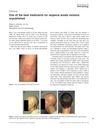
October 2024 in “The American Journal of Gastroenterology” This study described a case where both alopecia universalis and Crohn's ileitis in a 23-year-old man showed remarkable improvement with the JAK1 inhibitor upadacitinib, highlighting its potential as a treatment for patients with concurrent conditions.
 1 citations
,
June 2018 in “International Journal of Dermatology”
1 citations
,
June 2018 in “International Journal of Dermatology” DNCB is highly effective for treating alopecia areata with minimal long-term side effects.
December 2023 in “International Journal of Dermatology” This study found an increased risk of asthma and allergic rhinitis in individuals with hidradenitis suppurativa.
5 citations
,
May 2024 in “Journal of Allergy and Clinical Immunology Global” In this case study, a 29-year-old male with severe atopic dermatitis and alopecia universalis experienced an excellent response to treatment with upadacitinib, indicating it may be a promising option for similar patients.
 April 2026 in “Clinical Journal of Gastroenterology”
 In this case report, a woman with ulcerative colitis experienced clinical deterioration during upadacitinib therapy, which improved after discontinuation, strongly suggesting drug hypersensitivity to the Janus kinase inhibitor as a potential cause for her symptoms.