22 citations
,
July 2006 in “Annals of The Royal College of Surgeons of England” This case report aims to raise physician awareness about 'toe-tourniquet' syndrome, which can lead to digit loss if not promptly treated, and to prevent its misdiagnosis as child abuse.
71 citations
,
May 2006 in “The journal of investigative dermatology/Journal of investigative dermatology” In this study, researchers found that trichothiodystrophy hair brittleness is linked to abnormalities in sulfur content and structural organization, making it prone to breakage.
A new mutation in the TRPS1 gene caused Trichorhinophalangeal syndrome in a 17-year-old, highlighting the need for genetic testing.
6 citations
,
October 2014 in “International Journal of Molecular Sciences” Tanshinone IIA helps protect tissue from low oxygen damage by activating certain cell pathways.
 January 2026 in “Forum Dermatologicum”
 This study observed that 2.5% of patients with mycosis fungoides or Szary syndrome experienced alopecia, predominantly within skin lesions, with scalp metastases from other cancers also potentially causing hair loss, highlighting the diagnostic value of trichoscopy in differentiating alopecia types.
 June 2011 in “Journal of clinical and experimental investigations”
 This study suggests that oral zinc sulphate may be an effective and safe treatment for thallium poisoning, particularly in improving dermatological symptoms and reducing the progression of the condition.
20 citations
,
March 2017 in “Arthritis research & therapy” In this study, researchers analyzed social media data to assess the comparative safety of arthritis medications, finding increased odds of herpes zoster and perforated bowel with certain therapies. Social media posts expressed more safety concerns than favorable opinions about drug safety.
 January 2017 in “International journal of science and research”
 This review discusses treatment options for trichotillomania, focusing on cognitive-behavioral interventions and promising developments in combined pharmacotherapy and therapy approaches, but reports no new findings.
53 citations
,
March 2006 in “Biopolymers” This study suggests that increased amounts of less stable disulfide conformers in hair shafts may be linked to the brittleness observed in trichothiodystrophy.
November 1979 in “PubMed” 28 citations
,
October 2014 in “Development” This study revealed that frizzled 3 can fully rescue polarity defects in frizzled 6-null mice, while frizzled 6 can partially rescue defects in frizzled 3-null mice, highlighting conserved signaling roles in these proteins.
5 citations
,
September 2020 in “Proceedings - Baylor University. Medical Center” In this case report, a 39-year-old woman's symptoms from dermatomyositis–systemic lupus erythematosus overlap syndrome improved only after she was treated with tofacitinib.
1 citations
,
January 2010 in “Via Medica Journals” This review discusses key aspects and challenges of thyroid ultrasound interpretation but reports no new clinical findings, noting the necessity of experience and theoretical knowledge in this field.
10 citations
,
March 2022 in “Frontiers in Oncology” This study found that the overexpression of the lncRNA HOTTIP in glioma cells increased resistance to the chemotherapy drug temozolomide, suggesting a key role for miR-10b and EMT processes in this resistance.
 April 2023 in “Journal of Investigative Dermatology”
 This study found that mitochondrial dysfunction in T cells led to defective hair follicle stem cell function and premature skin aging signs in a mouse model.
 January 2023 in “Marmara University Open Access System”
 This study found that tideglusib delivered topically in a bacterial cellulose hydrogel showed positive effects on the wound healing of rat palatal mucosa, as observed through macroscopic, histomorphometric, and immunohistochemical evaluations.
 15 citations
,
October 2010 in “Archives of Toxicology”
15 citations
,
October 2010 in “Archives of Toxicology” This study found that the yeast androgen screen (YAS) could detect the activity of methyltestosterone in urine for a longer period than classical GC/MS, potentially identifying long-lasting metabolites.
 2 citations
,
July 2007 in “Cancer biology & therapy”
2 citations
,
July 2007 in “Cancer biology & therapy” This study found that 86% of patients with follicular non-Hodgkin's lymphoma were alive and nearly two-thirds remained in complete remission eight years after initial treatment with the radioimmunotherapy drug Bexxar.
September 2025 in “Annals of African Medicine” 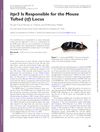 6 citations
,
October 2012 in “Journal of Heredity”
6 citations
,
October 2012 in “Journal of Heredity” This study identified the Itpr3 gene as responsible for the tufted hair loss phenotype in the BTBR mouse strain.
 2 citations
,
July 2008 in “Dermatologic Surgery”
2 citations
,
July 2008 in “Dermatologic Surgery” This study suggests that a prototype device may accurately measure hair quantity, diameter, and density in balding patients, potentially aiding in diagnostic assessments, though formal clinical studies are needed to confirm its effectiveness.
September 2023 in “Journal of the American Academy of Dermatology” Increased Treg cells and IL-10 may help quick recovery in acute diffuse and total alopecia.
 15 citations
,
November 2020 in “Pharmaceutics”
15 citations
,
November 2020 in “Pharmaceutics” In this ex vivo and mouse model study, Tofacitinib-loaded nanoparticles demonstrated enhanced delivery of the drug into hair follicles and reduced inflammatory effects compared to conventional forms, indicating potential for safer, topical use in treating alopecia areata.
 11 citations
,
February 2021 in “Journal of Cosmetic Dermatology”
11 citations
,
February 2021 in “Journal of Cosmetic Dermatology” This retrospective pilot study found that oral tofacitinib was more effective in treating alopecia areata than alopecia universalis, but relapses were common after treatment cessation.
June 2023 in “Zenodo (CERN European Organization for Nuclear Research)” This review discusses the transformative potential of direct-to-consumer (DTC) hair regrowth solutions and reports no clinical results; it emphasizes innovation, personalization, and trust in reshaping the industry.
19 citations
,
April 2023 in “Antibiotics” This study found that azelaic acid entrapped in transethosomes exhibited enhanced antidermatophyte activity and improved treatment outcomes in guinea pig models of dermatophytosis compared to free azelaic acid.
This study found that inherited coping styles influenced zebrafish responses to social stress more than social rank, with subordinate fish more vulnerable to health impairments like inflammation and skin injuries.
 April 2026 in “Communications Biology”
 In this study of Danioninae species, researchers reported that the presence of breeding tubercles on the pectoral fins is conserved in certain species and linked to local androgen conversion, with steroid 5-α-reductase playing a crucial role in their development.
17 citations
,
September 2009 in “British Journal of Dermatology” This study suggests that clinically apparent fragile hair in children is rarely linked to trichothiodystrophy, and the tiger-tail pattern is not wholly specific to this diagnosis.
 May 2022 in “Experimental dermatology”
 In this study, hair shafts from trichothiodystrophy patients with ERCC2 mutations revealed abnormal cuticle structures and protein imbalances compared to normal hair shafts.