 March 2014 in “Journal of The American Academy of Dermatology”
 Azathioprine may help with severe hair loss, a new topical treatment could counteract hair thinning, and trichoscopy can diagnose hair-pulling disorder effectively.
January 2026 in “Updates in clinical dermatology”  43 citations
,
August 2013 in “Pediatric Dermatology”
43 citations
,
August 2013 in “Pediatric Dermatology” This review discusses the use of trichoscopy in diagnosing and managing pediatric hair and scalp disorders and reports no new experimental findings.
 4 citations
,
February 2021 in “International Journal of Women's Dermatology”
4 citations
,
February 2021 in “International Journal of Women's Dermatology” This study determined that trichoscopy is a sensitive and specific tool that effectively aids in diagnosing alopecia in women, especially when clinical diagnosis is uncertain.
4 citations
,
January 2011 in “International Journal of Trichology” This case series reported that patients with trichotillomania and pseudofolliculitis experienced improvement in itch symptoms and hair regrowth after receiving topical steroids, topical, or oral antibiotics.
7 citations
,
November 2022 in “Actas Dermo-Sifiliográficas” This study reviewed the usefulness of trichoscopy in diagnosing and monitoring alopecia areata, noting that the technique identifies specific hair features like yellow and black dots, which are linked to the disease's chronic nature and treatment response.
September 1998 in “Journal of the European Academy of Dermatology and Venereology”  3 citations
,
October 1990 in “Journal of the American Academy of Dermatology”
3 citations
,
October 1990 in “Journal of the American Academy of Dermatology” This case report describes a patient with lichen nitidus whose lesions improved following treatment with oral astemizole and topical steroids, although spontaneous resolution remains a possibility.
1 citations
,
June 2023 in “Cosmoderma” This study found that in patients with alopecia areata, trichoscopy was a valuable tool for monitoring disease activity, severity, and therapeutic response, showing changes in trichoscopic markers that preceded improvements observed in the hair pull test.
 2 citations
,
October 2023 in “Dermatology practical & conceptual”
2 citations
,
October 2023 in “Dermatology practical & conceptual” This systematic review evaluated 60 studies on trichoscopy in hair and scalp disorders, revealing gaps in accounting for variables like disease stage or hair texture, and underscoring a need for more comprehensive analyses to fully understand trichoscopic patterns.
June 2025 in “British Journal of Dermatology” This systematic review reports that trichoscopy is highly accurate for diagnosing scalp disorders, suggesting it as a valuable alternative to biopsies and supporting recommendations for its integration into routine dermatology practice.
 June 2026 in “International Journal of Ayurvedic Medicine”
 In this study, researchers investigated the alignment of trichoscopic findings with ayurvedic signs (lakshanas) for diagnosing hair loss, suggesting that integrating these perspectives could enhance diagnostics and management of hair and scalp conditions.
 December 2019 in “Дерматологія та венерологія”
 Trichoscopy is a useful tool for diagnosing hair and scalp disorders.
 86 citations
,
October 2013 in “Dermatologic Clinics”
86 citations
,
October 2013 in “Dermatologic Clinics” Trichoscopy is a useful non-invasive method for diagnosing different hair loss conditions.
 October 2024 in “INTERNATIONAL JOURNAL OF SCIENTIFIC RESEARCH”
 This study found that trichoscopy can effectively identify specific patterns associated with Vitamin B12, Vitamin D3, and serum ferritin deficiencies in patients with Telogen Effluvium, offering a non-invasive alternative to blood tests for early diagnosis and management.
December 2020 in “Journal of Face Aesthetics” This study found that trichoscopy, a non-invasive diagnostic method, may effectively differentiate between types of focal alopecia in the parietal area in adult women, indicating specific trichoscopic features for conditions like alopecia areata, discoid lupus erythematosus, and lichen planopilaris.
 July 2021 in “Australasian Journal of Dermatology”
 This manuscript describes a proposed ‘trichoscopy-assisted hair pull test’ that enhances the diagnosis of hair loss conditions by allowing immediate examination of proximal hair shafts and roots in patients with a positive hair pull test.
1 citations
,
September 2025 in “Pediatric Dermatology” This systematic review reported that habit reversal training showed the most consistent benefit for treating pediatric trichotillomania, while evidence for pharmacological treatments and alternative therapies like N-acetylcysteine remains insufficient, highlighting the need for early behavioral intervention and further research into standardized treatment protocols.
5 citations
,
July 1996 in “Journal of Cutaneous Medicine and Surgery” This study explains that while trichothiodystrophy and xeroderma pigmentosum share genetic defects, TTD patients primarily exhibit issues in transcription initiation, not the increased skin cancer risk seen in XP.
 1 citations
,
July 2018 in “Elsevier eBooks”
1 citations
,
July 2018 in “Elsevier eBooks” This article reviews the role of trichoscopy in diagnosing hair weathering conditions like trichorrhexis nodosa and trichoptilosis and suggests treatment by avoiding harmful chemical and physical factors, but it provides no new research findings.
January 2023 in “Odisha Journal of Psychiatry” This case study describes a patient initially misdiagnosed with pediculosis capitis, later identified as having trichotillomania, highlighting the importance of thorough behavioral inquiries by physicians in such cases.
 27 citations
,
January 1990 in “Child Psychiatry & Human Development”
27 citations
,
January 1990 in “Child Psychiatry & Human Development” This review discusses the demographic, dermatologic, clinical, and psychodynamic aspects of trichotillomania, exploring its potential link to anxiety but reports no new clinical findings.
 June 1995 in “Archives of Dermatology”
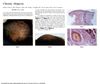
 This case report describes a 27-year-old woman with a family history of hair thinning and a 6-year history of alopecia on the scalp.
 34 citations
,
January 2014 in “International Journal of Trichology”
34 citations
,
January 2014 in “International Journal of Trichology” This study reported that polarized dermoscopy was better for visualizing vascular patterns, scaling, and reticular pigmentation, while nonpolarized mode better documented features like black dots and tapered hair in various hair and scalp conditions.
 January 2021 in “International journal of dermatology, venereology and leprosy sciences”
 This study found that trichoscopy is a valuable diagnostic tool for identifying hair loss patterns in women and can help avoid scalp biopsies in unclear cases.
 4 citations
,
January 2021 in “Skin appendage disorders”
4 citations
,
January 2021 in “Skin appendage disorders” This review discusses the complex causes of trichodynia and reports no clinical results; the authors call for more research into neural and immune interactions in scalp conditions.
 1 citations
,
January 2025 in “medRxiv”
1 citations
,
January 2025 in “medRxiv” In this case-control study, researchers did not find genome-wide significant genetic variants for trichotillomania, but cases had higher polygenic risk for psychiatric disorders and certain neuropsychiatric-associated copy number variants.
 89 citations
,
December 2010 in “The Journal of Dermatology”
89 citations
,
December 2010 in “The Journal of Dermatology” This study describes characteristic trichoscopic features of various hair loss diseases and proposes an algorithmic method for diagnosing them, but reports no new clinical results.
37 citations
,
April 1977 in “Journal of Cutaneous Pathology” This study found that specific histologic features in skin biopsies can help support a diagnosis of traumatic alopecia (trichotillomania), but not all markers are distinct to the condition.
 1 citations
,
September 2024 in “Indian Journal of Postgraduate Dermatology”
1 citations
,
September 2024 in “Indian Journal of Postgraduate Dermatology” In this report, trichoscopy was highlighted as a valuable tool for diagnosing temporal triangular alopecia in children due to its ability to reveal distinctive patterns that differentiate it from similar conditions like alopecia areata, eliminating the need for invasive biopsy.