 April 2017 in “InTech eBooks”
 This review discusses potential mechanisms and treatments for trichodynia, noting a lack of strong literature support and reporting no new clinical results; the authors highlight several hypotheses and available treatment options.
 70 citations
,
June 2003 in “Journal of Investigative Dermatology Symposium Proceedings”
70 citations
,
June 2003 in “Journal of Investigative Dermatology Symposium Proceedings” This study reports that the TrichoScan method effectively measures hair growth parameters and detected significant improvements in hair counts and thickness in men with androgenetic alopecia after finasteride treatment.
Recognizing bamboo hair helps diagnose Netherton’s syndrome.
 68 citations
,
August 2012 in “Journal of the American Academy of Dermatology”
68 citations
,
August 2012 in “Journal of the American Academy of Dermatology” This paper discusses the use of dermatoscopy as a fast, noninvasive technique for diagnosing hair shaft disorders and reports no new results; the authors highlight its advantages over traditional microscopy methods.
January 2022 in “The Pan African medical journal” This article discusses the rare condition of hypertrichosis, highlighting a case of a 10-year-old boy with congenital hair growth and emphasizing the need for patient support due to limited treatment options.
4 citations
,
June 1989 in “Archives of Dermatology” This case report describes a 65-year-old man diagnosed with a trichofolliculoma, a benign tumor originating from hair follicles, which appeared as a persistent pore on his cheek.
May 2026 in “Journal of International Medical Research” This case report describes a 4-year-old patient with complete hair loss and keratotic papules, leading to a diagnosis of atrichia with papular lesions, underscoring diagnostic challenges in resource-limited settings and suggesting a clinical framework for identifying this condition, especially in consanguineous families.
1 citations
,
October 1978 in “The Journal of Pediatrics” 103 citations
,
February 1972 in “Proceedings of the National Academy of Sciences” This study found that a unique transglutaminase in guinea pig hair-follicles, distinct from liver transglutaminase, likely plays a role in forming protein cross-links via ε(γ-glutamyl)lysine bonds.
26 citations
,
January 1990 in “Mycoses” This study reviewed tinea capitis cases in children at a dermatology clinic from 1977-1988, finding Trichophyton violaceum as the most common pathogen, with Moroccan immigrant children being the largest affected group.
11 citations
,
November 1996 in “Pediatric dermatology” This paper reviews trichostasis spinulosa and presents a case in a 13-year-old girl, providing no new clinical research results.
13 citations
,
December 2001 in “Journal of Investigative Dermatology” This study demonstrated that the tracheal xenotransplant procedure is an effective technique for assessing the invasiveness of epidermal keratinocytes and studying factors affecting hair follicle formation.
 3 citations
,
January 2015 in “Journal of clinical and diagnostic research”
3 citations
,
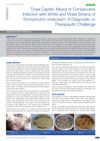
January 2015 in “Journal of clinical and diagnostic research” This case report described a seven-year-old with tinea capitis, which improved clinically after six weeks of griseofulvin treatment, changing the fungal strain from Trichophyton violaceum white variant to violet strain.
 32 citations
,
June 2017 in “Journal of infection/The Journal of infection”
32 citations
,
June 2017 in “Journal of infection/The Journal of infection” This source discusses the diagnosis and treatment of Tinea capitis in children, highlighting that Trichophyton tonsurans is the prevalent cause in the UK and that terbinafine is an effective treatment option.
61 citations
,
January 2002 in “American Journal of Clinical Dermatology”  June 2023 in “Zenodo (CERN European Organization for Nuclear Research)”
 In this abstract, the issue of "microinflammation" in hair follicles, central to androgenetic alopecia, is described as involving an inflammatory process with Langerhans cells and keratinocytes presenting antigens to T lymphocytes, leading to an immune response with macrophages or natural killer cells destroying these antigens.
 12 citations
,
June 2012 in “Revista da Sociedade Brasileira de Medicina Tropical”
12 citations
,
June 2012 in “Revista da Sociedade Brasileira de Medicina Tropical” This case study reported a rare infection by Trichosporon inkin, causing white piedra in a family in Southern Brazil, emphasizing the importance of molecular tools for precise identification.
 129 citations
,
January 2009 in “International Journal of Trichology”
129 citations
,
January 2009 in “International Journal of Trichology” This study found that trichoscopy criteria can distinguish female androgenic alopecia from chronic telogen effluvium, with specific features achieving 98% diagnostic specificity.
May 2017 in “Journal of the American Academy of Dermatology” Monilethrix is a rare, inherited condition causing fragile hair and hair loss, with no cure but some treatments may help.
13 citations
,
November 1985 in “International Journal of Dermatology” This study examined patients with trichostasis spinulosa and identified distinct differences in the distribution and microscopic appearances of lesions compared to keratosis pilaris and eruptive vellus hair cysts.
9 citations
,
December 1985 in “JAMA” This article highlights the rising recognition of tinea capitis in children, noting a shift from Microsporum to Trichophyton tonsurans as the main causative agent, with potential implications for day-care centers.
3 citations
,
January 2020 in “International journal of trichology” This study reports that congenital triangular alopecia, which can be misdiagnosed as other conditions, lacks effective treatment and generally requires no therapeutic intervention.
10 citations
,
January 1997 in “Dermatology” This case report details two siblings with trichothiodystrophy, identifying reduced hair sulfur content as essential for diagnosis despite varied symptoms complicating recognition.
January 2002 in “Agritrop (Cirad)” This study found that mutations in exon 3 of the hr gene are strongly associated with congenital hypotrichosis in Valle del Belice sheep, suggesting a potential genetic link to the disorder.
September 2021 in “CRC Press eBooks” This review discusses the diagnostic features of androgenetic alopecia through trichoscopy and reports no clinical results; it emphasizes hair shaft variability and yellow dots as key indicators.
 2 citations
,
January 2019 in “Dermatology Review”
2 citations
,
January 2019 in “Dermatology Review” This study found that pigmented vellus and upright regrowing hairs are the only predictive trichoscopic markers of hair regrowth in patients with alopecia totalis and universalis.
12 citations
,
January 2023 in “Indian Dermatology Online Journal” This review discusses the diagnostic and therapeutic challenges of hair shaft disorders and suggests diagnostic tools like trichoscopy and light microscopy, but reports no new clinical results.
 December 2024 in “Archiv Euromedica”
 This review highlights that diagnosing cicatricial alopecia, a hair loss condition linked to several autoimmune diseases, requires trichoscopy and histopathological examination to differentiate it from similar conditions, with early diagnosis being crucial for effective management.
September 1989 in “PubMed” This study reported detailed three-dimensional ultrastructural observations of human hair and hair follicles using a modified preparation method, including morphological differences in hair bulb cell layers and surface projections on root sheath cells.
 3 citations
,
March 2010 in “Dermatologica Sinica”
3 citations
,
March 2010 in “Dermatologica Sinica” This study reports the first case of atrichia with papular lesions in a Taiwanese family without a detectable mutation in the HR gene.