 41 citations
,
August 2007 in “European Journal of Gastroenterology & Hepatology”
41 citations
,
August 2007 in “European Journal of Gastroenterology & Hepatology” This case report documents a reversible instance of complete body hair loss (alopecia universalis) in a patient undergoing chronic hepatitis C treatment with pegylated interferon alpha-2b and ribavirin, with hair regrowth observed within three months after therapy completion.
 31 citations
,
January 2015 in “Journal of The American Academy of Dermatology”
31 citations
,
January 2015 in “Journal of The American Academy of Dermatology” This review discusses the potential applications of prostaglandin F2α analogs for certain types of alopecia and hypopigmentation, but reports no new experimental results.
 29 citations
,
August 1985 in “Contact Dermatitis”
29 citations
,
August 1985 in “Contact Dermatitis” Minoxidil can cause allergic reactions like burning, itching, and red bumps.
 25 citations
,
May 1986 in “The American Journal of the Medical Sciences”
25 citations
,
May 1986 in “The American Journal of the Medical Sciences” In this study, 53% of patients with male pattern baldness experienced significant hair growth with one year of topical minoxidil, while 95% rated its effectiveness as moderate or excellent.
 19 citations
,
December 2008 in “Journal of The American Academy of Dermatology”
19 citations
,
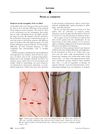
December 2008 in “Journal of The American Academy of Dermatology” This study suggests that yellow dots observed in scalp videodermoscopy are not highly specific to alopecia areata, as they appear in various types of alopecia.
 18 citations
,
August 2018 in “The FASEB journal”
18 citations
,
August 2018 in “The FASEB journal” This study found that Hoxc13-/- rabbits exhibit complete hair loss on the head and dorsum, providing a potential model for understanding human ECTD-9 and related dermatological conditions.
 18 citations
,
January 1997 in “British Journal of Dermatology”
18 citations
,
January 1997 in “British Journal of Dermatology” In this study, five women with androgenetic alopecia developed severe hypertrichosis on the face and limbs after using 5% topical minoxidil, which resolved after discontinuing the treatment.
 17 citations
,
December 2013 in “Journal of Investigative Dermatology Symposium Proceedings”
17 citations
,
December 2013 in “Journal of Investigative Dermatology Symposium Proceedings” In this study, once-daily treatment with bimatoprost 0.03% solution significantly increased eyelash growth, thickness, and darkness in patients with chemotherapy-induced eyelash loss compared to placebo, and was well tolerated over one year.
 16 citations
,
August 2002 in “Journal of Interferon and Cytokine Research”
16 citations
,
August 2002 in “Journal of Interferon and Cytokine Research” In this case study, hypertrichosis in a patient with hemophilia and hepatitis C may have been induced by IFN-alpha treatment, despite the drug usually causing hair loss.
 14 citations
,
October 2020 in “Natural Products and Bioprospecting”
14 citations
,
October 2020 in “Natural Products and Bioprospecting” This review discusses current topical treatments, natural products, and complementary therapies for androgenetic alopecia, but it reports no new clinical results.
 14 citations
,
January 2018 in “Endocrine”
14 citations
,
January 2018 in “Endocrine” This report describes a three-generation family with Cantú syndrome linked to a novel ABCC9 gene variant, featuring acromegaloid appearance and hypertrichosis without growth hormone abnormalities, and suggests a potential association with pituitary adenomas.
 14 citations
,
March 2007 in “Pediatric pulmonology”
14 citations
,
March 2007 in “Pediatric pulmonology” This study found evidence suggesting that hypertrichosis may be an adverse effect of inhaled corticosteroids in children, although it does not always resolve after stopping treatment.
 11 citations
,
May 1990 in “Journal of Dermatological Science”
11 citations
,
May 1990 in “Journal of Dermatological Science” In this animal study, topical diazoxide treatment led to increased hair thickness and follicle growth in bald stumptailed macaques without causing notable systemic side effects.
 10 citations
,
November 2018 in “Genetics in medicine”
10 citations
,
November 2018 in “Genetics in medicine” This study identified a genetic variant in the CTS6 gene associated with a hypotrichosis syndrome, emphasizing the significant role of cystatin M/E in hair and skin health.
 8 citations
,
January 2020 in “Journal of Cutaneous Medicine and Surgery”
8 citations
,
January 2020 in “Journal of Cutaneous Medicine and Surgery” Oral minoxidil may improve hair loss in men and women, but has some side effects.
 6 citations
,
May 2012 in “Archives of Dermatological Research”
6 citations
,
May 2012 in “Archives of Dermatological Research” This study reports a novel missense mutation in the HR gene in a 68-year-old Hungarian woman with alopecia universalis and limb deformities, suggesting a need for further research on its role in these conditions.
 4 citations
,
November 2016 in “Dermatologic Therapy”
4 citations
,
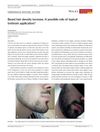
November 2016 in “Dermatologic Therapy” Topical tretinoin may increase beard hair density.
 4 citations
,
October 2013 in “Clinics in Dermatology”
4 citations
,
October 2013 in “Clinics in Dermatology” This article discusses three controversial hair growth disorders but reports no new research findings; it explores alopecia areata incognita, pseudopelade of Brocq, and psoriasis-linked alopecia.
 3 citations
,
May 2011 in “Journal of the American Academy of Dermatology”
3 citations
,
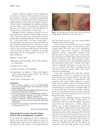
May 2011 in “Journal of the American Academy of Dermatology” This case report describes a 54-year-old woman who developed hypertrichosis around a leg ulcer while using PGE1 ointment, suggesting a potential side effect of the treatment.
 3 citations
,
February 2010 in “Clinical kidney journal”
3 citations
,
February 2010 in “Clinical kidney journal” This case report highlights a severe kidney injury linked to the combined use of ciclosporin and simvastatin in a patient treated for alopecia universalis.
 2 citations
,
March 2021 in “Journal of Cosmetic Dermatology”
2 citations
,
March 2021 in “Journal of Cosmetic Dermatology” This pilot study found that among male androgenetic alopecia patients, 2.5 mg oral minoxidil with platelet-rich plasma led to higher patient satisfaction than 1.25 mg, though hair count improvements were not statistically significant.
 1 citations
,
August 2019 in “Pediatric dermatology”
1 citations
,
August 2019 in “Pediatric dermatology” This study reports that topical minoxidil 5% foam may effectively promote hair growth in congenital alopecia and hypotrichosis linked to desmoplakin mutations, as demonstrated by significant hair growth in an 8-year-old boy.
 April 2023 in “Acta Scientific Orthopaedics”
 This essay discusses hair loss due to head bone displacement and does not report new clinical results, building on the author's prior work regarding the natural process of growth-related changes.
 October 2022 in “Boletín médico del Hospital infantil de México/Boletín médico del Hospital Infantil de México”
 This case report describes an 18-year-old male with a rare acquired smooth muscle hamartoma on his face, characterized by hyperpigmented plaques and increased hair growth, suggesting a histological overlap with folliculosebaceous cystic hamartoma.
 September 2003 in “Current Paediatrics”
 This article outlines how pediatric hair problems present and how they can be assessed, without reporting new research results.
1 citations
,
March 2023 in “Journal of the Turkish Academy of Dermatology” This report suggests a possible association between temporal triangular alopecia and sebaceous nevus, and identifies a pinkish background as a new trichoscopic finding for TTA.
 January 2020 in “Journal of Current Medical Research and Practice”
 In this study, trichoscopy was found to be helpful in diagnosing the types of noncicatricial alopecia, and alopecia's negative impact on quality of life was highlighted through the correlation with clinical severity.
2 citations
,
September 2021 in “JAAD case reports” This report describes a case of trichodysplasia spinulosa in a renal transplant patient, characterized by unique dermatoscopic features and highlighting the need for timely diagnosis.
1 citations
,
April 2016 in “Journal of the American Academy of Dermatology” Autoimmune conditions can be linked to trichoepitheliomas, with treatment focusing on cosmetic concerns.
4 citations
,
January 2017 in “PubMed” This report describes a rare case of acquired eyelash trichomegaly in a 16-year-old female with systemic lupus erythematosus, accompanied by diffuse hair loss and "lupus hairs" on the scalp.