15 citations
,
August 1985 in “Archives of dermatology” This study reports that 0.025% tretinoin lotion seemed effective for idiopathic hair casts in two young girls and suggests an infrainfundibular origin for the lesions.
March 2026 in “Drug Testing and Analysis” This study observed that the degradation product PTeCA significantly increased in hair treated with oxidative cosmetics, suggesting it could be a reliable marker for detecting such treatments, with a proposed PTCA cut-off value using PTeCA as the gold standard.
July 2024 in “Journal of Investigative Dermatology” May 2022 in “The journal of investigative dermatology/Journal of investigative dermatology” This study found that TET2 plays a tumor-suppressive role in preventing squamous cell carcinomas by regulating 5-hydroxymethylcytosine levels, suggesting therapeutic potential for DNA methylation dynamics.
 May 2020 in “Research Square (Research Square)”
 This study found that trichilemmal carcinoma shares genetic changes with other skin cancers, suggesting a similar pathogenesis, particularly in those with aggressive clinical courses linked to TP53 mutations.
October 2022 in “Hair Transplantation” This article discusses the temporary scalp trichopigmentation procedure, detailing its unique approach compared to traditional scalp micropigmentation, and reports no new clinical findings.
 May 2024 in “Actas dermo-sifiliográficas/Actas dermo-sifiliográficas”
 This review outlines current treatment strategies for trichotillomania, noting cognitive-behavioral therapy's success, while highlighting the promise and limitations of various pharmacological options.
6 citations
,
March 1996 in “Journal of Investigative Dermatology”  1 citations
,
October 2024 in “Journal of King Saud University - Science”
1 citations
,
October 2024 in “Journal of King Saud University - Science” In this in vitro study, extracts from Tridax procumbens demonstrated potential antioxidant and anticancer activity against various human cancer cell lines, with notable efficacy in specific fractions.
1 citations
,
March 2022 in “Anais brasileiros de dermatologia/Anais Brasileiros de Dermatologia” This study found that trichoscopy is a useful tool in differentiating between alopecia areta and trichotillomania on the eyebrows based on distinct hair and follicle features.
February 2016 in “PubMed” This review discusses testosterone replacement therapy, highlighting that most studies report no increased myocardial infarction risk when the therapy is properly administered with controlled hormone levels; it calls for careful consideration despite insurance coverage challenges.
 April 2026 in “International Journal of Drug Delivery Technology”
 This study found trichoscopy to be a reliable non-invasive method for diagnosing various forms of alopecia, aiding in clinical management and reducing the need for biopsies in a hospital-based setting with 90 patients, including those with uncertain diagnoses.
 December 2025 in “TURKDERM”
 This article discusses Trikostazis spinuloza (TS), a dermatological condition often misdiagnosed, and reviews its demographic, clinical, and dermoscopic features, but reports no new clinical results.
10 citations
,
January 1997 in “Dermatology” This case report details two siblings with trichothiodystrophy, identifying reduced hair sulfur content as essential for diagnosis despite varied symptoms complicating recognition.
19 citations
,
November 1979 in “Archives of dermatology” This case report discusses the potential use of topical tretinoin for treating Fox-Fordyce disease, but provides no new clinical results.
 108 citations
,
March 2011 in “Archives of Dermatology”
108 citations
,
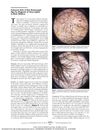
March 2011 in “Archives of Dermatology” Corkscrew hair may be a new sign for quickly diagnosing scalp fungus in black children.
36 citations
,
March 1989 in “British journal of dermatology/British journal of dermatology, Supplement” In this study, the authors compared topical diphencyprone and tretinoin gel for treating alopecia totalis and universalis, but the abstract does not report any definitive clinical results.
 4 citations
,
November 2016 in “Dermatologic Therapy”
4 citations
,
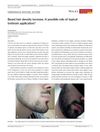
November 2016 in “Dermatologic Therapy” Topical tretinoin may increase beard hair density.
21 citations
,
September 2022 in “Actas Dermo-Sifiliográficas” This study reviews the use of trichoscopy in diagnosing and monitoring alopecia areata, highlighting that certain trichoscopic findings like yellow and black dots, exclamation mark hairs, and others, provide valuable insights into disease status and treatment response.
June 2015 in “Turkish Journal of Dermatology” This review discusses how trichoscopy, a hair and scalp examination method, helps in diagnosing various hair diseases by identifying specific structural features but provides no new clinical findings.
 March 2021 in “CRC Press eBooks”
 This article reviews the complexities and challenges in hair transplant procedures, emphasizing the role of micro-inflammation and the usefulness of trichoscopy for detecting complications, and reports no new clinical results.
February 2026 in “Biophysical Journal” 1 citations
,
June 2023 in “Cosmoderma” This study found that in patients with alopecia areata, trichoscopy was a valuable tool for monitoring disease activity, severity, and therapeutic response, showing changes in trichoscopic markers that preceded improvements observed in the hair pull test.
 December 2023 in “Journal of ethnopharmacology”
 This study found that tribuloside, a flavonoid from Tribulus terrestris L., enhances melanin production in human melanocytes, zebrafish, and human skin samples without causing toxicity, potentially through inhibiting PDE to increase cAMP levels and promote the melanin biosynthesis pathway.
19 citations
,
June 2020 in “BMC Cancer” This study reported that genetic changes in trichilemmal carcinoma resemble those in other skin cancers, with TP53 mutations associated with aggressive clinical outcomes.
 8 citations
,
November 2021 in “The Journal of Dermatology”
8 citations
,
November 2021 in “The Journal of Dermatology” This review addresses the complexities in trichoscopy terminology and proposes an updated diagnostic flowchart for hair diseases, but it reports no new clinical findings.
 September 2024 in “Archiv Euromedica”
 In this review, the authors concluded that trichoscopy is a quick, non-invasive, and effective method for diagnosing and monitoring non-scarring alopecia, offering a more precise and faster alternative compared to other diagnostic methods for identifying and managing different types of hair loss.
 8 citations
,
January 2020 in “International Journal of Trichology”
8 citations
,
January 2020 in “International Journal of Trichology” The authors concluded that trichoscopy is a valuable noninvasive tool for diagnosing and monitoring nonscarring alopecia, aiding in the identification of new hair signs in difficult cases.
19 citations
,
July 2019 in “Journal of Cosmetic Dermatology” This study found that in patients with patchy alopecia areata, certain trichoscopic features like upright regrowing hairs and pigtail hairs are positive predictive markers for treatment success.
September 2024 in “Journal of the American Academy of Dermatology”