11 citations
,
August 2016 in “Journal of the European Academy of Dermatology and Venereology” This letter discusses the use of serial trichoscopy versus a modified hair pull test for monitoring localized alopecia areata but reports no new clinical results.
 January 2023 in “Al-Azhar International Medical Journal /Al-Azhar International Medical Journal”
 Panoramic Trichoscopy is a new, better way to assess widespread hair loss.
 40 citations
,
January 2013 in “International journal of trichology”
40 citations
,
January 2013 in “International journal of trichology” This study found that among women with frontal fibrosing alopecia, 100% showed dermoscopic elements suggestive of the condition, with perifollicular erythema often indicating disease activity.
January 2026 in “Updates in clinical dermatology”  April 2025 in “Dermatology Practical & Conceptual”
 UV-enhanced trichoscopy helps diagnose hair shaft disorders like pili annulati.
 January 2025 in “Dermatology and Therapy”
 This study found that ultraviolet-induced fluorescence trichoscopy can help differentiate between scarring and non-scarring alopecia and between psoriasis and seborrheic dermatitis.
 9 citations
,
July 2020 in “Journal of Dermatology”
9 citations
,
July 2020 in “Journal of Dermatology” This study found that diffuse and pseudo-fringe sign patterns are common in Asian patients with frontal fibrosing alopecia, and that treatments combining antiandrogens or antimalarials with topical therapy are effective.
September 2023 in “International Journal of Trichology” In this case series, the authors reported effective hair regrowth and resolution of symptoms in three pediatric patients with folliculitis decalvans following treatment with a combination of antibiotics, retinoids, dapsone, and corticosteroids.
 May 2026 in “Zenodo (CERN European Organization for Nuclear Research)”
 This study observed that over 60 days, Amalaki Churna, when administered to 30 patients with non-cicatricial hair fall, significantly reduced hair fall and improved hair tensile strength without adverse effects, suggesting beneficial Rasayana and Keshya properties.
 May 2026 in “Zenodo (CERN European Organization for Nuclear Research)”
 In this study, Amalaki Churna, given at a dose of 3g twice daily, significantly reduced hair fall and improved hair strength in patients with non-cicatricial hair loss over 60 days, without reported adverse effects.
 290 citations
,
December 2017 in “Journal of The American Academy of Dermatology”
290 citations
,
December 2017 in “Journal of The American Academy of Dermatology” This article reviews the epidemiology, clinical evaluation, and pathogenesis of alopecia areata and highlights recent advancements, but it does not report new clinical findings.
 245 citations
,
March 2012 in “Journal of The American Academy of Dermatology”
245 citations
,
March 2012 in “Journal of The American Academy of Dermatology” This review discusses the dermoscopic features of common hair and scalp disorders and reports no new clinical results, aiming to assist dermatologists in diagnosing conditions like tinea capitis and alopecia areata.
 129 citations
,
January 2009 in “International Journal of Trichology”
129 citations
,
January 2009 in “International Journal of Trichology” This study found that trichoscopy criteria can distinguish female androgenic alopecia from chronic telogen effluvium, with specific features achieving 98% diagnostic specificity.
 88 citations
,
January 2013 in “Indian Journal of Dermatology, Venereology and Leprology”
88 citations
,
January 2013 in “Indian Journal of Dermatology, Venereology and Leprology” This article reviews recent advancements in understanding and treating androgenetic alopecia, focusing on new genetic insights, stem cell roles, and diagnostic tools, without reporting new clinical results.
 86 citations
,
August 2014 in “Journal of The American Academy of Dermatology”
86 citations
,
August 2014 in “Journal of The American Academy of Dermatology” This article discusses the history taking and clinical examination process for diagnosing alopecia and outlines a diagnostic approach, noting that it reports no new clinical results.
 69 citations
,
August 2014 in “Journal of The American Academy of Dermatology”
69 citations
,
August 2014 in “Journal of The American Academy of Dermatology” This review discusses recent advances in trichoscopy for differentiating types of alopecia and presents a systematic approach for using its diagnostic findings, but reports no new clinical results.
 68 citations
,
August 2012 in “Journal of the American Academy of Dermatology”
68 citations
,
August 2012 in “Journal of the American Academy of Dermatology” This paper discusses the use of dermatoscopy as a fast, noninvasive technique for diagnosing hair shaft disorders and reports no new results; the authors highlight its advantages over traditional microscopy methods.
 61 citations
,
January 2019 in “American Journal of Clinical Dermatology”
61 citations
,
January 2019 in “American Journal of Clinical Dermatology” This review discusses the potential causes and treatments for frontal fibrosing alopecia but reports no new clinical findings, highlighting the need for further research to understand its pathogenesis and develop validated treatments.
 53 citations
,
February 2017 in “Journal of The American Academy of Dermatology”
53 citations
,
February 2017 in “Journal of The American Academy of Dermatology” In this study of 20 patients with erosive pustular dermatosis of the scalp, using trichoscopy improved diagnosis, and treatments with high-potency steroids or topical tacrolimus effectively reduced inflammatory signs, suggesting these as first-line treatments.
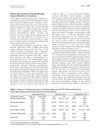 46 citations
,
January 2015 in “Journal of The American Academy of Dermatology”
46 citations
,
January 2015 in “Journal of The American Academy of Dermatology” This study suggests that trichoscopic features, such as perifollicular erythema and cicatricial white patches, are independently associated with pruritus and the severity of frontal fibrosing alopecia.
 45 citations
,
March 2010 in “Journal der Deutschen Dermatologischen Gesellschaft”
45 citations
,
March 2010 in “Journal der Deutschen Dermatologischen Gesellschaft” This article discusses methods for diagnosing and managing diffuse hair loss and reports no new results; the authors emphasize systematic evaluation and the importance of psychological support.
 43 citations
,
November 2019 in “American Journal of Clinical Dermatology”
43 citations
,
November 2019 in “American Journal of Clinical Dermatology” This review discusses female androgenetic alopecia, highlighting its diagnostic challenges and management strategies, but it reports no new results.
 43 citations
,
July 2018 in “Journal of The European Academy of Dermatology and Venereology”
43 citations
,
July 2018 in “Journal of The European Academy of Dermatology and Venereology” This study found that a topical solution combining 0.25% finasteride with 3% minoxidil significantly improved hair growth, as measured by hair density, diameter, and global assessment, in men with androgenetic alopecia, compared to 3% minoxidil alone, over 24 weeks without systemic adverse effects reported.
41 citations
,
December 2008 in “Pediatric Dermatology” This case report indicates that trichoscopy may significantly improve the diagnosis of Netherton syndrome by noninvasively identifying typical hair abnormalities without the need to pull hair.
 40 citations
,
July 2017 in “Frontiers in Medicine”
40 citations
,
July 2017 in “Frontiers in Medicine” This review highlights that in children, hair loss can be attributed to diverse conditions like alopecia areata and tinea capitis, and stresses the importance of a holistic approach to diagnosis and management, including psychosocial support due to limited effective treatments.
 40 citations
,
December 2014 in “Indian Journal of Dermatology”
40 citations
,
December 2014 in “Indian Journal of Dermatology” This study found that trichoscopy can effectively differentiate scalp psoriasis from seborrheic dermatitis by identifying specific trichoscopic patterns such as hidden hairs, signet ring vessels, and comma vessels.
 37 citations
,
January 2017 in “International Journal of Dermatology”
37 citations
,
January 2017 in “International Journal of Dermatology” This study found that trichoscopic features like exclamation mark hairs and angulated hairs were more indicative of alopecia areata in an Asian population, while features like broken hairs of different lengths and flame hairs were more common in trichotillomania.
35 citations
,
September 2011 in “The Journal of Dermatology” This article discusses the trichoscopic diagnosis of temporal triangular alopecia, but reports no new clinical results.
 33 citations
,
September 2012 in “Australasian Journal of Dermatology”
33 citations
,
September 2012 in “Australasian Journal of Dermatology” This article reviews trichoscopic signs of chemotherapy-induced alopecia, including exclamation marks, but reports no new clinical results.
 32 citations
,
January 2014 in “Dermatology Research and Practice”
32 citations
,
January 2014 in “Dermatology Research and Practice” This study found that trichoscopy can rapidly and noninvasively diagnose tinea capitis and alopecia areata in pediatric patients by identifying specific hair patterns associated with each condition.