 1 citations
,
May 2019 in “Journal of The European Academy of Dermatology and Venereology”
1 citations
,
May 2019 in “Journal of The European Academy of Dermatology and Venereology” New method, hair distribution width (HDW), improves accuracy in diagnosing androgenetic alopecia (AGA).
1 citations
,
January 2019 in “Journal of the Egyptian Women's Dermatologic Society (Print)” This study observed that while both minoxidil and botanically-derived 5-alpha reductase inhibitors significantly increased hair count and diameter in women with female pattern hair loss, minoxidil was more effective, especially for greater hair diameter increases, but had more troublesome side effects.
 1 citations
,
February 2018 in “Australasian journal of dermatology”
1 citations
,
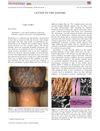
February 2018 in “Australasian journal of dermatology” Advanced imaging techniques are crucial for accurately diagnosing Monilethrix, a rare hair disorder.
 1 citations
,
January 2018 in “Indian journal of dermatopathology and diagnostic dermatology”
1 citations
,
January 2018 in “Indian journal of dermatopathology and diagnostic dermatology” This review discusses the use of trichoscopy as a valuable diagnostic and prognostic tool for various hair and scalp disorders, reporting no new clinical results.
1 citations
,
May 2016 in “Aktuelle Dermatologie” This case study reported that a 34-year-old woman with classic lichen planopilaris achieved disease remission after two months of hydroxychloroquine treatment following ineffective corticosteroid therapy.
 1 citations
,
January 2016 in “Journal of cosmetology & trichology”
1 citations
,
January 2016 in “Journal of cosmetology & trichology” Trichoscopy helped diagnose and treat a child's fungal scalp infection by spotting specific hair shapes.
 1 citations
,
March 2014 in “Turkderm”
1 citations
,
March 2014 in “Turkderm” Trichoscopy helps tell different hair loss types apart using specific scalp and hair patterns.
July 2026 in “Dermatology Practical & Conceptual” This review assessed trichoscopic findings in folliculotropic mycosis fungoides of the scalp, reporting features like milky-red globules and distinct vascular patterns, but noted the predominance of small studies and the need for larger research to validate trichoscopy's diagnostic utility for this condition.
In this study, trichoscopy was diagnostically useful in 97.5% of alopecia cases at a rural Indian hospital, confirming initial diagnoses in most cases and reducing the need for invasive scalp biopsies.
June 2026 in “JAAD Case Reports” Scurvy, caused by vitamin C deficiency, can occur in people with restrictive diets and can be diagnosed by twisted hair shafts.
May 2026 in “Skin Appendage Disorders” This study identified distinct trichoscopic and histopathological features of telogen effluvium following COVID-19 infection, with trichoscopic vascular patterns correlating with the severity of the initial infection.
 April 2026 in “Research Square”
 In this study, trichoscopic examination revealed that variations in hair diameter were more common in certain types of alopecia affecting the frontal scalp, suggesting the importance of evaluating the entire scalp for accurate diagnoses, although limitations include a single center design and small sample size.
 March 2026 in “Applied Sciences”
 In this scoping review, researchers observed that while AI-assisted trichoscopy holds promise for standardized assessments of hair and scalp disorders, its clinical translation is limited by small proprietary datasets, inconsistent validation protocols, and a scarcity of real-world clinical studies.
March 2026 in “Frontiers in Medicine” This study suggests that traditional classification systems for pattern hair loss, while useful in the past, have limitations in accuracy and reproducibility, and highlights the potential of integrating digital imaging and AI to create more precise and biologically informed classification frameworks.
 February 2026 in “Zenodo (CERN European Organization for Nuclear Research)”
 This study identified specific trichoscopic signs of secondary post-traumatic cicatricial alopecia in patients with mine-explosive injuries and burns and evaluated the effectiveness of hair transplantation procedures combined with PRP therapy, finding an average hair survival rate of 84.1% one year post-surgery.
 February 2026 in “Zenodo (CERN European Organization for Nuclear Research)”
 This study observed that trichoscopic examination revealed specific signs of secondary post-traumatic cicatricial alopecia in patients with mine-explosive injuries and burns, and reported an 84.1% hair survival rate following transplantation and PRP therapy, with marked improvements in scalp condition after 12 months.
In this study, a Monte Carlo-generated synthetic cohort analysis found that higher simulated cannabis exposure was linked to increased self-assessed hair loss severity and reduced follicular density, suggesting potential connections worth exploring in further clinical research.
January 2026 in “Diagnostics” This study reports that publicly available large language models are currently less accurate than human experts in diagnosing trichoscopic images, suggesting the need for further development and specialized training for these AI tools in trichology.
January 2026 in “Clinical Dermatology Review” This study found that platelet-rich plasma therapy significantly improved hair density, diameter, and reduced inflammation in androgenetic alopecia patients compared to placebo, though individual responses varied.
 January 2026 in “Indian Journal of Dermatopathology and Diagnostic Dermatology”
 This report highlights a case where dermoscopic observation of corkscrew hairs in a young woman led to the diagnosis of trichotillomania, emphasizing its role in distinguishing this psychiatric disorder from other forms of non-scarring alopecia and highlighting the importance of timely intervention.
January 2026 in “Indian Journal of Paediatric Dermatology” This study found trichoscopy to be a quick and effective method for diagnosing and monitoring tinea capitis in children, with improvements in trichoscopic features observed by week 2 and full recoveries confirmed mycologically by week 8.
December 2025 in “International Journal of Cosmetic Science” A new tool helps better assess and treat hair loss in Chinese men.
December 2025 in “Yassawi Journal of Health Sciences” This study found that trichoscopy is highly effective for diagnosing different types of alopecia, showing an average diagnostic accuracy of 90–95%, with specific features aiding in differentiating forms like androgenetic alopecia and alopecia areata. New technologies and AI improve interpretation objectivity, suggesting expanded clinical integration.
December 2025 in “Skin Appendage Disorders” Patients found AI helpful for alopecia diagnosis but want it to support, not replace, doctors.

In this simulation study, higher cannabis exposure was associated with increased hair shedding severity and reduced follicular density, with greater effects observed in female-assigned profiles, but these associations are based on modeled data and not clinical observations.

This simulation study found that higher cannabis exposure in a virtual population was associated with increased hair shedding severity and reduced follicular density, but these results are based on modeled data and cannot establish causal relationships.
October 2025 in “Pediatric Dermatology” This report describes how ultraviolet-induced fluorescence dermoscopy helped accurately diagnose scalp disorders, specifically alopecia areata and tinea capitis, in pediatric patients.
September 2025 in “International Journal of Medical Informatics” A machine learning model can predict scarring in lichen planopilaris using factors like vitamin D levels and diagnostic delay.
July 2025 in “Dermatology Practical & Conceptual” In this study, researchers found that hair alterations such as frontal-occipital inversion in males and a high occipital hairline may aid in diagnosing the uncommon condition TRPS.
 July 2025 in “Clinical Dermatology Review”
 This study found that platelet-rich plasma therapy led to significantly increased hair growth and density compared to placebo in patients with androgenic alopecia over six months.