10 citations
,
December 2008 in “Molecular Carcinogenesis” This study found that overexpressing the PML protein in transgenic mice decreased skin tumor occurrence and delayed their progression, highlighting PML's potential role in influencing keratinocyte growth and differentiation.
40 citations
,
July 2023 in “Clinical Pharmacology & Therapeutics” This review discusses the progress and challenges of targeted protein degradation therapies, highlighting the increasing number of degraders in cancer clinical trials and the limited diversity in targeted proteins, primarily focusing on those employing CRL4CRBN as the E3 ligase.
 156 citations
,
October 1996 in “Science of The Total Environment”
156 citations
,
October 1996 in “Science of The Total Environment” This study observed that tributyltin pollution induces imposex, reduces reproductive success, and leads to population decline in Ocinebrina aciculata, highlighting its sensitivity compared to other prosobranch species.
 September 2026 in “Stem Cell Reviews and Reports”
 Bulge progenitor cells show promise for regenerating hair follicles and increasing hair density.
5 citations
,
July 2016 in “Experimental Dermatology” This article reviews the limitations in current research on photobiomodulation for hair regrowth and suggests that optimal wavelengths and dosing have not yet been identified, noting that recommending these devices may be premature.
2 citations
,
June 2023 in “Medicine” This case report describes the occurrence of a very rare disease, MTPC, in the elbow of a man who does not match the typical etiology, highlighting its academic significance.
12 citations
,
August 2001 in “PubMed” This study found that contrast enhanced phototrichogram (CE-PTG) significantly improved detection of various hair types and growth stages in androgenetic alopecia compared to standard PTG and was comparable to biopsy analysis.
 January 2026 in “International Journal of Research and Innovation in Applied Science”
 This case report details a rare instance of malignant proliferating trichilemmal tumour in a 60-year-old male, emphasizing the significance of histochemical and immunohistochemical markers for accurate diagnosis and differentiation from squamous cell carcinoma.
 29 citations
,
October 2016 in “Cell death and differentiation”
29 citations
,
October 2016 in “Cell death and differentiation” This study found that in squamous cell carcinomas, the inhibition of the tumor-suppressor function of TAp73β by ΔNp63α occurs through promoter squelching, not direct protein interaction.
 December 2013 in “Appetite”
 This study identified a nonfunctional Itpr3 gene in BTBR mice, attributed to a 12-bp deletion, which likely causes their simultaneous hair loss and taste perception deficits.
 13 citations
,
March 2002 in “Pediatric Dermatology”
13 citations
,
March 2002 in “Pediatric Dermatology” This article discusses temporal triangular alopecia, emphasizing the need for increased awareness to prevent misdiagnosis and ineffective treatment, but reports no new clinical results.
 131 citations
,
October 2004 in “Clinical Cancer Research”
131 citations
,
October 2004 in “Clinical Cancer Research” This study suggests that applying topical Tempol to the scalp before whole brain radiation may protect against radiation-induced alopecia and is safe and well-tolerated.
 July 2026 in “International Journal of Molecular Sciences”
 This study found that TSG-enriched Polygonum multiflorum extract, optimized through microwave-assisted and chromatographic methods, promotes hair regrowth in a mouse model of androgenetic alopecia via 5α-reductase inhibition and Wnt/β-catenin pathway activation, suggesting its potential as a natural treatment.
 1 citations
,
January 2013 in “International Journal of Trichology”
1 citations
,
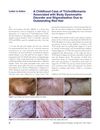
January 2013 in “International Journal of Trichology” A girl with red hair developed hair-pulling and body image disorders after being bullied for her hair color.
 April 2017 in “The Journal of Urology”
 This study found that patients with BPH who received finasteride before TURP experienced reduced intraoperative blood loss and improved quality of life one month after surgery compared to those who did not.
February 2026 in “Skin Appendage Disorders” This study found a significant association between pseudofolliculitis barbae and mood disorders such as depression and anxiety, but not with obsessive-compulsive disorder.
 2 citations
,
June 2016 in “PubMed”
2 citations
,
June 2016 in “PubMed” This case study reports successful treatment of an 11-year-old girl's trichotillomania with cognitive behavioral therapy, mild topical treatments, and supportive parental involvement, without psychopharmacologic intervention.
1 citations
,
June 2022 in “Photobiomodulation, photomedicine, and laser surgery” In this study, photobiomodulation notably increased hair density in men with androgenetic alopecia after 5 weeks, though no further gains were observed with additional sessions.
1 citations
,
October 2023 in “European Journal of Dermatology” This study found that combining hair transplantation with platelet-rich plasma treatment significantly improved hair regeneration, reduced hair loss, and minimized skin lesion areas in patients with androgenic alopecia compared to hair transplantation alone, suggesting enhanced treatment efficacy.
35 citations
,
September 2011 in “The Journal of Dermatology” This article discusses the trichoscopic diagnosis of temporal triangular alopecia, but reports no new clinical results.
 24 citations
,
August 2013 in “Facial Plastic Surgery Clinics of North America”
24 citations
,
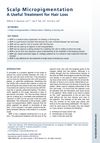
August 2013 in “Facial Plastic Surgery Clinics of North America” This review discusses scalp micropigmentation techniques and their customization to individual patients, but reports no new clinical results.
 April 2026 in “Diagnostics”
 This review outlines the use of quantitative imaging techniques in monitoring tendon response to platelet-rich plasma treatment for chronic tendinopathy and reports that these methods may aid in tailoring PRP protocols.
July 2026 in “Regenerative Biomaterials” This study found that modifying biphasic calcium phosphate/poly(methyl methacrylate) bone cement with human hair keratin improves its hydrophilicity, mechanical properties, and supports bone repair in rats, indicating potential for orthopedic applications.

PTHrP is important for bone formation and may be targeted for osteoporosis treatment and longevity therapies.
 April 2012 in “The Journal of Urology”
 This meta-analysis reported that dietary intake of omega-3 or omega-6 fatty acids does not significantly impact prostate cancer risk.
26 citations
,
October 2019 in “JNCI Cancer Spectrum” This clinical study observed that in patients with advanced breast cancer and BRCA1/2 mutations, talazoparib provided significantly better progression-free survival, objective response, clinical benefit, and patient-reported outcomes compared to physician’s choice chemotherapy, despite common side effects like anemia and fatigue.
 January 2024 in “Genetics in Medicine Open”
 In this report, two adult patients with Tatton-Brown-Rahman syndrome exhibited new cardiac features, such as atrial fibrillation and ventricular and atrial dilatation, highlighting the importance of cardiovascular follow-up in adults with this condition.
7 citations
,
January 2014 in “International Journal of Trichology” This article reviews five cases of primary idiopathic pseudopelade of Brocq and reports no histopathological changes indicative of any specific cicatricial alopecia.
January 2020 in “International Journal of Trichology” This study reported that platelet-rich plasma injections led to only temporary improvement in vellus hair characteristics in temporal triangular alopecia, suggesting it may not be an effective long-term treatment.
October 2024 in “Journal of the Endocrine Society” This case report highlights that a patient with resistance to thyroid hormone was misdiagnosed as having Graves’ disease, leading to unnecessary radioactive iodine treatment.