This article lists the clinically important interactions and skin reactions of several drugs and substances, including THA, FK506, tamoxifen, tamsulosin, tartrazine, tea tree oil, temazepam, and temozolomide, but provides no new clinical results.
32 citations
,
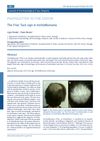
August 2016 in “Journal of the American Academy of Dermatology” This letter discusses congenital triangular alopecia (TTA), a non-scarring hair loss condition often seen in children, without reporting new clinical findings.
 31 citations
,
June 2018 in “Dermatologic Surgery”
31 citations
,
June 2018 in “Dermatologic Surgery” In this randomized, double-blind trial, researchers observed that low-level laser therapy led to significantly greater hair regrowth on treated areas compared to a sham treatment in patients with androgenetic alopecia over 24 weeks, suggesting it as a potentially effective and safe option.
55 citations
,
November 2010 in “Journal of Allergy and Clinical Immunology” This study found that the TLR3 L412F genetic variant is associated with severe viral infections, especially CMV, and immune dysfunction in a subgroup of chronic mucocutaneous candidiasis patients.
1 citations
,
January 2016 in “Dermatology Online Journal” This case report documents a rare instance of triangular temporal alopecia in an adult woman, emphasizing the importance of correct diagnosis to avoid unnecessary treatments, and reviews the literature on TTA.
1 citations
,
April 2024 in “JDDG Journal der Deutschen Dermatologischen Gesellschaft” In this case report, the authors concluded that cutaneous lupus erythematosus was induced by the PD-1 inhibitor tislelizumab during treatment for metastatic lung adenocarcinoma, despite initial remission and treatment adjustments.
11 citations
,
March 2002 in “Pediatric Dermatology” Temporal triangular alopecia is a non-scarring hair loss seen in some Asian children.
 September 2017 in “Springer eBooks”
 Low-level laser therapy seems to promote hair growth but requires more research to confirm its effectiveness.
 21 citations
,
August 2013 in “Journal of Dermatological Treatment”
21 citations
,
August 2013 in “Journal of Dermatological Treatment” This review discusses the mixed evidence and high risk of bias in studies on low-level light therapy for treating androgenetic alopecia and calls for rigorous randomized controlled trials to assess its efficacy.

This study found that low-level laser therapy may enhance wound healing and reduce pain, swelling, and inflammation by increasing mitochondrial activity and oxidative stress, leading to greater protein synthesis and cell proliferation.
1 citations
,
August 2016 in “Pan Stanford Publishing Pte. Ltd. eBooks” This chapter reviews low-level light therapy for hair growth and loss prevention but reports no new clinical results, providing an overview of mechanisms, treatments, and future perspectives.
1 citations
,
January 2008  56 citations
,
March 2010 in “Journal of Dermatology”
56 citations
,
March 2010 in “Journal of Dermatology” This review provides a synopsis of 53 cases of temporal triangular alopecia, noting its frequent detection in early childhood and potential association with congenital diseases, but it reports no new clinical findings.
 January 2012 in “Human health handbooks”
 This review discusses the application of low-level light therapy for hair loss treatment, particularly androgenetic alopecia, and reports no new clinical results; the authors suggest consideration of light source characteristics and potential pros and cons.
 165 citations
,
August 2013 in “Lasers in Surgery and Medicine”
165 citations
,
August 2013 in “Lasers in Surgery and Medicine” This review discusses the potential mechanisms and evidence supporting low-level laser therapy for stimulating hair growth in men and women, while noting its safety and effectiveness but needing further study on specific parameters.
April 2012 in “Neuropediatrics” This article reviews the genetic and phenotypic characteristics of Trichothiodystrophy and discusses the associated DNA repair defects, but does not report new clinical findings.
 July 2024 in “Dermatology Practical & Conceptual”
 This article discusses the diagnostic challenges between certain neonatal scalp conditions and highlights the potential of line-field confocal optical coherence tomography to provide detailed, non-invasive skin examination, without presenting new clinical findings.
 13 citations
,
June 2012 in “Journal of Dermatological Case Reports”
13 citations
,
June 2012 in “Journal of Dermatological Case Reports” This report describes an 8-year-old male with trichotillomania, confirmed by trichoscopy showing characteristic hair damage and patterns.
 106 citations
,
April 2013 in “Dermatologic Surgery”
106 citations
,
April 2013 in “Dermatologic Surgery” This study found that low-level light therapy significantly increased hair density and diameter in androgenetic alopecia patients compared to a sham device, suggesting it could be an effective treatment option.
January 2013 in “International Journal of Trichology” This case report describes a young girl with trichothiodystrophy and suggests the need for early diagnosis and multidisciplinary interventions for her educational challenges.
July 2017 in “OPAL (Open@LaTrobe) (La Trobe University)” In this study, researchers investigated the role of the ATX-LPA axis in asthma pathogenesis using human and mouse models and highlighted the potential for developing new ATX inhibitors as effective asthma treatments.
 83 citations
,
January 2001 in “American journal of clinical dermatology”
83 citations
,
January 2001 in “American journal of clinical dermatology” This review discusses the clinical features of trichotillomania and the challenges in its diagnosis and treatment, reporting no new clinical findings while highlighting the need for specialized therapy and better therapeutic options.
 2 citations
,
May 2022 in “Journal of the American Academy of Dermatology”
2 citations
,
May 2022 in “Journal of the American Academy of Dermatology” This study observed that most patients with traction alopecia showed improved or stabilized hair loss with therapeutic counseling and adjunctive treatments, but follow-up was often inconsistent, highlighting the need for better awareness and management.
 April 2023 in “The journal of investigative dermatology/Journal of investigative dermatology”
 This study suggests that the expression and localization of toll-like receptors and caveolin-1 in lichen planopilaris may influence cicatricial alopecia pathobiology and that downregulating caveolae could offer a novel management strategy.
990 citations
,
October 1999 in “Development” This study found that LEF1/TCF3 is necessary but not sufficient for TOPGAL activation in hair follicle development, indicating complex regulation in the skin.
 10 citations
,
March 2015 in “Journal of dermatology”
10 citations
,
March 2015 in “Journal of dermatology” This case report describes a 12-year-old boy with severe skin scaling due to novel compound heterozygous null truncation mutations in the TGM1 gene, resulting in loss of transglutaminase 1 activity.
 July 2022 in “The journal of investigative dermatology/Journal of investigative dermatology”
 This study found that locally administering thymic stromal lymphopoietin (TSLP) promotes hair growth by stimulating hair follicle cell proliferation during both normal conditions and after skin injury in mice.
19 citations
,
June 2010 in “Journal of acupuncture and meridian studies” This study found that emodin from Polygonum multiflorum showed 5alpha-reductase inhibitory activity, which was more potent than alizarin but less potent than riboflavin.
17 citations
,
January 2013 in “Talanta” A new method was developed to accurately measure enzyme activity related to prostate health.
14 citations
,
May 2005 in “Steroids” This study describes the synthesis of finasteride from 4-androstene-3,17-dione in a seven-step process with an overall yield of 18.6%.