 2 citations
,
February 2019 in “Anais brasileiros de dermatologia/Anais Brasileiros de Dermatologia”
2 citations
,
February 2019 in “Anais brasileiros de dermatologia/Anais Brasileiros de Dermatologia” Tufted folliculitis is common in patients with folliculitis decalvans.
 2 citations
,
June 2023 in “Skin Research and Technology”
2 citations
,
June 2023 in “Skin Research and Technology” This study reviewed 39 studies with 3204 patients to identify characteristic trichoscopic findings in alopecia areata, highlighting yellow and black dots, broken, short vellus, and tapering hairs as key indicators. It found no single diagnostic trichoscopic finding but observed trichoscopy's utility in monitoring treatment response.
 54 citations
,
January 2013 in “BMC Complementary and Alternative Medicine”
54 citations
,
January 2013 in “BMC Complementary and Alternative Medicine” In this study, topical application of Thuja orientalis extract promoted hair growth by inducing the anagen phase and increasing hair follicle size and number in telogenic mice.
15 citations
,
February 2015 in “Anais brasileiros de dermatologia/Anais Brasileiros de Dermatologia” This article reviews the use of dermoscopy in distinguishing temporal triangular alopecia from alopecia areata, emphasizing its role in avoiding invasive diagnostics and ineffective treatments; it reports no new clinical findings.
 23 citations
,
December 2004 in “Differentiation”
23 citations
,
December 2004 in “Differentiation” This article reviews the interaction between sex hormone pathways and morphogenesis-related signaling in epithelial organ development, using a chicken model to propose testable hypotheses, but reports no new clinical results.
 56 citations
,
March 2010 in “Journal of Dermatology”
56 citations
,
March 2010 in “Journal of Dermatology” This review provides a synopsis of 53 cases of temporal triangular alopecia, noting its frequent detection in early childhood and potential association with congenital diseases, but it reports no new clinical findings.
 8 citations
,
January 2020 in “International Journal of Trichology”
8 citations
,
January 2020 in “International Journal of Trichology” The authors concluded that trichoscopy is a valuable noninvasive tool for diagnosing and monitoring nonscarring alopecia, aiding in the identification of new hair signs in difficult cases.
133 citations
,
August 1969 in “Science” This study found that melatonin implants caused male weasels to molt, develop a new white winter coat, and become reproductively inactive, suggesting melatonin affects their neuroendocrine system.
This study analyzed inner root sheath-specific genes in Tan sheep during various growth stages, finding peak expression at birth. The pattern of genes KRT71, KRT72, and TCHH is consistent with wool crimp, potentially influencing wool morphology.
33 citations
,
September 1990 in “Proceedings of the National Academy of Sciences” This study found that a 671-base pair promoter sequence from the ultra-high-sulfur keratin gene is sufficient to direct tissue-specific and development-specific expression of a reporter gene during hair growth in transgenic mice.
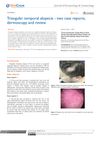 2 citations
,
February 2018 in “Journal of dermatology & cosmetology”
2 citations
,
February 2018 in “Journal of dermatology & cosmetology” This article discusses triangular temporal alopecia, highlighting dermoscopy's role in diagnosis and the limited therapeutic options, without reporting new clinical results.
 December 2023 in “The journal of cell biology/The Journal of cell biology”
 This study developed the mTurquoise2-Col4a1 mouse model and used fluorescent tagging of collagen IV to offer new insights into basement membrane dynamics during hair follicle budding, revealing that basement membranes are flexible and stable structures in developing skin tissue.
 January 1957 in “Nihon Chikusan Gakkaiho”
 This article examines microscopic structural differences and pigment distribution in various rabbit hair colors and reports no clinical results.
81 citations
,
September 2009 in “Birth defects research” This review discusses the mechanisms behind hair patterning during mouse embryonic development and reports no new experimental findings.
1 citations
,
November 2022 in “Animals” This study found that differences in skin transcriptomes between juvenile and adult mink, as well as between black and white mink, suggest genes regulating hair color are active during early development rather than adulthood.
8 citations
,
October 2006 in “Journal of Experimental and Clinical Anatomy”  January 2026 in “Indian Journal of Dermatopathology and Diagnostic Dermatology”
 This report highlights a case where dermoscopic observation of corkscrew hairs in a young woman led to the diagnosis of trichotillomania, emphasizing its role in distinguishing this psychiatric disorder from other forms of non-scarring alopecia and highlighting the importance of timely intervention.
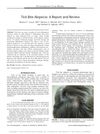 5 citations
,
April 2016 in “The American Journal of Dermatopathology”
5 citations
,
April 2016 in “The American Journal of Dermatopathology” This report describes a rare case of nonscarring alopecia linked to a tick bite on a 21-year-old male's scalp, with specific histological findings and proposed mechanisms.
1 citations
,
August 2024 in “JAAD Case Reports” This report presents a rare case of diffuse hair loss resembling alopecia areata, following a tick bite on the scalp.
93 citations
,
May 1990 in “The EMBO Journal” Mice with extra sheep genes had hair that fell out and regrew in cycles.
2 citations
,
September 2023 in “Journal of the Egyptian Womenʼs Dermatologic Society” This study concluded that exclamation mark hairs are the most reliable marker of disease activity in alopecia areata, with broken hairs, triangular hairs, and black dots also increasing the probability of active disease.
 2 citations
,
August 2020 in “Natural Product Communications”
2 citations
,
August 2020 in “Natural Product Communications” This study found that the topical application of a mixture of Platycladus orientalis leaf extract and α-terpineol promoted hair growth in mice by inducing early anagen transition and increasing growth factor expressions.
 2 citations
,
March 2018 in “The Journal of Dermatology”
2 citations
,
March 2018 in “The Journal of Dermatology” This letter discusses a trichoscopic feature called the color-transition sign for differentiating between alopecia areata incognita and telogen effluvium, and reports no new clinical results.
3 citations
,
May 1964 in “Nature” 8 citations
,
May 2005 in “Australian veterinary journal” This case report documents the first instance of recurrent flank alopecia in a Tibetan Terrier, diagnosed alongside atopic dermatitis.
 1 citations
,
July 2021 in “Aesthetic Plastic Surgery”
1 citations
,
July 2021 in “Aesthetic Plastic Surgery” This study concluded that a triangular flag-shaped incision design in hair transplantation achieved better hair alignment compared to the common elliptical incision, particularly in patients with specific hair directions.
January 2007 in “Journal of Southwest University” This study identified that the ND1 gene sequence of the Asian black bear's Sichuan subspecies shares high similarity with those of other bear species, raccoons, and Ailurus fulgens.
 August 2026 in “bioRxiv (Cold Spring Harbor Laboratory)”
 This study characterizes the secondary hair follicles in the Lanyu pig, an indigenous breed sharing similarities with human vellus hair follicles, suggesting its relevance as a model for researching hair follicle-mediated skin regeneration and enhancing translation to human wound healing.
 26 citations
,
September 2016 in “International Journal of Dermatology”
26 citations
,
September 2016 in “International Journal of Dermatology” This study aimed to identify trichoscopic features that help differentiate between tinea capitis and alopecia areata in children, enhancing diagnosis and treatment decisions visually and non-invasively.
5 citations
,
February 2023 in “Veterinary Sciences” This study found that adhesive tape impression cytology was effective for diagnosing dermatophytosis in dogs and cats, particularly in dogs with kerion, exhibiting sensitivity comparable to or higher than other tests.