January 2024 in “Indian Journal of Psychiatry” This study found that precision 40Hz gamma-transcranial alternating current stimulation significantly improved negative and cognitive symptoms in patients with schizophrenia compared to a sham group, suggesting promising potential for this neuromodulation technique in treating these symptoms.
 38 citations
,
January 2016 in “Cell Death and Disease”
38 citations
,
January 2016 in “Cell Death and Disease” This review discusses the role of the TCL1 transgenic mouse model in understanding chronic lymphocytic leukemia biology and highlights the importance of exploring new pathogenetic and therapeutic targets.
 September 2009 in “European Urology Supplements”
 Cone beam computed tomography can allow for smaller safety margins around the target area in prostate cancer radiation treatment if used for ongoing treatment checks.
32 citations
,
August 2016 in “Journal of the American Academy of Dermatology” This letter discusses congenital triangular alopecia (TTA), a non-scarring hair loss condition often seen in children, without reporting new clinical findings.
 1 citations
,
October 2022 in “Molecular therapy”
1 citations
,
October 2022 in “Molecular therapy” This study found that betibeglogene autotemcel significantly improved transfusion independence in 89% of patients with transfusion-dependent beta-thalassemia, although the high cost and manufacturing challenges may limit widespread adoption.
36 citations
,
June 2015 in “International journal of toxicology” This study established a new mouse model for TCE-induced skin sensitization and reported that proinflammatory cytokines TNF-α, IFN-γ, and IL-2 significantly contribute to this sensitization process.
 4 citations
,
March 2018 in “Journal of labelled compounds & radiopharmaceuticals”
4 citations
,
March 2018 in “Journal of labelled compounds & radiopharmaceuticals” In this study, researchers developed a new prostate cancer imaging agent, a [99m Tc]tricarbonyl complex derived from finasteride, which demonstrated high radiochemical purity and significant uptake in the prostate of a rat model, suggesting its potential for noninvasive prostate cancer imaging.
 56 citations
,
March 2010 in “Journal of Dermatology”
56 citations
,
March 2010 in “Journal of Dermatology” This review provides a synopsis of 53 cases of temporal triangular alopecia, noting its frequent detection in early childhood and potential association with congenital diseases, but it reports no new clinical findings.
 83 citations
,
January 2001 in “American journal of clinical dermatology”
83 citations
,
January 2001 in “American journal of clinical dermatology” This review discusses the clinical features of trichotillomania and the challenges in its diagnosis and treatment, reporting no new clinical findings while highlighting the need for specialized therapy and better therapeutic options.
 88 citations
,
August 2019 in “Nature communications”
88 citations
,
August 2019 in “Nature communications” In this study, researchers identified a specific T cell receptor associated with carbamazepine-induced severe cutaneous adverse reactions, demonstrating its potential for therapeutic development in patients with the HLA-B*15:02 genotype.
 13 citations
,
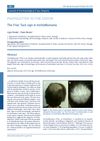
June 2012 in “Journal of Dermatological Case Reports”
13 citations
,
June 2012 in “Journal of Dermatological Case Reports” This report describes an 8-year-old male with trichotillomania, confirmed by trichoscopy showing characteristic hair damage and patterns.
21 citations
,
January 2000 in “Fetal Diagnosis and Therapy” This study found that trichothiodystrophy can be diagnosed prenatally in the second trimester using an endoscopically-guided fetal eyebrow biopsy, with sulfur content analysis being the most reliable test.
40 citations
,
July 2023 in “Clinical Pharmacology & Therapeutics” This review discusses the progress and challenges of targeted protein degradation therapies, highlighting the increasing number of degraders in cancer clinical trials and the limited diversity in targeted proteins, primarily focusing on those employing CRL4CRBN as the E3 ligase.
July 2025 in “International Journal of Trichology” This study reported six pediatric cases of temporal triangular alopecia and highlighted the use of trichoscopy to distinguish it by detecting a distinctive carpet of vellus hair, helping to differentiate TTA from other hair loss conditions.
 January 2026 in “Indian Journal of Dermatopathology and Diagnostic Dermatology”
 This report highlights a case where dermoscopic observation of corkscrew hairs in a young woman led to the diagnosis of trichotillomania, emphasizing its role in distinguishing this psychiatric disorder from other forms of non-scarring alopecia and highlighting the importance of timely intervention.
7 citations
,
April 1979 in “The Journal of Pediatrics”  January 2017 in “International journal of science and research”
 This review discusses treatment options for trichotillomania, focusing on cognitive-behavioral interventions and promising developments in combined pharmacotherapy and therapy approaches, but reports no new findings.
 January 2007 in “Revista del Centro Dermatológico Pascua”
 This case report describes a 2-year-old boy diagnosed with trichothiodystrophy, characterized by fragile hair, intellectual damage, diminished fertility, and short stature.
January 2009 in “Epsilon: Revista de la Sociedad Andaluza de Educación Matemática "Thales"” This report describes a Cronkhite-Canada syndrome patient with severe sepsis and disseminated intravascular coagulation successfully treated using combined therapies, including recombinant human soluble thrombomodulin.
 3 citations
,
August 2023 in “Drug safety”
3 citations
,
August 2023 in “Drug safety” This source reports that trastuzumab deruxtecan improves outcomes in HER2-positive and HER2-low metastatic breast cancer, emphasizing the need for careful adverse event monitoring, particularly for interstitial lung disease, and managing emetic risk to maximize benefits.
June 2020 in “Faculty Opinions – Post-Publication Peer Review of the Biomedical Literature” This study found a specific T cell receptor that may be key in carbamazepine-induced Stevens-Johnson syndrome and toxic epidermal necrolysis, suggesting potential therapeutic targets.
July 2024 in “Journal of Investigative Dermatology” Targeting TCR-Vβ2 in cutaneous T cell lymphoma shows promise for safer, more specific treatment.
7 citations
,
April 2008 in “Progrès en Urologie”  20 citations
,
August 2019 in “Journal of Telemedicine and Telecare”
20 citations
,
August 2019 in “Journal of Telemedicine and Telecare” This study found that dermatologists in São Paulo reported increased confidence in teledermatology over one year, citing its utility for triage and diagnosis, particularly for superficial infections and pigmentary disorders.
37 citations
,
January 1986 in “Carcinogenesis” This study found that TPA treatment transiently induces high levels of ODC in mouse epidermal cells, particularly around hair follicles, with localization reduced by retinoic acid or cycloheximide pretreatment.
33 citations
,
December 2005 in “British Journal of Clinical Pharmacology” This study found that the Transdermal Delivery System efficiently delivers testosterone systemically and showed bioequivalent hormone concentrations to a known topical gel in healthy males.
3 citations
,
January 2018 in “Frontiers in bioscience” This retrospective analysis reported significant increases in testosterone levels in men with testosterone deficiency using the Daily Subcutaneous Testosterone method combined with hCG and anastrozole, indicating its potential as a treatment option.
 January 2023 in “Indian dermatology online journal”
 This case study describes a previously unknown association of the PIBIDS complex with autoimmune thyroiditis and autoimmune hemolytic anemia in a five-year-old Indian child.
21 citations
,
February 1988 in “Toxicology” This study found that high doses of TCB caused severe toxicity in cotton top marmoset monkeys, with clinical and histological changes similar to those in humans and other primates exposed to PCBs.
2 citations
,
September 2024 in “PLoS ONE” This study suggests that combining bendamustine with tucidinostat may improve survival in patients with relapsed or refractory adult T-cell leukemia/lymphoma, highlighting its potential for clinical investigation.